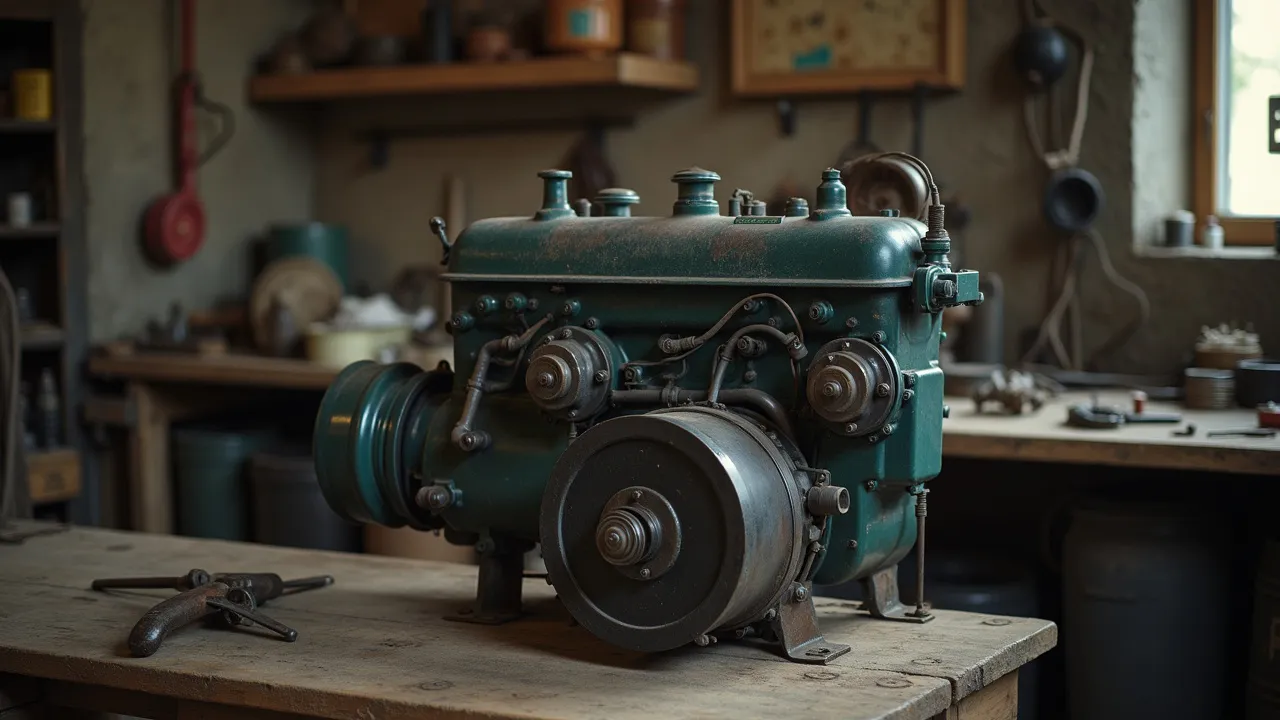
Diesel Engine Day, observed on February 23rd, honors Rudolf Diesel's invention and its transformative impact on industry, transportation, and energy. Celebrate by learning about diesel technology and its role in modern society.
The Historical Origins & Evolutionary Journey
The Foundational Catalyst
Diesel Engine Day is observed on February 23rd to commemorate the date in 1893 when German inventor Rudolf Diesel received his patent for the "Method of and Apparatus for Converting Heat into Work." This patent, number 67207, laid the groundwork for a revolutionary engine that would power the world. Diesel's goal was to create a more efficient engine than the steam engines of the day, using compression ignition rather than a spark plug. He envisioned an engine that could run on a variety of fuels, including vegetable oils, to help small businesses and farmers.
The Legislative/Official Adoption
While not an officially declared holiday by any government, Diesel Engine Day has been embraced by engineering societies, museums, and enthusiasts worldwide. It serves as a day to recognize the immense contributions of Rudolf Diesel and the diesel engine to modern civilization. The date of February 23rd is consistently used to mark the patent anniversary, avoiding confusion with Diesel's birth date (March 18, 1858) which is sometimes celebrated separately.
Modern Global Legacy
Today, diesel engines power ships, trucks, trains, agricultural equipment, and generators. They are known for their durability and fuel efficiency. The observance of this day encourages education about diesel technology, its history, and its future. Many technical colleges and historical societies host events, lectures, and exhibitions on this day.
How to Celebrate Diesel Engine Day
Educational Activities
- Visit a Museum: Many transportation or science museums have diesel engine exhibits. Take a guided tour or attend a special lecture on February 23rd.
- Read About Rudolf Diesel: Check out books or online resources detailing his life and invention. Focus on his vision for alternative fuels.
- Attend a Webinar: Engineering societies often host online seminars on diesel technology advancements.
Hands-On Celebrations
- Start a Model Engine: Build a small-scale diesel engine model kit to understand the mechanics.
- Observe a Working Engine: Visit a farm, factory, or port to see a large diesel engine in operation.
- Host a Discussion: Gather friends or colleagues to discuss the pros and cons of diesel engines versus electric power.
Corporate and Social Rituals
Companies in the transportation and energy sectors often use this day to launch new diesel technologies or highlight their sustainability efforts. Some organize community events to clean up diesel exhaust filters or plant trees to offset emissions. Social media campaigns with hashtags like #DieselEngineDay encourage sharing of historical photos and future innovations.
Regional Variations
In Germany, where Diesel was born, special exhibitions at the Deutsches Museum in Munich attract thousands. In the United States, the Antique Power Club often displays restored diesel tractors. In India, where diesel is widely used, vocational schools conduct workshops on engine maintenance.
Global Impact of Diesel Engines
The diesel engine has had a profound impact on global trade, agriculture, and industry. Its high torque and fuel efficiency made it the prime mover for heavy-duty applications. Shipping relies almost exclusively on diesel engines; container ships carry over 90% of world trade. Railways transitioned from steam to diesel-electric locomotives in the mid-20th century, enabling faster and cleaner freight transport. Agriculture uses diesel-powered tractors and harvesters to feed the growing population. Without the diesel engine, the modern world would look vastly different.
However, the environmental impact of diesel exhaust has led to stricter emissions regulations and a push for cleaner alternatives. The observance of Diesel Engine Day on February 23rd also serves as a reminder of the need for sustainable innovation. Many advocates use this day to promote biodiesel and renewable diesel fuels derived from waste oils.
Diesel Technology Innovations
From Patent to Production
Rudolf Diesel's first working prototype in 1897 achieved an efficiency of 26.2%, far surpassing the steam engine. Early engines were large and stationary, used for pumping water and generating electricity. By the 1920s, smaller, high-speed diesel engines were developed for trucks and buses.
Modern Advancements
Common Rail Direct Injection (CRDI) systems, introduced in the 1990s, improved fuel efficiency and reduced noise. Turbocharging and intercooling boosted power output. Exhaust Gas Recirculation (EGR) and Selective Catalytic Reduction (SCR) reduced nitrogen oxide emissions. Today's diesel engines are cleaner than ever, meeting stringent Euro 6 and EPA standards.
Alternative Fuels
Diesel engines can run on biodiesel (from vegetable oils or animal fats) and hydrotreated vegetable oil (HVO). Rudolf Diesel himself used peanut oil in early demonstrations. On Diesel Engine Day, many highlight these renewable options.
Environmental Perspectives and Sustainability
The diesel engine has been both praised for efficiency and criticized for pollution. Particulate matter and NOx emissions have led to health concerns and regulations. However, modern diesel engines with advanced aftertreatment can be as clean as gasoline engines. On February 23rd, environmental groups may organize protests, while industry associations emphasize the role of diesel in reducing CO2 emissions per ton-mile. The debate underscores the need for a balanced approach to energy policy.
Sustainability initiatives often include promoting biodiesel from waste sources, reducing idling, and transitioning to electric drivetrains for short-haul applications. Diesel engines remain essential for long-haul trucking and marine propulsion where battery weight is prohibitive.
Future of Diesel Engines
The future of the diesel engine is shaping up to be a hybrid one. Diesel-electric hybrid systems combine the efficiency of diesel at constant speed with electric batteries for peak loads. Hydrogen-diesel dual fuel engines are being developed to reduce carbon emissions. Ammonia and methanol are also being tested as carbon-free fuels for maritime diesel engines.
Engine manufacturers are investing in digitalization and connectivity for predictive maintenance. The observance of Diesel Engine Day on February 23rd is a perfect occasion to discuss these trends. Many universities host symposia on future drivetrains, and industry reports are released to coincide with the date.
Historical Timeline
Rudolf Diesel receives German patent DRP 67207 for his "Method of and Apparatus for Converting Heat into Work" on February 23.
First successful diesel engine prototype operates in Augsburg, Germany, achieving 26.2% thermal efficiency.
First diesel-powered ship, the Petite-Pierre, launches on the Canal du Rhône in France.
First diesel locomotive, built by Sulzer, is demonstrated in Switzerland.
Mercedes-Benz 260D becomes the first mass-produced diesel passenger car.
First diesel-powered tractor, the Ferguson TE20, revolutionizes farming.
Oil crises spur demand for fuel-efficient diesel engines in passenger cars and trucks.
Common Rail Direct Injection (CRDI) technology commercialized by Fiat and Bosch.
Strict emissions standards (Euro 4, EPA Tier 2) lead to widespread adoption of turbochargers and aftertreatment systems.
Volkswagen emissions scandal (Dieselgate) triggers global scrutiny and accelerated shift to electric vehicles.
Development of hydrogen-diesel dual-fuel engines and renewable diesel fuels for marine and heavy-duty applications.