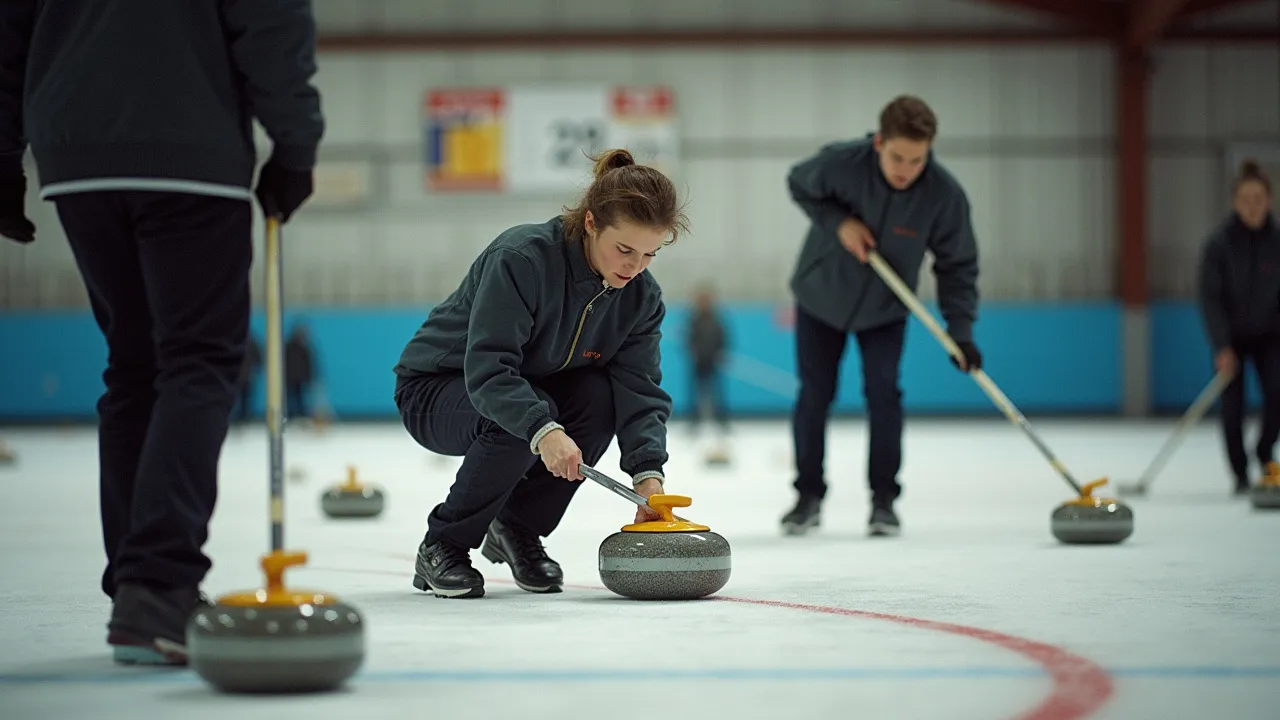
Curling is Cool Day on February 23rd celebrates the unique winter sport of curling, known for its strategy and camaraderie. Learn about its history, how to play, and ways to join the fun.
The Historical Origins & Evolutionary Journey
Curling is Cool Day is observed annually on February 23rd, a date chosen to celebrate the sport's unique appeal and to encourage participation. While the day itself was established in 2017, the roots of curling stretch back centuries.
The Foundational Catalyst
The sport of curling originated in 16th-century Scotland, where players slid stones on frozen lochs and ponds. The earliest known curling stone bears the date 1511. The sport evolved from a rustic pastime to a codified game with standardized rules in the 19th century.
The Legislative/Official Adoption
The United States Curling Association (USCA) officially founded Curling is Cool Day in 2017 to increase awareness and participation, particularly among younger audiences. The date February 23rd was chosen strategically to fall during the peak of the winter sports season and to align with major curling events like the national championships.
Modern Global Legacy
Since its inception, Curling is Cool Day has grown beyond the US, with curling clubs in Canada, Europe, and Asia hosting open houses and beginner clinics. The day has been amplified by social media campaigns using the hashtag #CurlingIsCool, showcasing the sport's blend of strategy, athleticism, and sportsmanship.
How to Celebrate Curling is Cool Day
Curling is Cool Day offers numerous ways to get involved, whether you are a seasoned curler or a complete beginner. Here is a definitive guide to celebrating effectively.
For Individuals and Families
- Visit a local curling club: Many clubs offer free introductory sessions on this day. Check their websites or call ahead for schedules.
- Watch a curling match: Tune into televised or online streams of national or international competitions.
- Play a simplified version: If ice is unavailable, try floor curling or backyard ice games with stones or substitutes.
For Schools and Community Groups
- Organize a field trip: Arrange a visit to a curling rink to learn the basics and try a few throws.
- Host a curling demonstration: Invite local curlers to speak and demonstrate techniques.
- Create educational materials: Teach the history and rules of curling in physical education or history classes.
For Organizations and Businesses
- Sponsor a learn-to-curl event: Partner with a local club to offer corporate team-building sessions.
- Launch social media challenges: Encourage employees or customers to share their curling experiences using #CurlingIsCool.
Regional Celebrations
While February 23rd is the primary date, some regions with strong curling traditions (e.g., Canada, Scotland, Sweden) may extend celebrations to include local tournaments or community competitions. In Canada, many clubs host 'Try Curling' weekends around this date.
The Global Impact of Curling as a Sport
Curling has grown from a niche winter activity to a globally recognized sport, especially after its inclusion in the Winter Olympics since 1998. The sport's unique combination of precision, strategy, and teamwork appeals to a wide demographic.
Olympic Influence
The reintroduction of curling to the Olympics (it was a demonstration sport in 1924, 1932, 1988, and 1992 before becoming official in 1998) significantly boosted its popularity. Nations like Sweden, Canada, and Great Britain have produced legendary teams, inspiring new generations.
Cultural Significance
Curling is often associated with values of respect, fair play, and community. The tradition of the 'broomstacking' (socializing after a game) reinforces its social aspect. In countries like Scotland and Canada, curling clubs are community hubs.
Economic Impact
The sport contributes to local economies through tourism for major events, such as the World Curling Championships, and through the construction and maintenance of dedicated curling facilities.
Core Skills and Techniques in Curling
Mastering curling requires a combination of physical skill, mental focus, and teamwork. The key techniques include the delivery (slide), sweeping, and strategy.
The Delivery
The stone is delivered from a hack (starting block) with a sliding motion. The curler must release the stone with the correct rotation (handle direction) and weight (speed). Accuracy is crucial.
Sweeping
Sweeping is performed by teammates using brooms to melt the ice slightly, reducing friction and allowing the stone to travel farther and straighter. Effective sweeping requires coordinated effort and judgment.
Strategy
Curling is often called 'chess on ice' due to its strategic depth. Teams call shots based on score, position of stones, and ice conditions. Key tactics include guards, draws, takeouts, and freezes.
Curling Equipment and Technology
The evolution of curling equipment has enhanced performance and safety. From stones to brooms to footwear, technological advances have shaped the modern game.
Curling Stones
Stones are made of granite, typically from Ailsa Craig in Scotland or Trefor in Wales. They weigh about 19.96 kg (44 lbs) and have a handle attached for gripping and rotation. Modern stones are precision-cut and polished for consistent performance.
Brooms
Brooms have evolved from corn brooms to synthetic brushes with replaceable heads. These brushes allow for more effective sweeping and better control. The 'Directional Fabric' heads now improve ice interaction.
Footwear
Curling shoes have a sliding sole on one foot (for the delivery) and a gripper on the other. Advances include replaceable sliding soles and specialized grip materials.
Environmental and Health Benefits of Curling
Beyond being a recreational activity, curling offers environmental and health advantages, especially when compared to other winter sports.
Low Environmental Impact
Curling requires only water and electricity for ice maintenance. Unlike skiing or snowboarding, it does not depend on snowmaking or artificial snow, reducing water and energy consumption. Many clubs now use sustainable practices like LED lighting and efficient refrigeration.
Physical Health
Curling provides a moderate-intensity workout, improving cardiovascular health, balance, and flexibility. The lunging motion in delivery strengthens legs and core. Sweeping is an effective full-body exercise.
Mental Health
The social nature of curling and the focus required for strategy can reduce stress and improve cognitive function. The sport is also inclusive, welcoming participants of all ages and abilities, promoting social connections.
Historical Timeline
The earliest known curling stone is found in Scotland, bearing the date 1511, indicating the sport's ancient origins.
The Grand Caledonian Curling Club (now Royal Caledonian Curling Club) is formed in Scotland, establishing standardized rules.
Curling is included as a demonstration sport at the first Winter Olympics in Chamonix, France.
Curling becomes a full medal sport at the Nagano Winter Olympics, with men's and women's events.
The United States Curling Association establishes Curling is Cool Day on February 23rd to promote the sport.
Curling is Cool Day celebrations expand globally, with clubs in over 20 countries participating in open houses and social media campaigns.