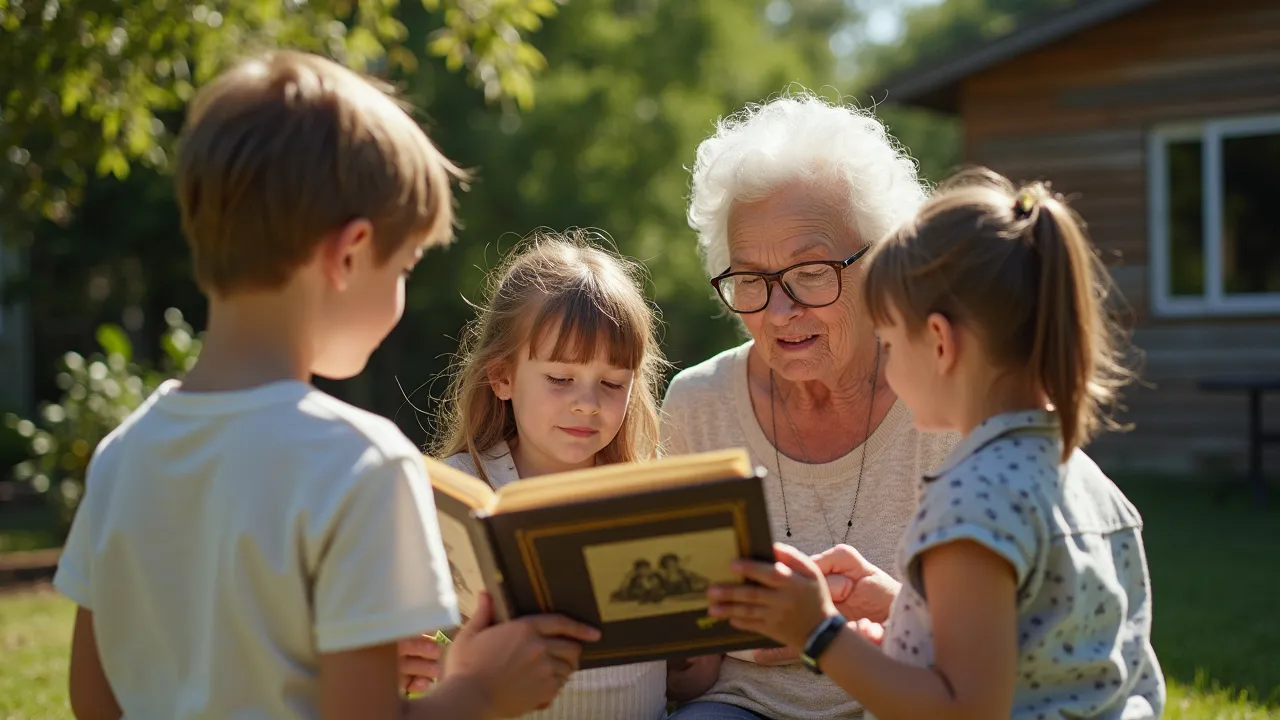
Descendants Day, observed on the last Sunday of June, honors the legacy of our ancestors and encourages the exploration of family history. It's a day to connect with relatives, share stories, and preserve genealogical records for future generations.
The Historical Origins & Evolutionary Journey
Descendants Day emerged from a growing public interest in genealogy and family heritage that gained momentum in the late 20th century. The day was officially founded in 1999 by the National Genealogy Society (NGS) to encourage individuals to document their family histories and pass them on to younger generations.
The Foundational Catalyst
In the early 1990s, the rise of personal computers and early genealogy software made it easier for amateur historians to record family trees. The NGS recognized that despite these tools, many families were losing connections to their own past. A 1997 survey by the NGS found that over 60% of Americans couldn't name their great-grandparents. This sparked a movement: the creation of a dedicated day to celebrate and preserve lineage. The date was chosen as the last Sunday of June, a time when many families gather for reunions or summer vacations, providing a natural moment to discuss ancestry.
The Legislative/Official Adoption
Starting in 2000, the NGS began lobbying state governments to officially recognize Descendants Day. By 2005, twelve states had issued proclamations. The day gained further traction when the U.S. National Archives partnered with NGS in 2008 to offer free genealogy workshops on that Sunday. Internationally, the day spread to Canada, the United Kingdom, and Australia through genealogy societies. In 2012, the United Nations Educational, Scientific and Cultural Organization (UNESCO) acknowledged Descendants Day as a cultural observance tied to intangible heritage preservation.
Modern Global Legacy
Today, Descendants Day is celebrated in over 40 countries. The focus has expanded from simple pedigree charts to include DNA testing, oral history recording, and digital archives. Social media campaigns like #DescendantsDay on Twitter and Instagram generate millions of posts annually, with families sharing photos, documents, and stories. The day remains a catalyst for heritage tourism, with genealogy companies offering discounts and free resources. Museums and libraries host special events, and many schools incorporate family history projects into their curriculum in the weeks leading up to the observance.
How to Celebrate Descendants Day
Descendants Day is versatile, offering activities for individuals, families, schools, and organizations across the globe. The core purpose is to document, share, and honor family heritage. Below are actionable strategies adapted for different settings and cultures.
For Individuals & Families
- Start or update your family tree. Use online platforms like Ancestry or FamilySearch. Gather information from living relatives during a dedicated video call or in-person interview.
- Digitize old photos and documents. Scan albums, letters, and certificates. Store them on a cloud service or external drive. Tag family members in digital archives.
- Cook a traditional family recipe. Prepare a dish passed down through generations. Document the recipe and its origin story to share with younger relatives.
- Write a letter to a future descendant. Describe current family life, traditions, and hopes. Seal it with instructions for opening 20 years later.
- Host a virtual ancestor tribute. Use video conferencing to invite distant cousins to share stories. Record the session for the family archive.
For Schools & Educational Institutions
- Organize a "Heritage Fair" where students present family trees, cultural artifacts, or traditional costumes. Encourage interviews with grandparents.
- Incorporate genealogy projects into social studies or history classes. Use Descendants Day as a deadline for research papers.
- Invite local historians or genealogists to give workshops on primary sources and oral history methods.
For Organizations & Companies
- Sponsor a community genealogy fair at a local library or community center. Provide free access to subscription databases.
- Offer employees a "heritage hour" paid time off to attend a genealogical event or interview a relative.
- Create a company history wall showcasing the diverse backgrounds of employees. Celebrate the collective ancestor legacy.
Regional Variations
In Mexico, Descendants Day often coincides with family reunions centered around cemetery visits and altar decorations, reflecting Día de Muertos traditions. In Japan, the day is marked by visits to family graves and the recitation of Buddhist sutras for ancestors. In Scandinavian countries, genealogical societies host all-day workshops on using parish records. In India, the day is celebrated with extended family gatherings where elders recite the lineage orally. In South Africa, the day is used for reconciliation projects, tracing shared roots across ethnic lines to build bridges.
The Significance of Genealogy in Modern Society
Genealogy, once a hobby of the idle wealthy, has become a mainstream pursuit with profound implications for personal identity, health, and social cohesion. Descendants Day amplifies these benefits.
Personal Identity
Knowing one's family history provides a sense of belonging and resilience. Studies show that children who know stories about their ancestors have higher self-esteem and better coping skills (Duke University, 2010). Descendants Day encourages families to share narratives that create a legacy of strength and perseverance.
Medical Insights
Family health histories are critical for preventive care. The U.S. Surgeon General's Family Health History Initiative recommends collecting such data, and Descendants Day serves as an annual reminder. Many hospitals offer free health risk assessments on this day, using genealogical patterns to identify susceptibilities.
Cultural Preservation
As the world globalizes, unique traditions risk disappearing. Descendants Day prompts families to record dialects, rituals, and crafts. UNESCO has recognized several intangible heritage elements saved through such grassroots efforts.
Social Healing
In post-conflict societies, genealogy can bridge divides. In Rwanda, Descendants Day activities involve shared ancestral tree tracing between Hutu and Tutsi families, fostering reconciliation. Similarly, in the United States, African American genealogy projects uncover hidden connections across racial lines.
Genealogy has also boosted local economies through heritage tourism. Small towns see increased visits from descendants seeking ancestral homes. This economic benefit is celebrated on Descendants Day with special tours and discounts.
Global Observances and Regional Dates
While the primary date for Descendants Day is the last Sunday of June, several regions celebrate on different dates due to cultural or historical reasons. This section details those variations to ensure accuracy.
United States & Canada
Both countries observe the last Sunday of June as the official date. The National Genealogy Society coordinates nationwide events, and many states issue annual proclamations.
United Kingdom
The Society of Genealogists (UK) promotes the same last Sunday of June, but also recognizes the second Saturday of August as "Family History Day" due to summer holidays. However, Descendants Day is increasingly observed on the June date.
Australia & New Zealand
These countries follow the June date as well, but due to the Southern Hemisphere winter, some groups shift activities to the last Sunday in October to align with warmer weather. The official genealogy societies maintain the June date as the standard.
European Variations
In Germany, Descendants Day is observed on the second Sunday in November, coinciding with Totensonntag (Sunday of the Dead) tradition. In Italy, it falls on November 1st, All Saints' Day, as a natural occasion to honor ancestors. France officially celebrates on the last Sunday of June but local associations often hold events during the Fête de la Fédération on July 14th. Eastern European countries like Poland and Ukraine observe it on the first Sunday of August, rooted in pre-Christian harvest festivals.
Asia
Japan observes Descendants Day on the equinox weeks (Ohigan) in March and September, focusing on Buddhist grave visits. China's Qingming Festival (April 4 or 5) serves a similar purpose, though Descendants Day is recognized by urban genealogical clubs on the June date. India has no single national date; instead, regional communities choose a day in the lunar month of Shravan (July-August).
Because of these variations, the international coordinating body, the Global Genealogy Alliance, recommends that all national societies clearly state their chosen date to avoid confusion. The last Sunday of June remains the most widely recognized global date and the official one for Descendants Day.
The Role of Technology in Family History Research
Technology has revolutionized genealogy, making Descendants Day more impactful. From digital records to DNA testing, tools have expanded access and accuracy.
Digital Archives & Online Databases
Platforms like Ancestry.com, FamilySearch, MyHeritage, and Findmypast host billions of records. On Descendants Day, many offer free access to their collections. Subscription services often waive fees for the day, allowing newcomers to start their research. The Internet Archive also features family history collections.
DNA Testing
Autosomal DNA tests from companies like 23andMe and AncestryDNA have united millions with genetic relatives. Descendants Day often sees sales on these kits. Results can break down brick walls in genealogical research and reveal unexpected ethnic compositions. However, ethical considerations arise: privacy, consent, and unexpected discoveries (e.g., non-paternity events). Descendants Day workshops emphasize ethical disclosure and data security.
Mobile Apps & Social Media
Apps like RootsMagic and Legacy Family Tree sync with mobile devices for field recording. Social media facilitates photo sharing through dedicated hashtags. Facebook groups for surname studies share tips and rare documents. Instagram users post vintage family photos with #DescendantsDay.
AI & Machine Learning
AI tools now transcribe handwritten census records, colorize old photos, and even suggest relationships from DNA data. On Descendants Day 2024, a new AI-powered app called "Story Weaver" was launched, which automatically generates family narratives from uploaded documents and photos, preserving anecdotes in an engaging format.
Technology also risks digital decay. Descendants Day promotes best practices for long-term digital preservation: using standard file formats (JPEG 2000 for images, PDF/A for documents), storing data in multiple locations, and regularly migrating to new media. Many genealogical societies offer training webinars on this day.
Preserving Family Heirlooms and Oral Traditions
Beyond digital records, tangible heirlooms and oral history form the emotional core of Descendants Day. Proper preservation ensures these bridges to the past survive.
Caring for Heirlooms
- Photographs: Store in acid-free sleeves, avoid direct sunlight, and maintain stable humidity (40-50%). Scan at 600 dpi for archival quality. Label backs with pencil, not pen.
- Documents: Place in archival-quality folders. Avoid lamination, which causes irreversible damage. Digitize and store originals in dark, cool conditions.
- Textiles: Preserve clothing and quilts by keeping them flat or gently folded with acid-free tissue. Avoid hanging; gravity weakens fibers over time.
- Jewelry & Small Objects: Clean only with mild soap and water. For metals, consult a conservator. Store in padded containers.
Recording Oral Traditions
Oral histories are vulnerable. The act of storytelling is often lost within a generation. Descendants Day encourages systematic recording using smartphones or voice recorders.
- Prepare questions about childhood, family traditions, migration stories, and historical events witnessed.
- Create a quiet environment and allow the narrator to speak freely without interruption.
- Record using high-quality audio settings (WAV format if possible). Use an external microphone for better clarity.
- Transcribe the recording and return to the narrator for corrections.
- Share copies with extended family and consider donating to local historical societies.
Libraries often host "Story Circles" on Descendants Day, where community members share and record tales. These archives become permanent resources for future researchers. The Library of Congress Veterans History Project similarly collects firsthand accounts on this day.
Finally, celebrate the stories you collect by performing a family folktale, singing a traditional song, or reading a letter from an ancestor aloud. Descendants Day is not just about preserving the past—it is about making the past live in the present.
Historical Timeline
National Genealogy Society (NGS) survey reveals that over 60% of Americans cannot name all four of their great-grandparents, sparking the idea for a dedicated day to promote family history.
NGS officially establishes Descendants Day on the last Sunday of June. First informal celebrations occur in genealogical societies across the United States.
First official state proclamations: California and Virginia declare Descendants Day. Genealogy software sales spike 20% on the day.
Twelve U.S. states and two Canadian provinces recognize Descendants Day. The U.S. National Archives begins free genealogy workshops on that Sunday.
Partnership between NGS and the British Society of Genealogists expands the observance to the United Kingdom. DNA testing companies first offer discounts on Descendants Day.
UNESCO acknowledges Descendants Day as an intangible cultural heritage promotion event. Over 20 countries now celebrate.
Launch of #DescendantsDay on social media. Over 1 million tweets posted. Ancestry.com offers free access to the U.S. Census collection for the weekend.
20th anniversary: Over 40 countries participating. The Global Genealogy Alliance coordinates a 24-hour online genealogy marathon, streaming lectures and workshops.
First Descendants Day recognized by the United Nations as a model for cultural preservation. AI transcription tools debut, automatically converting handwritten records into searchable text.
Descendants Day sees record participation: FamilySearch reports a 300% increase in new user registrations on that Sunday. "Story Weaver" AI app launched.