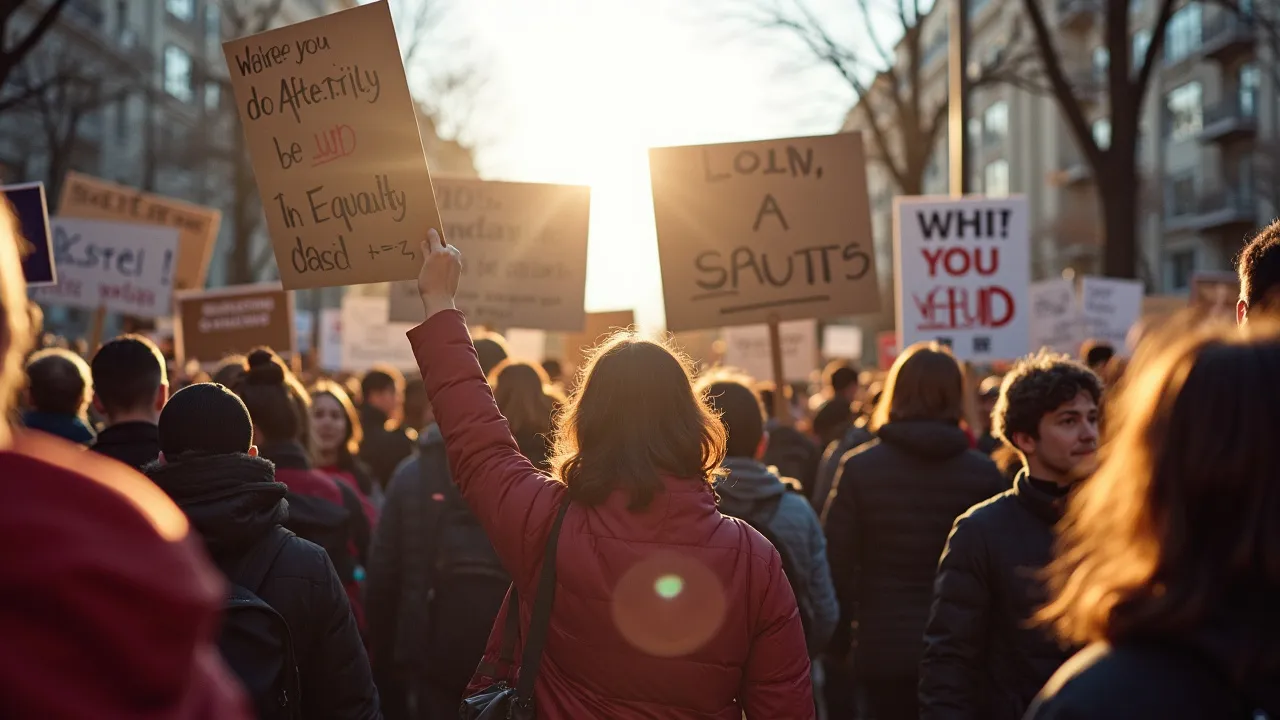
Civil Rights Day, observed on the third Monday of January, honors the struggle for racial equality and justice. It commemorates leaders like Martin Luther King Jr. and inspires continued advocacy for civil rights worldwide.
The Historical Origins & Evolutionary Journey
Civil Rights Day, widely recognized as Martin Luther King Jr. Day in the United States, traces its roots to the mid-20th century civil rights movement. The day honors the legacy of Dr. King and the broader struggle for racial equality and social justice. Its evolution from a grassroots campaign to a federal holiday reflects the enduring impact of the movement.
The Foundational Catalyst
The modern civil rights movement gained momentum in the 1950s and 1960s, driven by systemic racial segregation and discrimination. Key events such as the Montgomery Bus Boycott (1955-1956), the Greensboro sit-ins (1960), and the March on Washington (1963) galvanized public opinion. Dr. King's philosophy of nonviolent resistance became central to the movement's strategy. His "I Have a Dream" speech, delivered on August 28, 1963, articulated a vision of racial harmony that resonated globally.
The Legislative/Official Adoption
After Dr. King's assassination on April 4, 1968, a campaign began to establish a national holiday in his honor. Congressman John Conyers and Senator Edward Brooke introduced legislation, but it faced opposition. Public pressure, including a petition with 6 million signatures, led to President Ronald Reagan signing the holiday into law on November 2, 1983. The first official observance took place on January 20, 1986. Initially, some states resisted, combining it with other holidays or naming it Civil Rights Day. By 2000, all 50 states recognized the day, though some maintain alternative names.
Modern Global Legacy
Today, Civil Rights Day is observed not only in the U.S. but also in countries like Canada, Japan, and Israel, where it serves as a day to reflect on human rights progress. The day has expanded beyond racial equality to encompass LGBTQ+ rights, gender equality, and disability rights. Educational institutions and organizations host workshops, film screenings, and service projects. The holiday has become a catalyst for ongoing social justice movements, such as Black Lives Matter, which continue Dr. King's unfinished work.
How to Celebrate Civil Rights Day
Celebrating Civil Rights Day involves meaningful reflection, education, and action. Whether individually or collectively, participants honor the legacy of the civil rights movement and recommit to justice. Below are actionable strategies for individuals, schools, and organizations.
For Individuals and Families
- Attend a commemorative event: Many cities host parades, marches, or interfaith services. Check local listings for community gatherings.
- Volunteer for social justice causes: Dedicate time to organizations fighting poverty, discrimination, or voter suppression.
- Educate yourself: Read books like Letter from Birmingham Jail or watch documentaries such as Eyes on the Prize.
- Engage in dialogue: Discuss civil rights issues with family and friends to foster understanding.
For Schools and Educational Institutions
- Host a teach-in: Organize classroom sessions on the history of civil rights, focusing on key figures and events.
- Create a timeline display: Showcase milestones from the civil rights movement in hallways or libraries.
- Encourage student projects: Have students write essays, create art, or produce short films about civil rights themes.
For Corporations and Organizations
- Provide a day of service: Offer paid time off for employees to volunteer with civil rights or community organizations.
- Host a guest speaker: Invite civil rights activists or historians to address employees.
- Review policies: Use the day to audit internal diversity, equity, and inclusion (DEI) initiatives.
In countries like Canada, Civil Rights Day is often tied to Human Rights Day on December 10, with events focusing on indigenous rights. In Japan, some communities honor the day by studying the U.S. civil rights movement and its parallels to local human rights issues.
Global Impact of Civil Rights Movements
The civil rights movement in the United States had a profound ripple effect worldwide. It inspired anti-colonial struggles, apartheid resistance, and indigenous rights movements. The day serves as a reminder that the fight for equality is universal.
Influence on South Africa
Dr. King's nonviolent approach influenced the anti-apartheid movement led by Nelson Mandela. The U.S. civil rights legislation, including the Civil Rights Act of 1964 and Voting Rights Act of 1965, provided a model for dismantling legalized racism. South Africa's own transition to democracy in 1994 echoed these principles.
Impact on the United Kingdom
In the UK, the civil rights movement in Northern Ireland (the Troubles) drew inspiration from American tactics such as marches and sit-ins. The UK also adopted race relations acts in the 1960s and 1970s, influenced by U.S. developments.
Legacy in India
India's own struggle for independence under Mahatma Gandhi was a precursor to Dr. King's philosophy. Civil Rights Day in India is sometimes observed as a day to reflect on caste discrimination and the need for social reform.
Today, global observance of Civil Rights Day emphasizes intersectionality, recognizing that race, gender, class, and sexuality intersect in systems of oppression. International organizations like the United Nations use the day to promote the Universal Declaration of Human Rights.
Core Themes: Equality, Justice, Nonviolence
The foundation of Civil Rights Day rests on three core principles: equality, justice, and nonviolence. These themes permeate the history and contemporary practice of civil rights advocacy.
Equality
Equality demands that all individuals have the same legal and social rights regardless of race, gender, or background. The landmark Brown v. Board of Education decision (1954) declared segregated schools unconstitutional, paving the way for desegregation. The Civil Rights Act of 1964 outlawed discrimination in public accommodations and employment. These laws embody the principle of equality before the law.
Justice
Justice extends beyond legal equality to address systemic disparities. The civil rights movement sought not only to end segregation but also to ensure economic justice, voting rights, and fair housing. The Voting Rights Act of 1965 eliminated barriers like literacy tests, while the Fair Housing Act of 1968 prohibited discrimination in housing. Ongoing struggles for justice include criminal justice reform, environmental justice, and reparations.
Nonviolence
Nonviolence is both a moral and strategic approach. Dr. King advocated for peaceful protest, civil disobedience, and dialogue. Key campaigns like the Birmingham Campaign (1963) and the Selma to Montgomery Marches (1965) demonstrated the power of nonviolent resistance. Today, nonviolence remains a core tactic for movements such as Black Lives Matter and Fridays for Future.
Civil Rights in Education
Education has been both a battleground and a tool for civil rights. Civil Rights Day provides an opportunity to reflect on educational equity and the role of schools in promoting social justice.
Historical Context
The struggle for desegregation included landmark cases like Brown v. Board of Education and the Little Rock Nine (1957), where African American students faced violent opposition at Central High School. The Higher Education Act of 1965 expanded access to college through grants and loans.
Modern Challenges
Despite progress, educational disparities persist. Minority students often attend underfunded schools, face harsher discipline, and have limited access to advanced courses. Civil Rights Day highlights the need for reforms such as equitable school funding, culturally responsive curriculum, and affirmative action policies.
Educational Activities
Curriculum integration: Schools incorporate civil rights history into lessons year-round, not just on the holiday.
Service-learning projects: Students participate in community service related to literacy, mentorship, or voter registration.
Student-led initiatives: Clubs and organizations host panels, film screenings, and debates on civil rights topics.
Corporate and Social Responsibility on Civil Rights Day
Increasingly, corporations and organizations observe Civil Rights Day as part of their diversity, equity, and inclusion (DEI) commitments. This section explores best practices for aligning business operations with civil rights principles.
DEI Initiatives
Companies use Civil Rights Day to launch or reinforce DEI programs. Activities include:
- Mandatory training: Workshops on unconscious bias, microaggressions, and inclusive leadership.
- Employee resource groups (ERGs): ERGs for racial minorities, women, and LGBTQ+ employees plan commemorative events.
- Policy reviews: Auditing hiring practices, promotion rates, and pay equity.
Community Engagement
Corporations partner with local civil rights organizations through sponsorships, volunteer days, and matching gifts. Some companies close operations or offer floating holidays to allow employees to participate in activism.
Supply Chain Equity
A growing focus is ensuring supply chains are free from discrimination and exploitation. Civil Rights Day prompts companies to assess their vendors' labor practices and support minority-owned businesses.
Critics argue that some corporate observance is performative. To ensure authenticity, companies must demonstrate year-round commitment beyond symbolic gestures.
Challenges and Future of Civil Rights
While Civil Rights Day celebrates progress, it also highlights ongoing struggles. The holiday serves as a call to action to address persistent inequalities.
Contemporary Challenges
- Voter suppression: New laws in some states restrict voting access, disproportionately affecting minorities.
- Police brutality: High-profile killings of unarmed Black individuals have sparked protests and demands for reform.
- Economic inequality: The racial wealth gap remains vast, with median white families holding ten times the wealth of Black families.
Future Directions
The future of civil rights involves:
- Intersectional advocacy: Addressing the overlap of race, gender, sexual orientation, and disability.
- Technology and privacy: Ensuring AI and surveillance technologies do not perpetuate bias.
- Global solidarity: Connecting movements across borders to tackle issues like climate justice and refugee rights.
Civil Rights Day encourages individuals to educate themselves, vote in local elections, and support organizations working to dismantle systemic racism. The legacy of Dr. King is not a monument but a marching order.
Historical Timeline
Brown v. Board of Education: U.S. Supreme Court declares racial segregation in public schools unconstitutional.
Montgomery Bus Boycott begins after Rosa Parks refuses to give up her seat; Dr. Martin Luther King Jr. emerges as a leader.
March on Washington: Dr. King delivers 'I Have a Dream' speech, pushing for civil rights legislation.
Civil Rights Act of 1964 signed into law, prohibiting discrimination based on race, color, religion, sex, or national origin.
Voting Rights Act of 1965 passed, eliminating voting barriers like literacy tests and poll taxes.
Dr. Martin Luther King Jr. assassinated in Memphis, Tennessee; Fair Housing Act of 1968 passed shortly after.
President Ronald Reagan signs law making Martin Luther King Jr. Day a federal holiday, effective 1986.
First official observance of Martin Luther King Jr. Day (federal holiday) on January 20.
All 50 states officially recognize Martin Luther King Jr. Day, though some name it Civil Rights Day or Human Rights Day.
Civil Rights Day continues to be a platform for contemporary movements focusing on voting rights, police reform, and economic justice.