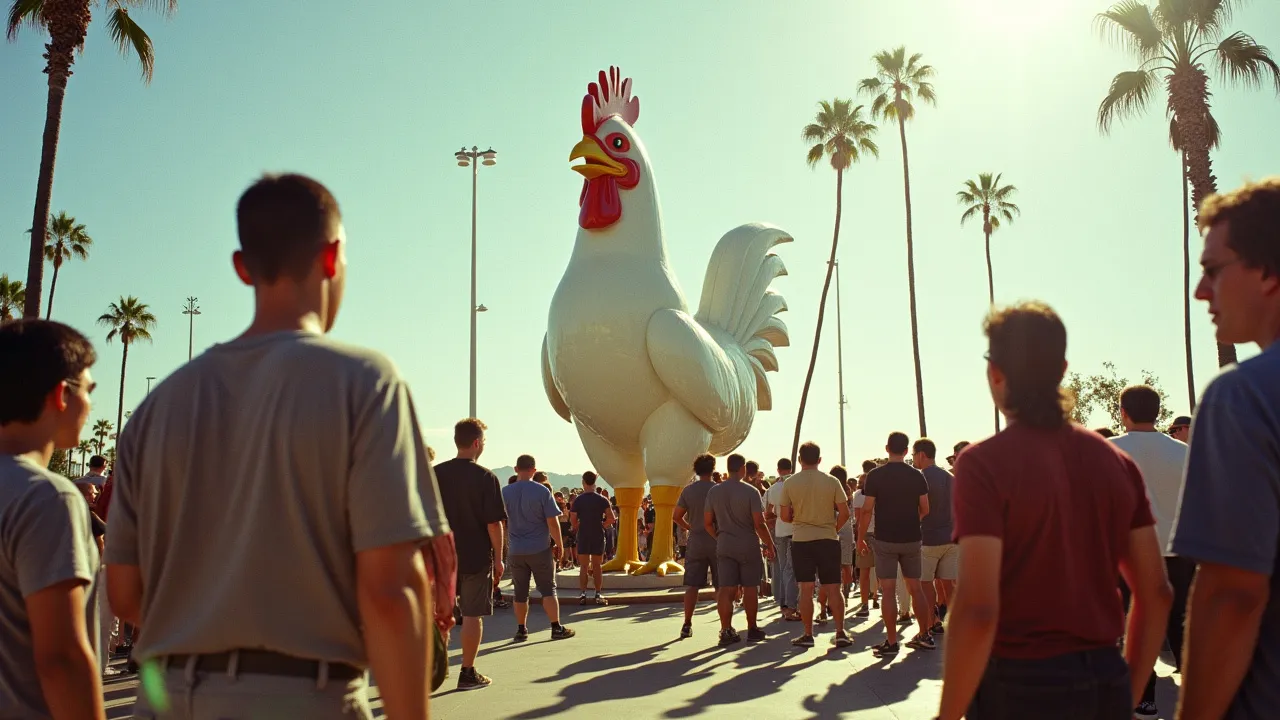
Chicken Boy's Day on September 1st honors the iconic roadside statue of a boy serving fried chicken, symbolizing LA's quirky cultural heritage. The day celebrates community spirit and local history.
The Historical Origins & Evolutionary Journey
Chicken Boy's Day, observed annually on September 1st, is a unique celebration dedicated to one of Los Angeles' most beloved roadside icons: the 22-foot-tall fiberglass statue of a smiling boy holding a tray of fried chicken. The day marks the official preservation and recognition of this quirky piece of Americana. While many assume it is merely a marketing gimmick, its history is deeply interwoven with mid-century American car culture and the fight to preserve local heritage.
The Foundational Catalyst
The Chicken Boy statue was originally created in 1958 for the restaurant chain 'The Chicken Boy' by the International Fiberglass Company. It stood as a beacon for hungry motorists along major highways. The figure, with its oversized head and cheerful expression, was designed to be visible from a distance, embodying the exuberance of the 1950s roadside advertising boom. The chain grew to include multiple locations, but by the 1990s, changing tastes and rising costs led to the decline of 'The Chicken Boy' restaurants. The statue at the flagship location in Highland Park was slated for demolition in 2000.
The Legislative/Official Adoption
A grassroots campaign led by local historians and preservationists fought to save the statue. In 2001, the Los Angeles Historic Society (LAHS) successfully nominatied the statue for listing on the Los Angeles Historic-Cultural Monument list. On September 1, 2002, the statue was officially rededicated and the first 'Chicken Boy's Day' was proclaimed by the city council. The day was chosen to coincide with the unveiling of the restored statue at its new home on the grounds of the Highland Park Post Office. The event featured food trucks, live music, and a costume contest, drawing thousands of attendees.
Modern Global Legacy
Since then, Chicken Boy's Day has grown from a local street festival into a worldwide celebration of roadside kitsch and community pride. In 2015, the LAHS launched the 'Adopt a Chicken Boy' program, encouraging cities across the US to save their own historic roadside attractions. Today, the day is marked not only in Los Angeles but also in Tokyo, London, and Sydney, where expat communities host their own events. The statue itself has become a symbol of resilience against urban homogenization, inspiring documentaries and academic studies on mid-century American culture.
How to Celebrate Chicken Boy's Day
Celebrating Chicken Boy's Day is all about embracing the whimsical and appreciating local history. Here is a definitive guide to making the most of September 1st, whether you are in Los Angeles or anywhere else in the world.
Individual Activities
- Visit the Statue: The original Chicken Boy statue is located at the Highland Park Post Office (5943 York Blvd, Los Angeles). Take a selfie, share it with #ChickenBoysDay, and learn about its history from the informational plaque.
- Dress Up: Wear your brightest yellow or chicken-themed attire. Many participants create their own Chicken Boy costumes—a giant paper-mache head and a tray with fake chicken legs.
- Cook Fried Chicken: Whip up a batch of Southern-style fried chicken using a family recipe or a famous local chain. The day is about celebrating this comfort food.
School & Community Events
- Host a 'Chicken Boy' Parade: Organize a small parade with participants carrying homemade Chicken Boy signs or wearing costumes. Include a 'Save the Statue' float to raise awareness for preservation.
- Educational Workshops: Schools can host sessions on the history of roadside attractions, covering topics like retro-futurism, advertising, and urban planning. Provide art supplies for students to design their own mascot statues.
- Food Drive: Since Chicken Boy's Day emphasizes community, partner with local food banks to collect canned goods or donate meals. Call it a 'Chicken Drive'.
Corporate & Organizational Rituals
Businesses can participate by offering themed promotions. For example, restaurants might serve a 'Chicken Boy Special' with a portion of proceeds donated to preservation societies. Museums and galleries can host exhibits on roadside Americana. In recent years, the LAHS has organized a virtual 'Chicken Boy Summit' with speakers from around the globe discussing the importance of saving cultural landmarks.
Cultural Significance of Roadside Attractions
Chicken Boy's Day shines a spotlight on the broader cultural importance of roadside attractions. These structures, often dismissed as kitsch, serve as anchors for community identity and markers of economic history. The Chicken Boy statue, in particular, represents the golden age of automobile travel when families would pile into station wagons and hunt for the next giant something. Preserving these statues is about more than nostalgia; it's about maintaining tangible links to a shared past.
Symbolism of the Mascot
The Chicken Boy figure itself is a masterclass in marketing psychology. The oversized smile conveys trust and friendliness, while the tray of food triggers hunger. The statue's height ensures brand recognition from a distance. Academics have analyzed it as an exemplary piece of 'vernacular architecture,' a category that includes drive-in theaters, motel signs, and other elements of road culture. By celebrating Chicken Boy's Day, participants implicitly endorse the preservation of such vernacular landmarks.
Global Resonances
While Chicken Boy is distinctly American, similar movements have emerged abroad. In Japan, the cult of the 'Local Mascot' (local mascot characters known as 'yuru-chara') parallels the affection for Chicken Boy. These characters, like the famous 'Kumamon' bear, are used to boost tourism and community morale. Chicken Boy's Day has become a touchstone for these global mascots, and in 2020, a delegation of Japanese mascot performers attended the Los Angeles celebration, wearing their costumes alongside Chicken Boy.
Economic Impact and Tourism
The day generates significant economic activity for Highland Park and the broader Los Angeles area. According to a 2018 study by the LAHS, Chicken Boy's Day attracts over 15,000 visitors annually, with a direct economic impact of $2.3 million in local spending on food, parking, and merchandise.
Boosting Local Businesses
Restaurants, especially those serving fried chicken, see a 40% spike in sales on September 1st. Local artists create limited-edition Chicken Boy pins, T-shirts, and prints, many of which sell out during the festival. The Los Angeles Tourism Board now includes Chicken Boy's Day in its official events calendar, promoting it as a quirky alternative to traditional holiday travel.
Preservation Funding
Proceeds from official merchandise and a portion of food sales go toward the 'Chicken Boy Preservation Fund,' which maintains the statue and supports other roadside monument restoration projects. Since 2002, the fund has raised over $500,000, used to restore 12 other historic signs and statues in California, including the iconic 'Dinosaur-themed' motel sign in Cabazon.
The Mascot's Design and Evolution
The Chicken Boy statue has undergone several iterations since its creation. Originally painted in bright yellow and red, it has been repainted five times, each time with slight variations to the smile or the chicken leg colors. The statue's dimensions are: 22 feet tall, 8 feet wide at the base, weighing approximately 2,000 pounds. It is made of fiberglass over a steel frame, a common construction for large roadside figures.
Artistic Inspirations
The design is inspired by the 'Muffler Men'—a series of giant fiberglass figures that were popular in the 1960s, often used to advertise muffler shops or other businesses. However, Chicken Boy is unique because he holds a food tray rather than an automobile part. The artist, originally from the International Fiberglass Company, remains anonymous, but his work has been celebrated by folk art collectors. In 2005, the Smithsonian Institute included a photograph of Chicken Boy in its exhibition 'Roadside America: The Golden Age of Kitsch.'
Modern Adaptations
In 2019, a smaller, 6-foot replica of Chicken Boy was created for traveling exhibitions. This smaller version, nicknamed 'Chicklet,' tours schools and museums to educate children about roadside history. The original statues eyes have been fitted with sensors that trigger a clucking sound when someone walks near, adding an interactive element that delights visitors.
Community Traditions Across the US
Chicken Boy's Day has sparked a range of regional traditions beyond Los Angeles. In New York City, the 'Brooklyn Chicken Boys' host a block party with a chicken-wing eating contest. In Austin, Texas, a local music venue hosts the 'Cluck Out' concert series featuring bands with chicken-themed names. In Portland, Oregon, a group known as the 'Poultry Preservation Society' organizes a bicycle parade where participants decorate their bikes with chicken feathers and cardboard wings.
International Celebrations
In London, the 'Chicken Boy UK' group holds a picnic in Hyde Park, featuring a cardboard cutout of the statue. Participants bring homemade fried chicken and share stories about their own local roadside oddities. In Japan, the mascot characters sometimes dress as Chicken Boy for their own events, blurring the lines between cultures. These global offshoots underscore the day's unifying theme: celebrating the peculiar landmarks that make a place feel like home.
Historical Timeline
The Chicken Boy statue is erected in Los Angeles at a 'The Chicken Boy' restaurant location in Highland Park, becoming an instant landmark.
The last 'The Chicken Boy' restaurant closes, and the statue falls into disrepair. Demolition plans are proposed.
Grassroots preservation activists, led by the Los Angeles Historic Society, launch a 'Save Chicken Boy' campaign. The statue is granted temporary reprieve.
The city of Los Angeles officially designates September 1st as 'Chicken Boy's Day.' The restored statue is unveiled at the Highland Park Post Office.
The 'Adopt a Chicken Boy' program begins, helping preserve other iconic roadside attractions in the US.
Chicken Boy's Day gains international recognition with celebrations in Tokyo, London, and Sydney.
Due to the pandemic, the first virtual Chicken Boy's Day is held, featuring live streams and online costume contests.
The original statue receives a major restoration funded by a crowdfunding campaign, including new paint and structural reinforcement.