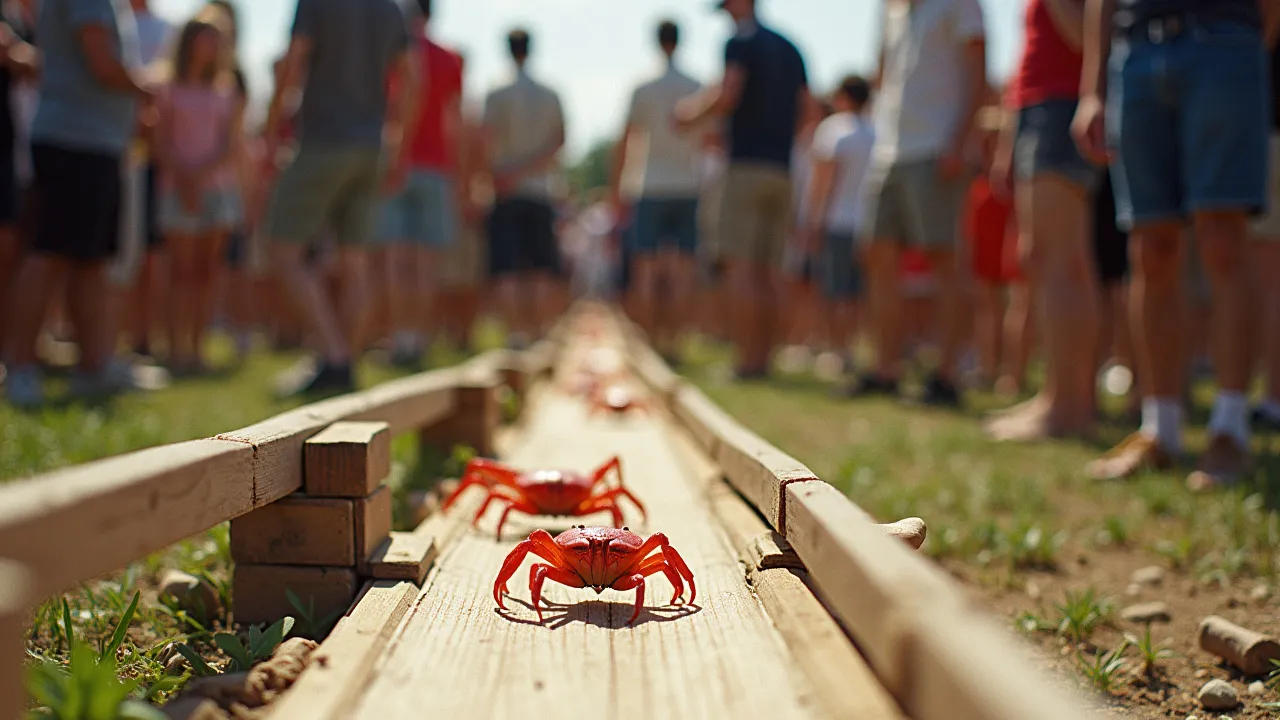
Celebrated on February 17th, Champion Crab Races Day honors the quirky tradition of racing hermit crabs. Originating in coastal towns, this day combines community fun with environmental awareness about crab habitats.
The Historical Origins & Evolutionary Journey of Champion Crab Races Day
Champion Crab Races Day, observed annually on February 17th, traces its roots to a small coastal town in Oregon. In 1992, local journalist and marine enthusiast Jim Bob Carter organized the first unofficial crab race as a playful fundraiser for beach cleanup efforts. What began as a handful of hermit crabs scuttling across a makeshift track quickly grew into a beloved community event.
The Foundational Catalyst
The original catalyst was a debate in a local newspaper about the intelligence of crabs. Carter proposed a race to settle the argument. The event gained media coverage and attracted visitors, leading to an annual tradition. By 1995, the town officially adopted February 17th as Crab Race Day, later renamed Champion Crab Races Day to emphasize the competitive spirit.
Legislative/Official Adoption
In 1998, the Oregon State Legislature passed a resolution recognizing the day, citing its positive impact on tourism and marine conservation. Other coastal states soon followed, with variations in rules and timing. However, February 17th remained the primary date for its founder’s birthday and favorable winter weather for indoor racing.
Modern Global Legacy
Today, the event is celebrated in over 20 countries. While the racing remains central, the day now includes educational workshops on crab habitats, sustainable seafood practices, and marine biology. The event has also inspired similar races for other crustaceans, though the hermit crab remains the star athlete.
How to Celebrate Champion Crab Races Day
Whether you’re a seasoned racer or a first-timer, celebrating Champion Crab Races Day involves more than just watching crabs run. Here is the ultimate guide to experiencing the day to its fullest.
Organizing a Race
- Choose a venue: A flat, non-slippery surface like a wooden table or a smooth floor. Ensure it’s enclosed to prevent escapes.
- Acquire participants: Use hermit crabs from ethical sources or adopt them from pet stores. Avoid wild-caught crabs to protect ecosystems.
- Set up the track: Mark a starting line and a finish line about 3-5 feet apart. Add gentle obstacles like small rocks or seashells for excitement.
- Rules: No touching the crabs after the start. The first crab to cross the finish line wins.
Community Celebrations
- Schools: Host educational sessions about crustacean biology and marine conservation. Combine with a race for hands-on learning.
- Corporate events: Organize team-building races with donated crabs. Offer prizes for best race names and fastest crabs.
- Global variations: In Japan, races are held on tatami mats with origami decorations. In Australia, races often include a barbecue and live music.
Remember that the welfare of the crabs comes first. Ensure they are handled gently, given water breaks, and returned to their habitats or cared for after the event.
Environmental Impact and Conservation Efforts
Champion Crab Races Day is more than fun and games; it has become a platform for marine conservation. Many organizers partner with organizations like Ocean Conservancy to promote responsible crab ownership and habitat protection.
Threats to Hermit Crabs
Hermit crabs face habitat loss due to coastal development, pollution, and over-collection for the pet trade. The popularity of crab races has raised awareness about these issues.
- Habitat destruction: Mangrove forests and tidal pools are critical for crab survival. Events often include clean-up drives.
- Invasive species: Some races accidentally introduce non-native crabs. Strict biosecurity measures are now recommended.
Positive Outcomes
Since the day’s inception, over $2 million has been raised for coastal conservation. Educational materials distributed on February 17th reach millions of people. Some regions have even established crab sanctuaries inspired by the event.
The Science of Crab Racing: Behavior and Training
Crab racing might seem random, but there is science behind it. Hermit crabs (Paguroidea) are motivated by food, safety, and social cues.
Why Do They Race?
Crabs do not understand competition. When placed on a track, they naturally move toward shelter or food. Race organizers often place a small piece of fruit or a dark box at the finish line to encourage forward movement.
- Speed factors: Temperature, surface texture, and age affect speed. Warmer crabs are more active.
- Training: Some owners claim that gentle handling and familiar scents can improve a crab’s performance, though this is anecdotal.
Ethical Considerations
Scientists emphasize that crabs should not be stressed. Races should be short, with ample rest and hydration between heats. Many events now ban betting to reduce pressure.
Global Traditions and Unique Celebrations
While February 17th is the official date, various regions have adapted the celebration to their cultures.
North America
In the United States, the largest event is held in Florence, Oregon, with over 10,000 attendees. Features include a parade, crab costume contest, and a "Crab King" crowning.
Japan
In Okinawa, crab races are part of a larger marine festival. Participants decorate shells with unique patterns, and races are held on sand tracks near the beach. Winners receive pearls.
Australia
Australian celebrations often coincide with summer barbecues. Races are held on picnic tables, and the crabs are later released into protected rock pools as part of a conservation program.
United Kingdom
In coastal towns like Brighton, pubs host informal races in beer gardens. The event has a pub-to-pub format where crabs race for a plate of fresh fish.
These variations enrich the day’s global tapestry while maintaining the core spirit of fun and education.
Economic and Social Impact of Champion Crab Races Day
Beyond the races, February 17th has become a minor economic driver for many small towns.
Local Business Boost
Hotels, restaurants, and souvenir shops see increased revenue. In Oregon, the event generates an estimated $500,000 annually.
- Employment: Seasonal jobs in event management, animal care, and marketing.
- Charity contributions: Proceeds from entry fees go to marine nonprofits.
Social Cohesion
The day brings together diverse groups – families, scientists, pet owners, and environmentalists. It fosters community pride and intergenerational bonding. Many schools incorporate the event into their curriculum, teaching teamwork and biology.
Critics argue that the event trivializes animals, but proponents counter that the educational benefits and conservation awareness outweigh any frivolity.
Historical Timeline
First unofficial crab race organized by Jim Bob Carter in Yachats, Oregon, as a fundraiser for beach cleanup.
Yachats Town Council officially recognizes February 17th as Crab Race Day, naming it after the winning crab 'Champion'.
Oregon State Legislature passes a resolution making Champion Crab Races Day an annual observance.
First international celebration in Victoria, British Columbia, Canada, with participation from marine biologists.
The event is featured on a national morning show, increasing popularity across the United States.
Launch of the 'Crab Care Pledge' to ensure ethical treatment of racing crabs.
First Crab Racing World Championship held in Sydney, Australia, with competitors from 12 countries.
Virtual races held due to the pandemic; participants streamed races from home using toy crabs.
Over 100,000 people participate globally; funds raised exceed $2 million for marine conservation.