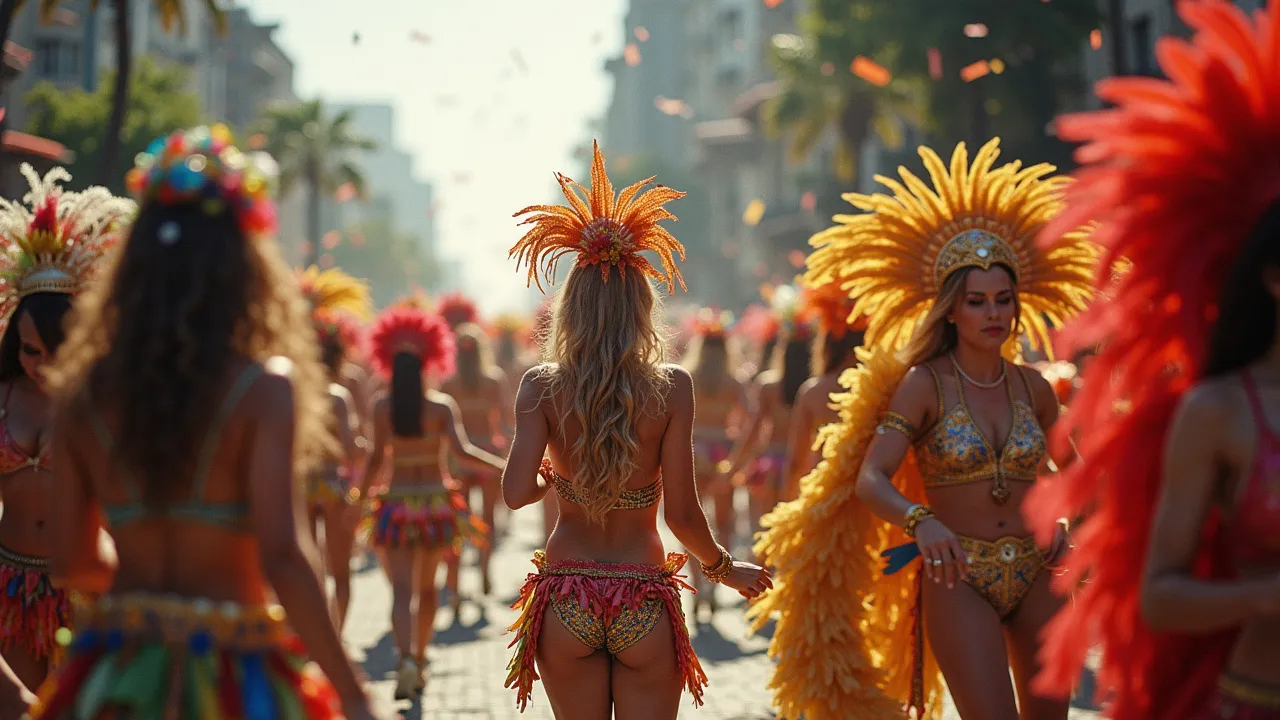
Carnival Day, observed on February 26th, celebrates the vibrant pre-Lenten traditions of carnival worldwide. From colorful parades to elaborate costumes, this day honors the cultural heritage and joyous spirit of carnival festivities.
The Historical Origins & Evolutionary Journey
Carnival is one of humanity's oldest and most widespread celebrations, with roots stretching back thousands of years. The word itself comes from the Latin "carne vale," meaning "farewell to meat," reflecting the Christian tradition of abstaining from meat during Lent. However, the festivities predate Christianity, drawing from ancient pagan rituals that marked the transition from winter to spring.
The Foundational Catalyst
The earliest known carnivals can be traced to ancient Egypt and Rome. The Roman festival of Saturnalia, held in mid-December, involved role reversals, feasting, and public revelry. Similarly, Lupercalia, celebrated in February, featured purification rites and fertility rituals. These festivals allowed social norms to be temporarily overturned, a key element of modern carnival.
As Christianity spread, the Church incorporated these pagan practices into the pre-Lenten period. By the Middle Ages, carnival had become a widespread European tradition, particularly in Catholic countries. The period between Epiphany (January 6) and Ash Wednesday became a time of indulgence before the 40-day fast of Lent. Elaborate masquerade balls, street parades, and theatrical performances became hallmarks of the season.
The Legislative/Official Adoption
Carnival's official recognition varied by region. In Venice, the carnival was formally recognized by the Venetian Republic as early as the 13th century. In Brazil, the Portuguese colonial authorities introduced "Entrudo," a raucous street festival that evolved into the world-famous Rio Carnival. In the United States, Mardi Gras celebrations in New Orleans date back to 1699, when French explorers held a small feast. The first official Mardi Gras parade in New Orleans was organized in 1857 by the Krewe of Comus, a secret society that established many of the traditions still observed today.
Modern Global Legacy
Today, carnival has spread to every continent, adapting to local cultures while maintaining core themes of masked revelry, music, and spectacle. In Trinidad and Tobago, carnival emphasizes calypso and steelpan music. Germany's Karneval season peaks with Rose Monday parades. The Notting Hill Carnival in London celebrates Caribbean culture. Carnival Day, observed on February 26th, serves as a fixed calendar date to appreciate these diverse traditions, even as many actual carnivals follow the movable Lenten calendar.
How to Celebrate Carnival Day
Carnival Day offers a perfect opportunity to engage with this festive tradition, whether you live in a carnival hotspot or far away. Here are actionable ways to celebrate, tailored for individuals, schools, and organizations.
For Individuals and Families
Host a Costume Party: Encourage friends and family to dress in vibrant, creative costumes. Provide masks, feathers, and glitter for DIY accessories.
Cook Traditional Carnival Foods: Make king cake (a Mardi Gras staple), feijoada (Brazilian stew), or frittelle (Italian fritters).
Listen to Carnival Music: Create a playlist featuring samba, calypso, soca, and brass band music. Dance as if no one is watching.
Watch a Parade Online: Many carnivals stream live events. Tune into Rio, Venice, or New Orleans parades from home.
For Schools and Community Groups
Organize a Mini Parade: Have participants create floats from decorated wagons or bicycles. Use recyclable materials to keep it eco-friendly.
Educational Workshops: Teach the history of carnival through mask-making, dance lessons, and storytelling.
Cultural Exchange: Invite community members from different backgrounds to share their carnival traditions.
For Organizations and Corporations
Themed Team-Building: Host a carnival day at the office with games, face painting, and a costume contest.
Charity Bonanza: Organize a fundraiser with a carnival theme, donating proceeds to local arts programs.
Social Media Campaign: Use #CarnivalDay to share photos of celebrations, encouraging global participation.
Global Traditions and Regional Variations
Carnival is celebrated differently around the world, with each region adding its unique flavor. While Carnival Day falls on February 26th, many actual carnival events are tied to the Christian calendar and vary each year. Below are key regional traditions.
Rio de Janeiro, Brazil
Rio's carnival is arguably the world's largest, featuring the Sambadrome parade where samba schools compete with elaborate floats and thousands of dancers. Street parties called "blocos" fill neighborhoods with music and costumed revelers.
Venice, Italy
The Venetian Carnival is famous for its elegant masquerade balls and intricate masks. Participants wear period costumes inspired by the 18th century. The tradition dates back to the 13th century.
New Orleans, USA
Mardi Gras season in New Orleans is a multi-week celebration culminating on Fat Tuesday. Krewes organize parades with throws like beads and doubloons. King cake is a must-eat treat.
Trinidad and Tobago
Trinidad's carnival is renowned for its calypso music, steelpan bands, and energetic soca rhythms. The parade features "mas" (masquerade) bands with elaborate costumes and dancing.
Notting Hill, London
This Caribbean-inspired carnival began in 1966 and now attracts over a million people. It features colorful costumes, sound systems, and Caribbean cuisine.
Germany and Switzerland
German "Karneval" (or "Fasching") includes street parades with jesters and floats, along with political satire. The "Rosenmontag" (Rose Monday) parade is the highlight.
The Significance of Carnival: More Than Just a Party
Carnival is not merely a festive escape; it serves profound social, cultural, and psychological functions. At its core, carnival provides a sanctioned release valve for societal tensions. The temporary suspension of norms allows for critique of authority and experimentation with identity.
Social Commentary
Historically, carnival was a time when peasants could mock the nobility. In Brazil, samba schools often use their parades to comment on political issues. In New Orleans, satirical floats lampoon politicians and celebrities.
Cultural Preservation
Carnival transmits cultural heritage through music, dance, and craftsmanship. African rhythms survive in samba and calypso. Indigenous and European influences blend in costumes and rituals. For diaspora communities, carnival is a vital link to ancestral roots.
Economic Impact
Carnival generates billions in tourism revenue. Rio's carnival alone brings in over $1 billion. It also provides jobs for artists, musicians, costume makers, and vendors. Small businesses rely on carnival season for a significant portion of annual income.
Psychological Well-being
Participating in carnival can boost mental health through communal joy, physical activity, and creative expression. The collective effervescence fosters social bonds and a sense of belonging.
Cultural Impact and Artistic Expression
Carnival has profoundly influenced music, fashion, film, and literature. Its legacy extends beyond the festival season.
Music and Dance
Samba, bossa nova, calypso, soca, and brass band music owe their global popularity to carnival. Dance moves developed in carnival parades often become mainstream in clubs and social events. The syncopated rhythms of carnival music have inspired jazz, soul, and pop.
Fashion and Costume Design
Carnival costumes push creative boundaries with feathers, sequins, and innovative materials. Designers like Bob Mackie and Jean Paul Gaultier have drawn from carnival aesthetics. The masquerade ball tradition has influenced haute couture.
Film and Literature
Films like "Black Orpheus" and "The Wiz" draw on carnival imagery. Novels such as Gabriel García Márquez's "One Hundred Years of Solitude" incorporate carnival as a metaphor for liberation and chaos.
Global Influence
The spread of carnival has led to hybrid celebrations. The Notting Hill Carnival, for example, merges Caribbean traditions with British multiculturalism. In Japan, the "Matsuri" festivals share similarities with carnival. The concept of a temporary, festive world has become a universal cultural export.
Modern Adaptations and Future of Carnival
In the 21st century, carnival faces new challenges and opportunities. Climate change, urbanization, and pandemics have forced adaptations, yet the spirit of carnival endures.
Sustainability Initiatives
Many carnivals are adopting eco-friendly practices. Rio now recycles costumes and floats. New Orleans has banned certain non-biodegradable throws. Brazil's samba schools use sustainable materials like recycled paper and organic dyes.
Digital and Virtual Celebrations
The COVID-19 pandemic spurred virtual carnivals with livestreamed parades and VR experiences. Even after restrictions lifted, digital components remain, allowing global audiences to participate.
Inclusivity and Diversity
Modern carnival increasingly prioritizes inclusivity. LGBTQ+ groups have prominent roles, and there are efforts to represent indigenous and Afro-descendant communities. Trinidad's carnival now has transgender and non-binary categories in competitions.
Commercialization vs. Tradition
While some criticize carnival's commercialization, sponsorship has helped fund elaborate displays. The challenge is balancing authenticity with economic viability. Community-led initiatives and public funding help preserve traditional aspects.
As Carnival Day on February 26th reminds us, this ancient festival continues to evolve, reflecting society's changing values while retaining its core purpose: a brief, joyous suspension of the ordinary.
Historical Timeline
Venice recognizes Carnival officially; first documented masquerade balls.
French explorers hold a Mardi Gras feast in Louisiana, USA.
Rio de Janeiro's first official Carnival parade occurs.
Trinidad's Carnival becomes a major event after emancipation celebrations.
The Krewe of Comus holds the first organized Mardi Gras parade in New Orleans.
Rio's first samba school competition formalizes the parade structure.
Notting Hill Carnival begins in London.
COVID-19 causes mass cancellations; virtual carnivals emerge.