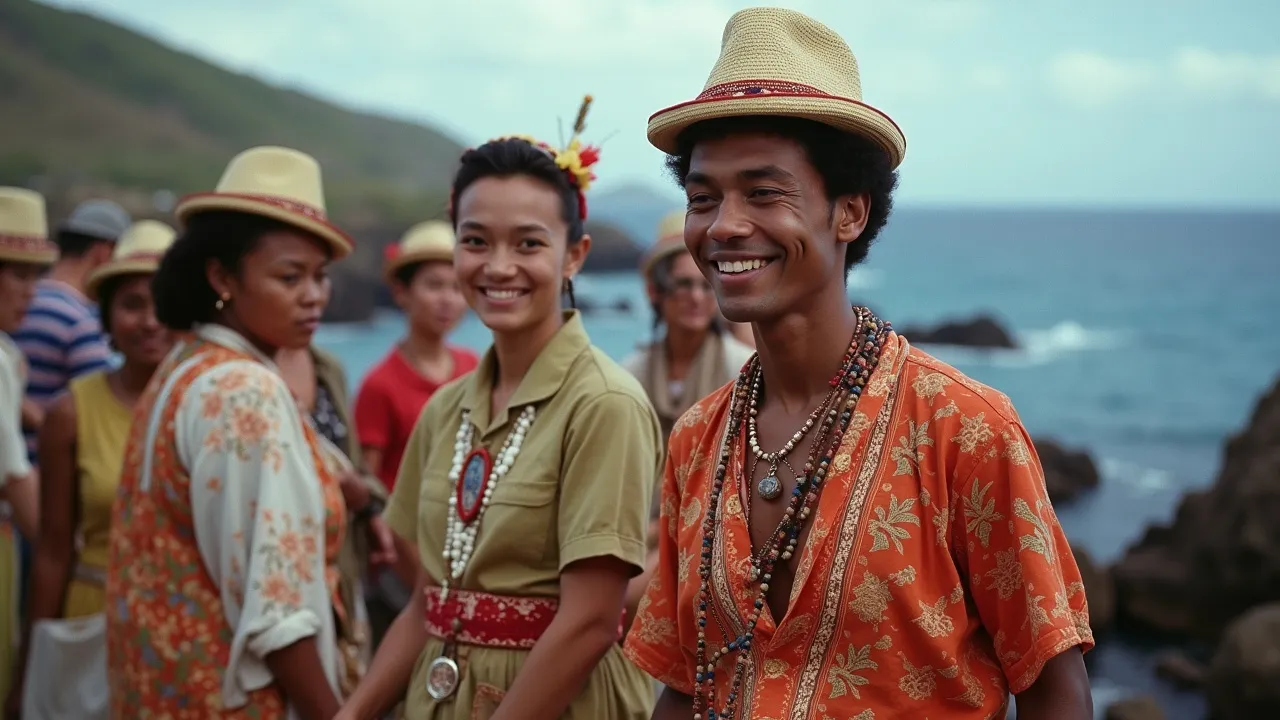
Bounty Day (Pitcairn) on January 23rd commemorates the arrival of the HMS Bounty mutineers and their Tahitian companions in 1790. It is the national day of the Pitcairn Islands, marked by community feasts, boat burning ceremonies, and reenactments.
The Historical Origins & Evolutionary Journey
Bounty Day, observed annually on January 23rd, is the most significant national holiday on the remote Pitcairn Islands. This day marks the landing of the HMS Bounty mutineers and their Tahitian companions in 1790, an event that forever shaped the island's history and culture. The celebration honors the resilience and unity of the Pitcairn community, which descended from those original settlers.
The Foundational Catalyst: The Mutiny on the Bounty
The story begins with the infamous mutiny on April 28, 1789, when acting Lieutenant Fletcher Christian led a rebellion against Captain William Bligh aboard HMS Bounty. Bligh and 18 loyal crewmen were set adrift in a small boat, while Christian and 25 mutineers, along with some Tahitians, searched for a safe haven. After a brief attempt to settle on Tubuai, they returned to Tahiti, where many stayed. Christian and eight other mutineers, accompanied by 12 Tahitian women and six men, sailed eastward and eventually discovered the uninhabited Pitcairn Island on January 15, 1790. They landed and began a new settlement on January 23rd, the day now celebrated as Bounty Day.
The Legislative/Official Adoption
For decades, the descendants of the mutineers celebrated the landing informally. The official designation as a national day came in the early 20th century as the Pitcairn Islands became a British Overseas Territory. The exact year of formal recognition is not precisely documented, but by the 1930s, Bounty Day was firmly established as the primary festive occasion. The island council later codified it as a public holiday, with traditions passed down through generations.
Modern Global Legacy
Today, Bounty Day not only unites Pitcairn's small population (around 50 people) but also attracts global attention from historians, genealogists, and tourists. The celebration symbolizes the triumph of community over adversity and serves as a living link to one of maritime history's most dramatic events. The Pitcairn Islands Government actively promotes the day as a cultural heritage event, with live broadcasts often shared worldwide.
How to Celebrate Bounty Day (Pitcairn)
Celebrating Bounty Day as a Pitcairn Islander or visitor involves participating in deeply rooted traditions that blend British and Polynesian influences. The day typically begins with a church service at the Seventh-day Adventist Church on Pitcairn, reflecting the island's predominant faith. Afterwards, the community gathers for a grand feast featuring local dishes such as fish, taro, breadfruit, and the traditional pilhi (a coconut-based dessert).
Key Traditions and Rituals
Public Reading of the Bounty Mutineers' Names: To honor the ancestors, a roll call is conducted, and the names of the nine mutineers who settled on Pitcairn—including Fletcher Christian, John Adams, and Edward Young—are recited.
Boat Burning Ceremony: A symbolic model of the HMS Bounty is set ablaze, representing the mutineers' decision to destroy their ship to prevent detection and ensure commitment to the island.
Reenactments and Festivities: Locals dress in 18th-century naval attire or traditional Tahitian costumes, performing skits of the landing and engaging in dances, songs, and games.
For Individuals and Families
Learn the history by reading books or watching documentaries about the mutiny.
Prepare a Pitcairn-inspired meal with ingredients like coconut, fish, and root vegetables.
If visiting, book travel well in advance (only accessible by sea) and participate in community events.
For Schools and Organizations
Host a themed lesson on the Bounty mutiny and Pitcairn history.
Organize a small reenactment to engage students.
Support Pitcairn's economy by purchasing handicrafts from the island's online store.
Cultural Significance and Societal Themes
Bounty Day embodies themes of resilience, community cooperation, and cultural fusion. The Pitcairn Islands society is a unique blend of British Protestant values and Tahitian traditions, a heritage that is proudly displayed during the celebrations.
Community Bonding
The entire population of Pitcairn—barely 50 individuals—comes together for the festivities, reinforcing social ties in an isolated environment. The feast, shared work, and collective memory strengthen the island's unity. Outsiders are welcomed warmly, as the holiday also serves to educate visitors about Pitcairn's heritage.
Preservation of Heritage
With only a handful of native speakers of the Pitkern language (a creole of English and Tahitian), Bounty Day plays a crucial role in preserving linguistic and cultural identity. Traditional songs, dances, and stories are passed to younger generations. The day also raises awareness of the island's fragile ecosystem and the challenges of depopulation.
Religious Undertones
While not a religious holiday per se, the church service underscores the Adventist faith that most Islanders follow. The moral lessons of the mutiny—obedience, redemption, and God's providence—are often discussed in sermons, linking spirituality with historical reflection.
Global Impact and Relevance
Although Bounty Day is a local observance, its story resonates worldwide due to the enduring fascination with the mutiny on the Bounty. Hollywood films, books, and pop culture references ensure that the name 'Pitcairn' is recognized globally.
Tourism and Economic Impact
The holiday is a rare opportunity for tourists to experience Pitcairn's unique culture. Visitors often coincide their trips with Bounty Day, providing a vital economic boost. The island's limited tourism industry benefits from increased interest, with souvenir sales and local guides earning income.
Academic and Genealogical Interest
Historians and genealogists worldwide track the descendants of the mutineers, many of whom have spread to New Zealand, Australia, and Norfolk Island. Bounty Day triggers online discussions, DNA studies, and family reunions. The Pitcairn Islands Study Center at Pacific Union College in California often hosts related events.
Media Coverage
News outlets like the BBC, National Geographic, and the Smithsonian frequently feature Bounty Day stories, enhancing the island's profile. This media attention aids in conservation efforts and promotes understanding of Pitcairn's way of life.
Environmental and Ecological Context
Pitcairn Island's environment is integral to its identity. Bounty Day celebrations often incorporate sustainable practices, reflecting the community's dependence on natural resources.
Island Ecology
The island is part of the Pitcairn Islands Group, a UNESCO World Heritage Site candidate. The surrounding waters are part of the Pitcairn Islands Marine Reserve, one of the largest marine protected areas in the world. During Bounty Day, officials may highlight environmental stewardship.
Local Cuisine and Agriculture
The feast features locally grown produce such as bananas, yams, and citrus, as well as fish caught from the surrounding rich waters. The meal underscores the self-sufficiency of the islanders.
Conservation Messages
With climate change threatening low-lying islands, Bounty Day sometimes includes educational components on sustainability. The Pitcairn Islands Council uses the day to promote recycling and reduce plastic use.
Legal and Governmental Aspects
Bounty Day is a public holiday under Pitcairn law. The island's administration, led by the Governor of the Pitcairn Islands (based in New Zealand) and the local Island Council, recognizes the day as a time for reflection and celebration.
Official Proclamations
Each year, the Island Council may issue a proclamation encouraging participation. The British High Commissioner often sends a message of goodwill. The holiday is listed in the official Pitcairn calendar.
Ceremonial Roles
Selected community members lead the events, including the mayor or a designated elder. The burning of the boat is supervised for safety, and the roll call is conducted with solemnity.
International Recognition
While not widely observed elsewhere, Bounty Day serves as a cultural symbol for the United Kingdom's overseas territories. It reinforces Pitcairn's status as a British Overseas Territory with self-governing rights.
Historical Timeline
Mutiny on the Bounty takes place led by Fletcher Christian against Captain William Bligh.
The HMS Bounty mutineers and their Tahitian companions first sight Pitcairn Island.
The mutineers land and establish a settlement on Pitcairn Island, the date now celebrated as Bounty Day.
The American sealing ship Topaz discovers the Pitcairn community, revealing that only one mutineer, John Adams, remains alive.
Pitcairn becomes a British colony, and the population grows as descendants thrive.
First recorded formal celebration of Bounty Day, though informal gatherings likely occurred earlier.
The Pitcairn Islands are officially designated as a British Overseas Territory, with Bounty Day recognized as a public holiday.
Pitcairn's population reaches a modern low of around 50, but Bounty Day continues to unite the community.
The Pitcairn Islands Marine Reserve is established, the largest contiguous marine protected area in the world, highlighting conservation efforts often discussed during Bounty Day.