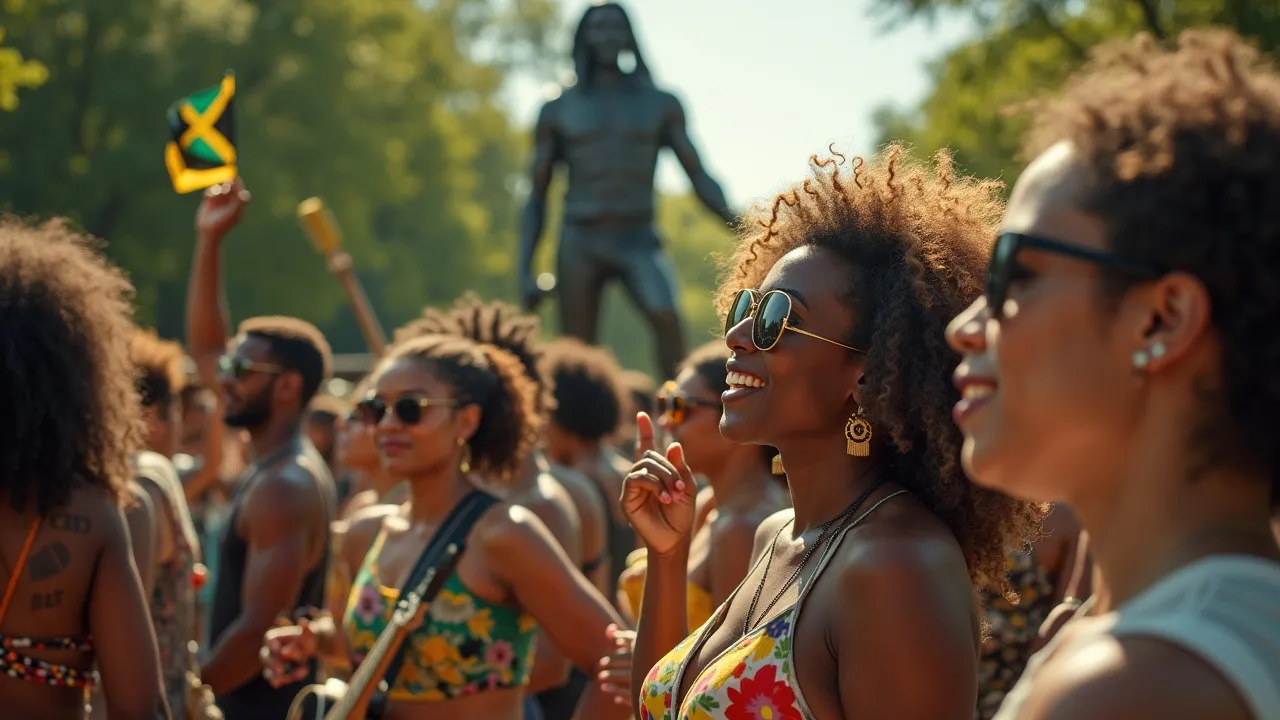
Bob Marley Day, observed on February 6th, honors the legendary reggae musician's life and legacy. Celebrated globally with music, cultural events, and reflections on peace and unity, it marks Marley's enduring influence on music and social justice.
The Historical Origins & Evolutionary Journey of Bob Marley Day
The Foundational Catalyst
Bob Marley, born Robert Nesta Marley on February 6, 1945, in Nine Mile, Saint Ann Parish, Jamaica, rose from humble beginnings to become the global ambassador of reggae music and Rastafarian spirituality. His music, infused with messages of love, resistance, and social justice, transcended borders and resonated with oppressed peoples worldwide. After his untimely death from cancer on May 11, 1981, at age 36, fans and activists began organizing tributes on his birthday. The first large-scale recognition occurred in 1985 when the city of Miami proclaimed February 6 as Bob Marley Day. This grassroots movement gained momentum, leading to official proclamations in cities such as Los Angeles, New York, and London.
The Legislative/Official Adoption
In 1990, the Jamaican government formally declared February 6 as Bob Marley Day, a national day of celebration that, while not a public holiday, is marked by concerts, educational events, and cultural exhibitions. The observance was further solidified by the United Nations Educational, Scientific and Cultural Organization (UNESCO) which, in 1991, added Bob Marley to its list of world-renowned figures. Over the decades, the day has evolved from a small fan tribute to an international phenomenon, with each region adding its own flavor.
Modern Global Legacy
Today, Bob Marley Day is celebrated on six continents. In Ethiopia, where Rastafari consider Marley a prophet, the day is marked with spiritual ceremonies. In Australia, reggae festivals coincide with the date. The digital age has expanded reach: live streams, social media campaigns, and virtual concerts engage millions. The day now also serves as a platform to promote causes Marley championed: racial equality, environmentalism, and peace.
How to Celebrate Bob Marley Day: A Global Guide
Individual and Family Celebrations
- Listen to Bob Marley's Discography: Create a playlist spanning from Catch a Fire to Uprising. Pay attention to lyrics of resistance and unity.
- Cook Jamaican Cuisine: Prepare traditional dishes like jerk chicken, rice and peas, or plantains. Share a meal with family while playing reggae music.
- Wear Rastafari Colors: Don green, gold, and red—the colors of the Ethiopian flag and Rastafari movement—to show solidarity.
- Visit a Local Reggae Event: Many cities host concerts, art exhibits, or film screenings. Check community calendars.
Community and School Events
- Organize a Reggae Battle of the Bands: Encourage local musicians to perform Marley covers. Award prizes for authenticity and spirit.
- Host a Documentary Night: Screen Marley (2012) or Bob Marley: The Making of a Legend followed by group discussions on his impact.
- Educational Workshops: Teach about Rastafarianism, reggae history, and social justice. Use primary sources like Marley's interviews.
Corporate and Organizational Rituals
Businesses can implement a 'One Love' day: encourage employees to volunteer for social causes, donate to charities supporting education in Jamaica, or host a diversity and inclusion seminar inspired by Marley's message of unity. Restaurants can offer special reggae-themed menus. Retailers may promote Bob Marley merchandise with proceeds going to the Bob Marley Foundation.
Regional Variations
In Jamaica, the day begins with a sunrise gathering at Nine Mile, Marley's birthplace, followed by a street parade in Kingston. In London, the annual Bob Marley Tribute Concert at the O2 Arena features top reggae acts. In the United States, cities like Austin, Texas, hold a 'Reggae Fest' on the nearest weekend, while New York City's 'Bob Marley Birthday Bash' at the Apollo Theater is iconic. In Brazil, fans gather on Copacabana Beach for a massive drum circle. Each region infuses local culture while honoring Marley's core ideals.
Global Impact and Cultural Significance
Bob Marley Day transcends mere music appreciation; it is a cultural touchstone that underscores the power of art to unite. Marley's lyrics, such as "One Love" and "Get Up, Stand Up," have become anthems for human rights movements. The day is used by activists to highlight ongoing struggles: in 2020, virtual events focused on police brutality; in 2022, climate change activism took center stage. UNESCO's recognition of Marley as a global icon has also boosted tourism to Jamaica, with February becoming a peak month for reggae tourism. The day's economic impact is significant, generating revenue for local musicians, vendors, and cultural institutions. Moreover, it fosters cross-cultural dialogue: in Cuba, state-sponsored events blend reggae with son and salsa; in Japan, reggae dancehall competitions are held. The day proves that Marley's message of love and resistance is universal.
The Musical Legacy: Reggae's Enduring Influence
Bob Marley's Musical Innovations
Bob Marley and the Wailers pioneered a distinctive sound that combined Jamaican ska and rocksteady with rhythm and blues, creating reggae's signature off-beat rhythms. Albums like Exodus (1977) and Legend (1984) remain bestsellers, introducing reggae to global audiences. Marley's vocal style—raw, soulful, and passionate—influenced countless artists across genres, from punk to hip-hop.
Influence on Modern Music
Reggae's DNA is present in the work of artists like Bob Dylan, Eric Clapton (who covered "I Shot the Sheriff"), and Rihanna. The annual Bob Marley Day concerts often feature collaborations between reggae veterans and pop stars, bridging generations. Today, reggae festivals worldwide (e.g., Reggae Sumfest, Rototom Sunsplash) owe their existence to Marley's pioneering international tours.
Rastafari Spirituality and Social Justice Themes
Bob Marley was a devout Rastafarian, and his music was a vehicle for the movement's principles: the divinity of Haile Selassie I, the use of cannabis as a sacrament, and the call for repatriation to Africa. Bob Marley Day is a moment to explore these themes. Many events include Nyabinghi drumming sessions and reasoning circles. The day also emphasizes social justice: Marley's song "War" recycles a speech by Haile Selassie, calling for racial equality. In recent years, the day has been used to advocate for cannabis legalization, with activists organizing smoke-ins and educational forums. The intersection of spirituality and activism is a core part of the observance.
Economic and Tourism Dimensions of Bob Marley Day
February 6 has become a significant driver for Jamaica's economy. The month sees a surge in tourism as fans visit Marley's birthplace in Nine Mile, the Bob Marley Museum in Kingston, and other sites. Hotels offer packages, airlines add flights, and local artisans sell reggae memorabilia. The global celebration also generates revenue: concert tickets, merchandise, and streaming royalties spike. The Bob Marley Foundation uses the day to launch fundraising campaigns for education and healthcare in rural Jamaica. In cities like Toronto and London, the day boosts local economies through festivals that attract tourists. The event has even influenced smaller businesses: reggae bars and restaurants see increased foot traffic, and reggae-themed merchandise becomes a seasonal bestseller.
Historical Timeline
Bob Marley is born on February 6 in Nine Mile, Jamaica.
Marley forms The Wailers with Peter Tosh and Bunny Wailer, releasing early hits like 'Simmer Down'.
The album 'Catch a Fire' introduces reggae to international audiences.
Release of 'Exodus', named Album of the Century by Time magazine.
Bob Marley dies on May 11. Fans begin annual tributes on his birthday.
Miami becomes the first city to officially proclaim February 6 as Bob Marley Day.
Jamaica declares February 6 as Bob Marley Day, a national day of celebration.
Bob Marley receives a Grammy Lifetime Achievement Award.
Virtual Bob Marley Day events are held globally due to the COVID-19 pandemic.
Bob Marley Day is celebrated in over 50 countries, with major festivals in Kingston, London, and New York.