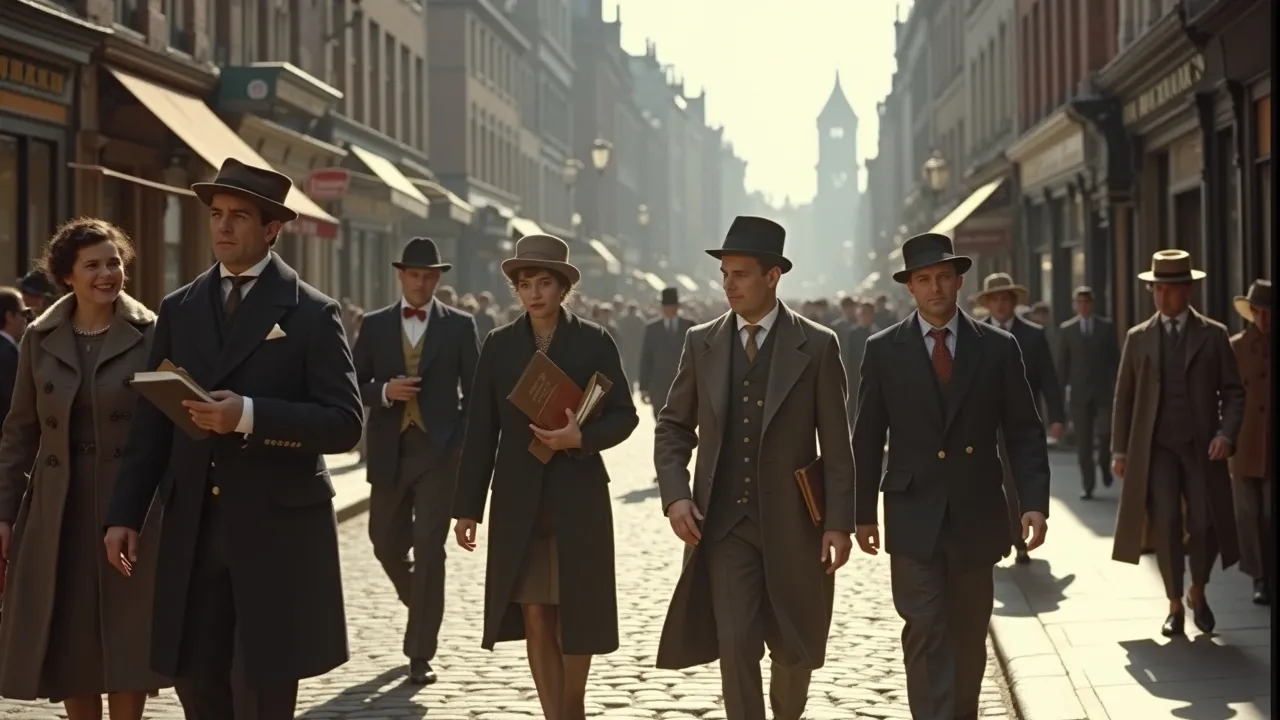
Bloomsday, celebrated on June 16th, honors James Joyce's literary masterpiece Ulysses and its protagonist Leopold Bloom. Fans worldwide reenact scenes from the novel, particularly in Dublin, Ireland.
Historical Origins & Evolutionary Journey
Bloomsday commemorates the life and work of James Joyce, one of the most influential writers of the 20th century, and specifically his landmark novel Ulysses. The day is named after Leopold Bloom, the protagonist of the novel, whose wanderings through Dublin on June 16, 1904 form the core of the narrative. The first informal celebrations took place in 1954, when Joyce enthusiasts in Dublin decided to retrace Bloom's steps, marking the 50th anniversary of the fictional events.
The Foundational Catalyst
The idea of Bloomsday was born from a desire to keep Joyce's legacy alive and to celebrate the modernist literary revolution he spearheaded. In 1954, on the 50th anniversary of the novel's setting, a group of Irish writers and artists, including Patrick Kavanagh and John Ryan, organized a pilgrimage to the Martello Tower in Sandycove, the opening location of the novel. This small gathering evolved into an annual tradition, with more participants joining each year.
The Legislative/Official Adoption
Over the decades, Bloomsday gained official recognition. In 1982, for the centenary of James Joyce's birth, Dublin hosted a grand celebration with events and performances. By 1999, the Irish government acknowledged Bloomsday as part of Ireland's cultural heritage, and in 2004, the centenary of the fictional June 16th, massive festivities were held with international participation. Today, Bloomsday is celebrated in over 60 countries.
Modern Global Legacy
Bloomsday has transcended its Irish roots to become a global literary phenomenon. Festivals now occur in cities like New York, Budapest, and Melbourne, featuring readings, walking tours, and period-accurate costumes. The day serves as a reminder of the universality of Joyce's themes—identity, nationality, and the human experience—and continues to attract new generations of readers and scholars.
How to Celebrate Bloomsday
Celebrating Bloomsday can be as simple or elaborate as you wish. The essence lies in engaging with James Joyce's Ulysses and immersing oneself in the world of Leopold Bloom. Here are definitive ways to observe the day, from personal to communal activities.
For Individuals
- Read excerpts from Ulysses — Focus on the episodes that correspond to the time of day. Many online resources provide a reading schedule.
- Attend a reading or lecture — Libraries and universities often host events on or near June 16th.
- Dress in Edwardian attire — Putting on a period hat, suit, or dress adds authenticity, especially if you join a walking tour.
- Cook a Bloom-themed meal — Ulysses is famous for its food descriptions; try a gorgonzola sandwich or a glass of burgundy wine.
For Groups and Organizations
- Organize a walking tour — Follow the path of Leopold Bloom around Dublin using maps from the novel. Key stops include Davy Byrne's Pub and the National Library.
- Host a pub crawl — Visit the same pubs mentioned in the book, such as Kiernan's and the Ormond Hotel.
- Stage a marathon reading — Gather volunteers to read the entire novel aloud over 24 hours, a tradition in many cities.
- Hold a costume contest — Encourage participants to dress as characters from the novel, with prizes for best accuracy.
Global Celebration Variations
In Dublin, the official Bloomsday Festival features street theater, concerts, and guided tours. In the United States, the James Joyce Center in New York hosts events, as do universities like Boston College. In Australia, Bloomsday is often celebrated with a picnic in the park, reflecting the summer season Down Under. The common thread is a deep appreciation for Joyce's work and a sense of community among fans.
Global Impact and Cultural Significance
Bloomsday has become a symbol of literary tourism and cultural heritage. The day contributes significantly to Dublin's economy, drawing thousands of visitors each year. Beyond economics, it fosters a global literary community united by a shared love for a challenging yet rewarding novel. The event also highlights the themes of identity and exile that permeate Joyce's work, resonating with diasporic communities worldwide. UNESCO has recognized Ulysses as a world heritage text, and Bloomsday serves as a living tribute to its enduring relevance.
Educational Outreach
Many schools and universities incorporate Bloomsday into their curricula, using the day to introduce students to modernist literature. Workshops on Joyce's language, Dublin geography, and Irish history are common. Some institutions offer study-abroad programs timed with Bloomsday, allowing students to experience the setting firsthand.
Influence on Popular Culture
Bloomsday has inspired references in film, music, and art. Movies like Nora (2000) and Bloom (2003) depict Joyce's life and the novel's action. Musicians have composed pieces based on episodes, and visual artists create works themed around Bloom's journey. The day even influences fashion, with vintage clothing seeing a surge in popularity each June.
Literary and Thematic Breakdown of Ulysses
Ulysses is a sprawling modernist novel that parallels Homer's Odyssey. Set on June 16, 1904, it follows Leopold Bloom's wanderings around Dublin and his eventual meeting with Stephen Dedalus, Joyce's alter ego. The novel is divided into 18 episodes, each with a unique style and corresponding to a Homeric episode. Key themes include:
- Identity and the Self — Bloom, a Jewish-Irish outsider, struggles with his sense of belonging. Stephen grapples with artistic and intellectual isolation.
- The Ordinary vs. The Epic — Joyce elevates mundane activities like breakfast and a funeral to epic proportions, underscoring the significance of everyday life.
- Nationalism and Colonialism — The novel critiques Irish nationalism and British colonialism through characters like the Citizen, a Fenian nationalist.
- Body and Materiality — Joyce unflinchingly depicts bodily functions and sexual desires, challenging Victorian sensibilities.
Reading Ulysses is often a group activity on Bloomsday, with participants savoring the richness of Joyce's prose and his deep connection to Dublin.
Modern Adaptations and Festivities
Bloomsday has evolved from a small gathering to a multi-day festival. The Dublin Bloomsday Festival now spans a week with events such as:
- The Martello Tower Open Day — Visitors can explore the tower where Ulysses begins.
- The Bloomsday Fringe — A series of offbeat events including speed-reading competitions and trivia nights.
- Breakfast with James Joyce — A reenactment of the novel's first episode, complete with a kidney breakfast.
- Street performances — Actors perform scenes from the book at key locations.
Outside Ireland, celebrations range from small book club readings to large-scale galas. In Trieste, Italy (where Joyce lived for a time), the city hosts a program of lectures and walks. In Japan, Ulysses fans gather for a marathon reading in Tokyo. Digital adaptations have also emerged, with virtual tours and online readings enabling global participation.
Notable Locations and Walking Tours
Dublin is a character in Ulysses, so visiting its landmarks is essential. Key locations include:
- Martello Tower at Sandycove — Where Episode 1 takes place.
- Nelson's Pillar (now destroyed) — Mentioned in the novel; a spire now stands at the site.
- Davy Byrne's Pub — Where Bloom stops for a gorgonzola sandwich and burgundy.
- National Library of Ireland — Setting for the Scylla and Charybdis episode.
- Glasnevin Cemetery — Scene of Paddy Dignam's funeral.
- Brothel district (Monto) — The Circe episode takes place here.
Many walking tours follow Bloom's route, which spans about 15 miles. Some are guided by experts who explain the historical and literary context. For DIY tours, maps are available online. Video tours and immersive apps also allow virtual exploration.
Historical Timeline
James Joyce begins writing Ulysses, set on June 16, 1904, which corresponds to his first outing with Nora Barnacle.
Ulysses is published by Shakespeare and Company in Paris; Bloomsday is yet to be celebrated.
First informal Bloomsday celebration: Joyce enthusiasts including Patrick Kavanagh and John Ryan retrace Bloom's journey in Dublin.
Centenary of James Joyce's birth; Dublin holds major events that draw international attention to Bloomsday.
The Irish government officially recognizes Bloomsday as part of Ireland's cultural calendar.
Centenary of the fictional June 16, 1904; Dublin hosts a week-long festival with over 100 events.
Bloomsday is celebrated in over 60 countries; UNESCO adds Joyce's manuscripts to its Memory of the World Register.
Centenary of Ulysses publication; global celebrations, especially in Dublin, with virtual events due to post-pandemic adjustments.