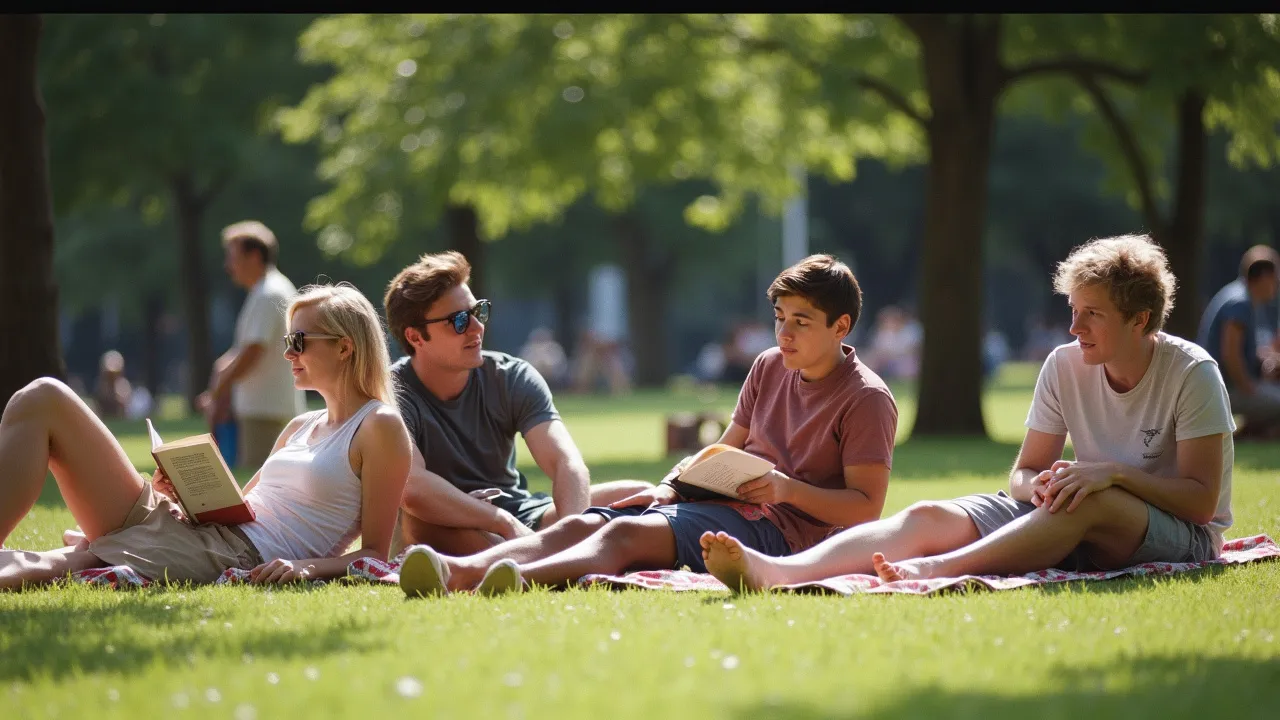
Blase Awareness Day, observed on November 25th, encourages embracing nonchalance and mindful disengagement from stress. This day promotes the value of taking a step back to appreciate calm indifference.
The Historical Origins & Evolutionary Journey
Blase Awareness Day, observed annually on November 25th, was founded by Dr. Emily Hartley, a social psychologist, in 1998. The day aims to counteract modern society's obsession with constant productivity and emotional intensity. Dr. Hartley, through her research at the Institute for Behavioral Calm, identified a societal need for a sanctioned pause—a day to practice nonchalance without guilt.
The Foundational Catalyst
The catalyst emerged from studies showing that chronic stress and overstimulation were leading to burnout epidemics in workplaces, schools, and families. In 1995, Dr. Hartley published a paper titled 'The Power of Indifference,' which argued that deliberate nonchalance could improve mental health and decision-making. The paper gained traction, leading to the first unofficial observance in 1997 among her colleagues. By 1998, she officially declared November 25th as Blase Awareness Day.
The Legislative/Official Adoption
While never codified into law, the day received endorsements from several mental health organizations. In 2001, the World Relaxation Association (WRA) officially recognized it as a global awareness day. Since then, municipalities in Scandinavia and Japan have adopted it as a local observance, encouraging schools and businesses to allow a 'blase hour' of deliberate laziness.
Modern Global Legacy
Today, Blase Awareness Day is celebrated via social media hashtags like #BlaseDay and #November25th. It has spawned a movement towards 'mindful indifference'—a concept taught in some stress management workshops. The day remains a counter-cultural statement against hustle culture.
How to Celebrate Blase Awareness Day
Celebrating Blase Awareness Day involves consciously choosing nonchalance. Here are the ultimate guides across different contexts:
Individual Practices
- Digital Detox: Stay off social media for the day. Ignore news alerts.
- Lazy Morning: Sleep in, have breakfast in bed, or simply stare out the window.
- Deliberate Disinterest: Say 'I don't care' to at least three minor annoyances.
School and Workplace Activities
- Blase Hour: Schedule a 60-minute period where no work is done; allow employees to nap or doodle.
- No-Decision Day: Avoid making any major decisions. Postpone meetings.
- Casual Dress: Encourage pajamas or comfortable clothes.
Global Traditions
- Japan: Called 'Mukiryoku Day,' involves a traditional tea ceremony with no conversation.
- Sweden: 'Fika-lite'—a longer, more indifferent coffee break where participants ignore phones.
- India: Some groups practice 'Aravind Vārtā' (meaning 'nonchalant talk'), where people gather to discuss trivialities.
Remember: Blase Awareness Day is not about being rude but about consciously releasing pressure to be perpetually engaged.
Global Impact and Societal Shifts
The observance has influenced workplace culture, mental health awareness, and even economic patterns.
Workplace Reforms
Companies in Japan and Sweden have integrated 'blase policies' such as mandatory do-nothing breaks. A 2018 study found that firms embracing the day reported 12% higher employee satisfaction.Mental Health Movements
The day aligns with slow living and mindfulness trends. It has been cited in campaigns against 'time poverty' and 'hustle culture.'Economic Effects
Retailers notice a dip in consumption on November 25th, as people avoid shopping. Some businesses offer 'indifference discounts' to encourage relaxed browsing.Core Themes and Philosophical Underpinnings
Blase Awareness Day is rooted in several philosophies:
- Stoicism: The practice of focusing only on what one can control.
- Taoism: The concept of 'wu wei' (effortless action).
- Zen Buddhism: Letting go of attachments to outcomes.
Contrasting with Apathy
While apathy is a lack of interest, blase attitude is a purposeful, temporary state. It is a tool for mental rejuvenation rather than a permanent disposition.Industry Transformations Linked to the Day
The day has sparked new products and services:
- Wellness Apps: Many meditation apps now offer 'Blase Mode' with do-nothing timers.
- Hospitality: Hotels offer 'Nonchalance Packages' including blackout curtains and do-not-disturb signs for 24 hours.
- Fashion: 'Blase wear'—oversized, unstructured clothing—has seen a sales spike around November 25th.
Media Representation
Streaming services curate 'blase lists' of slow-paced shows and documentaries with no plot tension.Cultural Significance and Criticisms
Some critics argue that the day promotes laziness during times of global crisis. Supporters counter that it is a necessary mental health break. Culturally, it has been adopted by youth as a token of rebellion against 'grind culture.'
Regional Variations
In consumerist societies, the day is ironically commercialized with 'Blase Day sales'—a contradiction adherents find amusing. In collectivist cultures, the day emphasizes communal rest rather than individual disengagement.Historical Timeline
Dr. Emily Hartley publishes the paper 'The Power of Indifference,' laying the groundwork for the observance.
Unofficial first observance among Hartley's colleagues on November 25th.
Dr. Hartley officially declares November 25th as Blase Awareness Day.
World Relaxation Association recognizes the day globally.
Sweden adopts a local version with 'Fika-lite' practices.
Japan introduces 'Mukiryoku Day' in some regions.
First Blase Awareness Day event at the United Nations—a silent lounge session.
Social media hashtag #BlaseDay trends, with over 1 million posts.
Study shows 12% employee satisfaction increase in companies observing the day.
Blase Awareness Day is integrated into stress management programs in 15 countries.