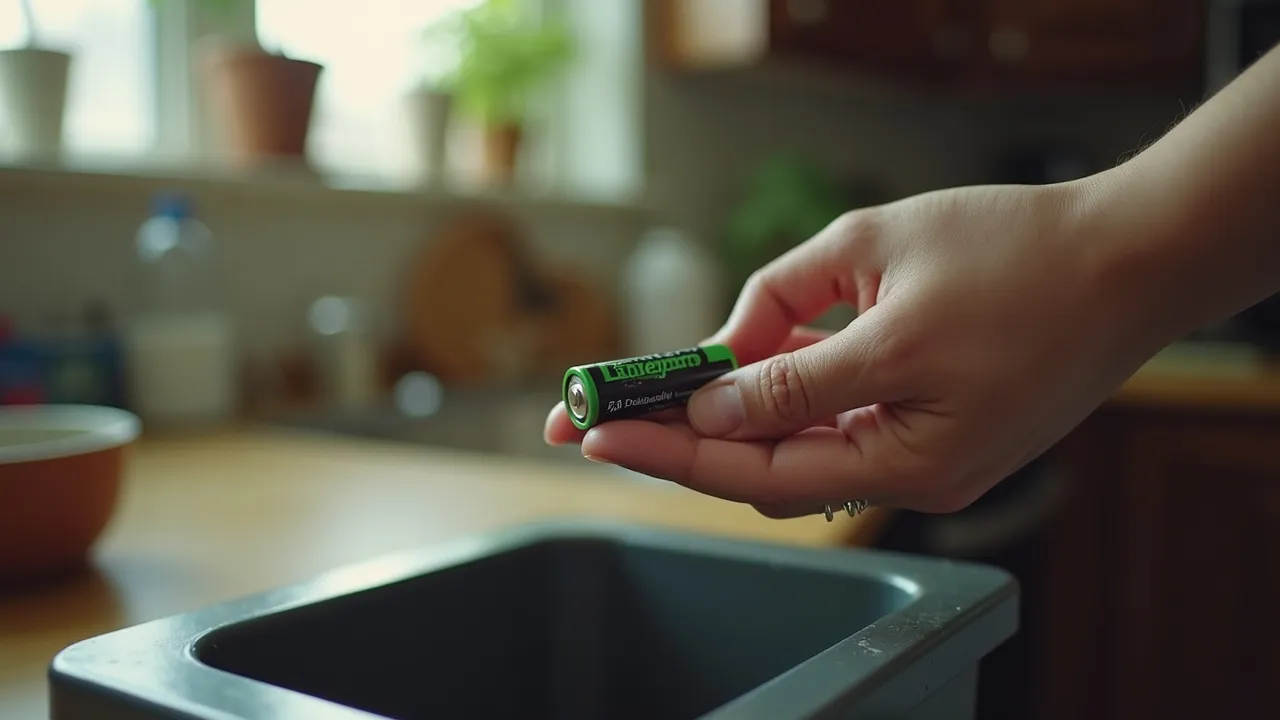
Observed on February 18th, Battery Day honors the invention and impact of batteries in modern life. It promotes battery recycling, innovation, and awareness of sustainable energy storage.
The Historical Origins & Evolutionary Journey
Battery Day, observed on February 18th, commemorates the birth of Alessandro Volta (February 18, 1745), the inventor of the first true battery – the Voltaic pile. Volta's groundbreaking discovery in 1800 provided a continuous source of electrical current, revolutionizing science and technology. The day was later embraced by the battery industry in the United States as National Battery Day to promote battery recycling and innovation. Over time, it has grown into a global awareness day.
The Foundational Catalyst: Volta's Pile
Alessandro Volta's invention consisted of alternating discs of zinc and copper separated by brine-soaked cloth. This stack produced a steady electric current, disproving prevailing theories and sparking the field of electrochemistry. Volta's work laid the foundation for all subsequent battery development.
Legislative and Official Adoption
While Battery Day is not a federal holiday, it is recognized by environmental agencies, recycling programs, and battery manufacturers. In the US, organizations like Call2Recycle use February 18th to launch recycling campaigns. The United Nations Environment Programme also acknowledges the day in the context of sustainable energy.
Modern Global Legacy
Today, Battery Day highlights the critical role of batteries in portable electronics, electric vehicles, and renewable energy storage. It emphasizes the need for responsible disposal and recycling to mitigate environmental harm. The observance has expanded to include discussions on lithium-ion batteries, solid-state technology, and the circular economy.
How to Celebrate Battery Day
Battery Day offers numerous ways for individuals, schools, and organizations to participate. Below are actionable strategies to celebrate responsibly and educationally.
For Individuals
- Recycle used batteries: Find a local battery drop-off location through Earth911 or Call2Recycle.
- Switch to rechargeable batteries: Reduce waste by using NiMH or lithium-ion rechargeables.
- Educate yourself: Read about battery chemistry, recycling processes, and future technologies.
For Schools and Educators
- Hands-on science activities: Build a simple lemon battery to teach electrochemistry.
- Guest speakers: Invite engineers or environmentalists to discuss battery innovation.
- Recycling drives: Organize a school-wide battery collection event.
For Organizations and Businesses
- Launch a recycling program: Implement in-office battery recycling bins.
- Share educational content: Use social media to post about battery safety and sustainability.
- Sponsor research: Donate to groups working on battery technology or recycling infrastructure.
Different countries have unique traditions. In Japan, companies hold exhibits on battery technology. In Germany, recycling centers offer special drop-off hours. In India, NGOs conduct awareness workshops in rural areas.
The Global Impact of Batteries
Batteries have transformed nearly every aspect of modern life. From powering medical devices to enabling the smartphone revolution, their impact is immeasurable. However, the environmental costs – mining for lithium, cobalt, and nickel, plus disposal hazards – pose significant challenges. Battery Day serves as a call to action for sustainable innovation.
Environmental Benefits of Recycling
- Recovers valuable metals: Up to 95% of battery materials can be reclaimed.
- Reduces toxic waste: Keeps heavy metals like lead and mercury out of landfills.
- Conserves resources: Less mining needed for new batteries.
Technological Advancements
Research in solid-state batteries, sodium-ion, and flow batteries promises safer, longer-lasting energy storage. Companies like Tesla and QuantumScape are pushing boundaries, and Battery Day highlights these breakthroughs.
Battery Safety and Disposal Best Practices
Improper disposal of batteries can cause fires and environmental contamination. On Battery Day, education on safe handling is paramount. Here are essential guidelines:
- Do not throw batteries in trash: They can spark when crushed.
- Store used batteries safely: Tape terminals with non-conductive tape (e.g., electrical tape) before storing in a cool, dry place.
- Know your battery types: Alkaline, lithium-ion, nickel-cadmium, and lead-acid each have specific recycling protocols.
- Use designated recycling facilities: Many retailers like Best Buy and Home Depot offer free drop-offs.
For lithium-ion batteries, especially from laptops and phones, never puncture or incinerate them as they can explode.
Battery Day Around the World
While February 18th is the primary date in the US, other regions observe battery-related days on different dates. For example:
- Japan: 'Battery Day' on September 16th, linked to the invention of the Japanese dry cell battery in 1885.
- United Kingdom: 'National Battery Day' on February 18th as well, but with emphasis on recycling campaigns by the British Battery Recycling Association.
- Global: October 14th is sometimes celebrated as 'World Battery Day' by some organizations, though February 18th remains the most accepted.
These regional variations reflect different historical milestones and cultural priorities, but all share the common goals of innovation and sustainability.
The Future of Battery Technology
Battery Day also looks forward to emerging technologies that could reshape energy storage. Key developments include:
- Solid-state batteries: Higher energy density and safety, potential for electric vehicles with 500+ mile range.
- Sodium-ion batteries: Abundant materials, lower cost, suitable for grid storage.
- Lithium-sulfur batteries: Lighter and cheaper, but still in research phase.
- Recycling innovations: Direct recycling methods that preserve cathode structure for reuse.
These advances are critical for achieving global climate goals and electrifying transportation.
Historical Timeline
Alessandro Volta invents the Voltaic pile, the first true battery, providing continuous electrical current.
Gaston Planté invents the lead-acid battery, the first rechargeable battery.
Waldemar Jungner patents the nickel-cadmium battery, later commercialized in the 20th century.
Lewis Urry develops the alkaline battery, leading to longer-lasting portable power.
John Goodenough and colleagues invent the lithium-ion battery, leading to the Nobel Prize in 2019.
Sony commercializes the first lithium-ion battery for portable electronics.
National Battery Day (Feb 18) gains recognition in the US through industry and environmental campaigns.
Tesla Gigafactory opens, ramping up battery production for electric vehicles and energy storage.
Battery Day celebrated globally with virtual events and increased focus on recycling due to COVID-19.