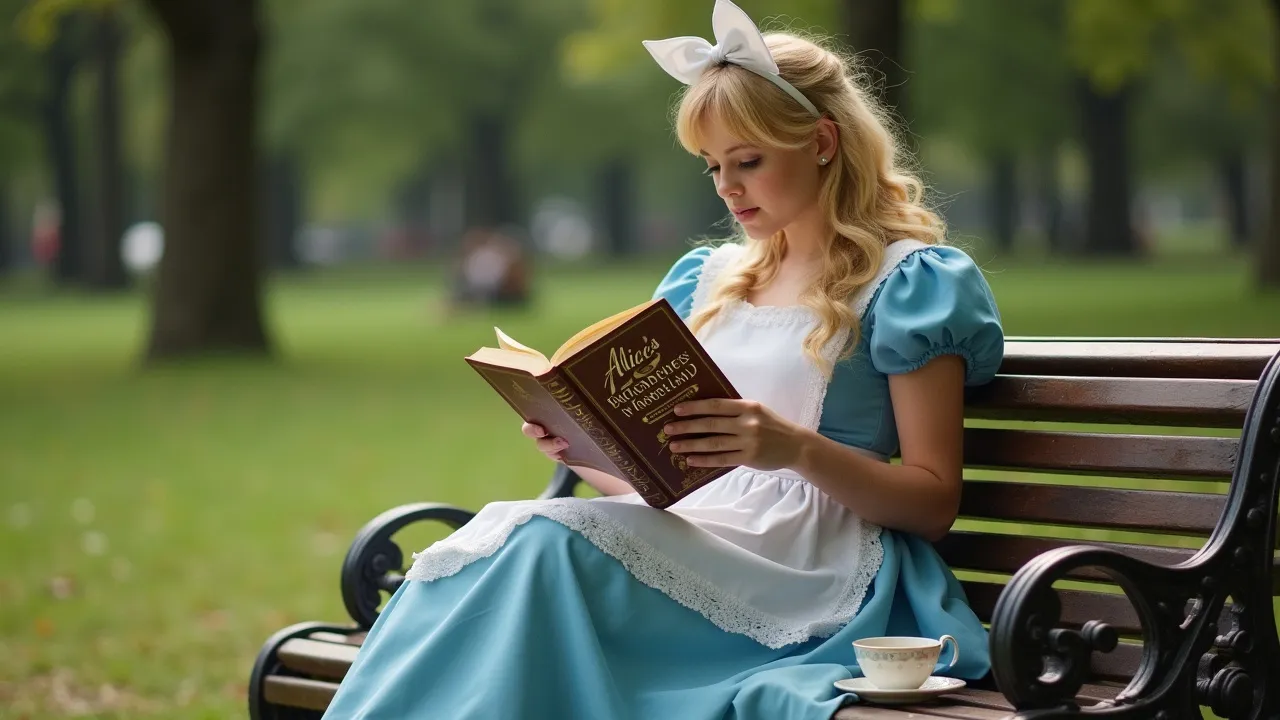
Alice in Wonderland Day, celebrated on July 4th, honors the publication of Lewis Carroll's beloved novel. It invites fans worldwide to explore the whimsical world of Wonderland through readings, costume parties, and creative activities.
The Historical Origins & Evolutionary Journey
Alice in Wonderland Day commemorates the first publication of Lewis Carroll's Alice's Adventures in Wonderland on July 4, 1865. The day has evolved from a quiet literary anniversary into a global celebration of whimsy and imagination.
The Foundational Catalyst
The story began on a boating trip on July 4, 1862, when Charles Lutwidge Dodgson (Lewis Carroll) told a tale to Alice Liddell and her sisters. Three years later, on July 4, 1865, the manuscript was published by Macmillan. The book's instant success sparked a cultural phenomenon.
The Legislative/Official Adoption
Though never officially declared by a government, the day gained recognition through grassroots efforts. In 1996, the Lewis Carroll Society of North America formally announced Alice in Wonderland Day as an annual observance. Since then, libraries, schools, and fan groups have embraced it.
Modern Global Legacy
Today, the day is celebrated on both sides of the Atlantic and beyond. Events include Mad Hatter tea parties, costume parades, and reading marathons. The date remains fixed on July 4th, tied to the original publication.
How to Celebrate Alice in Wonderland Day
Whether you are a lifelong fan or a newcomer, there are countless ways to celebrate. Follow this definitive guide for individuals, schools, and organizations.
For Individuals
- Read the original book aloud or silently. Focus on the wordplay and nonsense verse.
- Host a tea party with mismatched cups, riddles, and jam tarts. Use the iconic "We're All Mad Here" theme.
- Dress up as your favorite character: Alice, the Mad Hatter, or the Cheshire Cat.
- Watch an adaptation like the 1951 Disney film or Tim Burton's 2010 version.
For Schools & Libraries
- Organize a read-aloud session with dramatic voices for each character.
- Hold a Wonderland art contest where students draw scenes or create pop-up cards.
- Teach literary puns and logic puzzles from the book.
Global Variations
In the UK, celebrations often occur at Christ Church, Oxford, where Carroll taught. In Japan, themed cafes serve "Drink Me" potions. Australia hosts beachside costume parades. Each region adds a local twist while honoring the core themes.
Cultural Impact & Societal Themes
Alice in Wonderland has permeated every facet of culture, from art to psychology. Its themes of identity, reality, and absurdity resonate across generations.
Influence on Literature
The book pioneered the literary nonsense genre. Authors like Neil Gaiman and J.K. Rowling cite Carroll as an influence. The phrase "down the rabbit hole" has entered common parlance.
Psychological Archetypes
Psychologists use the "Alice in Wonderland syndrome" to describe perceptual distortions. Characters represent facets of the human psyche: the Queen of Hearts as tyranny, the Cheshire Cat as enigma.
Art and Fashion
Surrealist artists like Salvador Dalí illustrated the book. Fashion designers regularly reference the story's motifs—playing cards, pocket watches, and roses.
The Enduring Legacy of Lewis Carroll
Lewis Carroll's creation continues to enchant new audiences. The book has never been out of print and has been translated into over 100 languages.
Adaptations Across Media
- Film: Over 20 film adaptations, including a 1903 silent version.
- Stage: Broadway musicals and ballet productions.
- Video Games: Interactive adventures like American McGee's Alice.
Educational Value
Teachers use the book to explore logic, math, and vocabulary. The character of Alice embodies curiosity and courage, making her a role model for children.
Collectibles and Memorabilia
First editions are highly prized. Antique teacups, chess sets, and illustrations by John Tenniel are sought after by collectors.
Wonderland Themes & Philosophical Underpinnings
Beneath the whimsy, Carroll embedded deep questions about identity and reality. Alice constantly asks "Who are you?" to others and herself.
The Problem of Identity
Alice changes size, forgets poems, and questions her own existence. This mirrors the human struggle for self-definition in a changing world.
Logic and Nonsense
The Mock Turtle's story, the Mad Tea Party, and the Caucus Race all parody logical structures. Carroll, a mathematician, infused the text with paradoxes.
Authority and Absurdity
The Queen's constant cry "Off with her head!" satirizes arbitrary power. Alice's defiance—standing up to the Queen—shows the triumph of reason over tyranny.
Modern Observances & Global Reach
In the digital age, Alice in Wonderland Day has found new life online. Social media users share quotes, fan art, and costumes using hashtags like #AliceDay.
Official Events
Major celebrations occur at the University of Oxford's Bodleian Library, which hosts exhibitions of Carroll's manuscripts. The Disney theme parks often hold Wonderland-themed parades on July 4th.
Charity Tie-Ins
Some organizations use the day to promote literacy. Book drives and read-a-thons encourage donations of children's books to underserved communities.
Future Trends
Virtual reality experiences and AI-generated Wonderland adventures are emerging. The story's adaptability ensures its relevance for centuries to come.
Historical Timeline
On July 4, Lewis Carroll tells a story to Alice Liddell during a boat trip on the River Thames, forming the basis for Alice's Adventures in Wonderland.
Alice's Adventures in Wonderland is published on July 4 by Macmillan. The first edition sells out quickly.
Carroll publishes The Nursery Alice, a simplified version for young children.
The first film adaptation, a silent film directed by Cecil Hepworth and Percy Stow, is released.
Walt Disney's animated Alice in Wonderland premieres, introducing the story to a global audience.
The Lewis Carroll Society of North America officially declares July 4 as Alice in Wonderland Day.
Tim Burton's live-action Alice in Wonderland starring Mia Wasikowska grosses over $1 billion worldwide.
The 150th anniversary of the book is celebrated with special editions, exhibitions, and worldwide events.