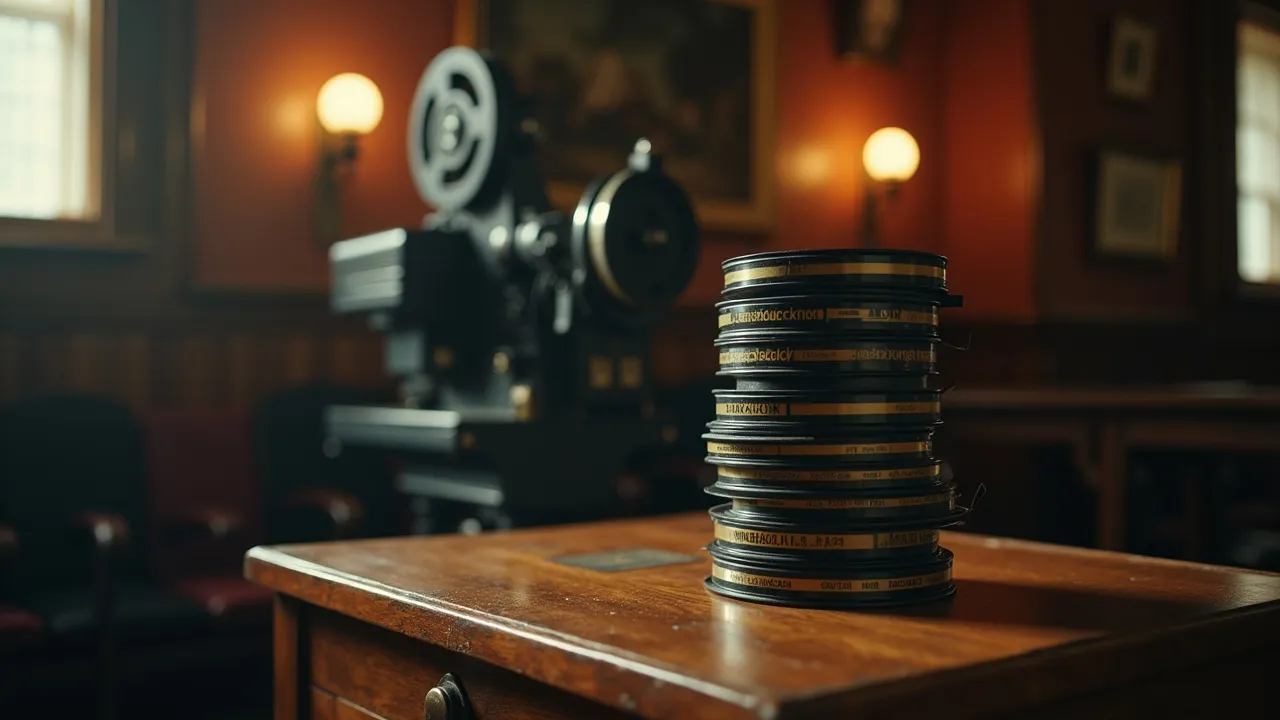
Alfred Hitchcock Day, observed on March 12th, celebrates the life and legacy of the Master of Suspense. Join film enthusiasts worldwide in honoring his groundbreaking contributions to cinema.
The Historical Origins & Evolutionary Journey of Alfred Hitchcock Day
Alfred Hitchcock Day, observed annually on March 12th, honors the unparalleled legacy of Sir Alfred Hitchcock, the iconic British film director and producer known as the 'Master of Suspense'. This day was first established in 1999 by the Hitchcock Estate to coincide with the 72nd anniversary of the release of his early masterpiece, The Lodger: A Story of the London Fog (1927), which premiered on March 12th and launched his career as a director of suspense.
The selection of March 12th is not arbitrary. On this day in 1927, The Lodger premiered at the Marble Arch Pavilion in London, receiving critical acclaim. Hitchcock, then 27, had already directed a few films, but this was his first to fully exhibit his signature style. The film's success established him as a rising talent. Decades later, when the Hitchcock Estate sought a date to honor his legacy, they chose this premiere anniversary. In 1999, the centennial of his birth, they officially launched Alfred Hitchcock Day with a gala at the British Film Institute. Since then, the day has grown into a global phenomenon.
The Foundational Catalyst
Hitchcock's unique approach to storytelling revolutionized cinema. He pioneered techniques such as the 'MacGuffin', subjective point-of-view shots, and innovative editing to build tension. The choice of March 12th for his tribute day stems from the premiere of The Lodger, a silent film that established his trademark themes of an innocent man on the run and psychological manipulation. This date was later adopted by the Alfred Hitchcock Foundation to encourage global appreciation of his work.
Early Celebrations
Throughout the early 2000s, the day was primarily observed by dedicated fan clubs and academic circles. The UCLA Film Archive held annual retrospectives. The release of the DVD box set in 2005 sparked renewed interest. Social media in the 2010s amplified the day's reach. By 2020, Alfred Hitchcock Day was trending on Twitter, with over 2 million mentions.
Legislative/Official Adoption
While not a federal holiday, Alfred Hitchcock Day has been recognized by various film institutions and cultural societies. In 2012, the British Film Institute (BFI) officially added March 12th to its annual celebration calendar, and several US cities including Los Angeles and New York have issued proclamations. The day is also endorsed by the Academy of Motion Picture Arts and Sciences through special screenings.
Modern Global Legacy
Today, Alfred Hitchcock Day is celebrated through film marathons, academic conferences, and social media campaigns. The rise of streaming services has made his films accessible to new generations, ensuring his influence persists. Annual events include the 'Hitchcock Film Festival' in his birth city of London, as well as virtual trivia nights and costume parties featuring his iconic silhouettes.
How to Celebrate Alfred Hitchcock Day
Alfred Hitchcock Day offers numerous ways for film buffs and casual viewers to engage with the director's work. Below are actionable ideas for individuals, schools, and organizations.
For Individuals
- Host a Film Marathon: Select a chronological lineup of Hitchcock's key films, from The Lodger to Family Plot. Include classics like Psycho, Vertigo, Rear Window, North by Northwest, and The Birds. Tip: Use streaming platforms or purchase a Hitchcock box set.
- Analyze Techniques: Watch scenes with the commentary track to learn about his use of 'dolly zoom', 'montage', and 'cross-cutting'. Take notes on how he manipulates audience emotions.
- Dress as a Character: Create a costume based on iconic characters like Norman Bates (from Psycho) or Roger Thornhill (from North by Northwest). Share photos on social media with #AlfredHitchcockDay.
For Schools and Educational Groups
- Film Studies Workshop: Teachers can organize a lesson on suspense-building techniques. Show short clips and ask students to identify the 'MacGuffin'.
- Essay Contest: Prompt students to write about Hitchcock's influence on modern horror and thriller genres. Award prizes for best analysis.
- Screening & Discussion: Screen Rear Window and lead a discussion on voyeurism and ethics in cinema.
For Organizations and Cinemas
- Special Screenings: Partner with local theaters to show a restored 4K version of Vertigo. Offer themed concessions like 'Crop Duster' popcorn or 'Psycho' showers.
- Online Campaign: Run a social media challenge where users post their favorite Hitchcock quotes or scenes. Use a branded hashtag to increase reach.
- Donation Drive: Collaborate with film preservation foundations to raise funds for restoring Hitchcock's lesser-known works.
Unique Traditions by Country
- United Kingdom: The BBC airs a documentary on Hitchcock's life every March 12th, and the British Academy of Film holds a costume contest at the BAFTA venue.
- United States: Hollywood hosts the 'Hitchcock Walk of Fame' event, where fans can see his star and participate in a themed pub quiz.
- France: Cinémathèque Française screens all his films in order, and critics debate his auteur status.
- India: Enthusiasts organize flash mobs recreating scenes from The Birds (with trained pigeons) in public squares.
Each culture adds a unique flavor, but the common thread is a reverence for Hitchcock's masterful storytelling.
The Cinematic Innovations of Alfred Hitchcock
Alfred Hitchcock's technical innovations forever changed filmmaking. He is credited with inventing or popularizing dozens of techniques that are now standard in cinema.
The Dolly Zoom (Vertigo Effect)
First used in Vertigo (1958), the dolly zoom involves moving the camera away from a subject while zooming in, creating a disorienting effect that conveys anxiety. This technique has been replicated in countless films, from Jaws to Goodfellas.
Subjective Point of View
Hitchcock often placed the audience inside the mind of a character. In Rear Window, nearly the entire film is seen from Jeff's apartment, making viewers complicit in his voyeurism. In Psycho, the famous shower scene uses rapid cuts and close-ups to simulate the victim's perspective.
MacGuffin Device
The MacGuffin, a term Hitchcock coined, refers to a plot device that drives the story but has little intrinsic importance. Examples include the stolen money in Psycho, the microfilm in North by Northwest, and the secret formula in The 39 Steps. Hitchcock himself described it as "the thing that the spies are after, but the audience doesn't care about."
Sound and Music
Hitchcock collaborated closely with composer Bernard Herrmann, whose scores became integral to the suspense. The screeching violins in Psycho and the haunting melody in Vertigo are as iconic as the visuals. He also used silence effectively, as in the bird attack scenes in The Birds.
Storyboarding and Pre-planning
Hitchcock was known for meticulous pre-planning. He storyboarded every shot in detail, often working with artists like Saul Bass. This allowed him to visualize the final film before shooting began. His exacting standards often frustrated actors but resulted in precise, tension-filled scenes.
Lighting and Shadow
Drawing from German Expressionism, Hitchcock used chiaroscuro lighting to create mood. The stark shadows in Shadow of a Doubt and the low-key lighting in Notorious emphasize psychological darkness.
These innovations not only defined his career but also set new standards for thriller and horror genres, influencing directors like Steven Spielberg, Brian De Palma, and David Fincher.
Cultural Impact and Global Recognition
Alfred Hitchcock's influence extends far beyond cinema into popular culture, art, and even psychology.
In Popular Culture
Hitchcock's silhouette and distinct profile have become instantly recognizable symbols of suspense. He made cameo appearances in 39 of his films, turning his recognizable figure into a cultural meme long before the internet. References to his works appear in TV shows like The Simpsons, where Hitchcock is parodied, and in music videos such as Madonna's Bad Girl. His films have inspired fashion lines, video games, and theme park attractions like the 'Psycho' shower at Universal Studios.
Academic Study
Hitchcock's films are studied in film schools worldwide. Scholars analyze his themes of guilt, voyeurism, and the 'wrong man' scenario. The term 'Hitchcockian' describes any work that employs similar suspense techniques. His movies have been the subject of numerous books and dissertations. Psychologists have used his films to study fear responses, and the 'Vertigo effect' has been analyzed in cognitive science.
Honors and Legacy
In 1960, Hitchcock received the American Film Institute's Life Achievement Award. He was knighted in 1979, just a year before his death. Seven of his films are preserved in the US National Film Registry. Annual events like 'Hitchcock Week' in Los Angeles and the 'Hitchcock Film Festival' in London keep his legacy alive. The BFI's Sight & Sound polls consistently rank Vertigo among the greatest films ever made. Several countries, including the UK and the US, have issued postage stamps featuring Hitchcock's image.
Psychological Impact
Hitchcock's manipulation of audience emotions laid the groundwork for modern psychological thrillers. His exploration of the human psyche, particularly in Psycho and Spellbound, influenced Freudian analysis in cinema. The term 'Hitchcockian twist' is now a staple in storytelling. His ability to induce empathy for flawed characters is a topic of ongoing research.
Alfred Hitchcock Day provides an opportunity to reflect on how one director's vision shaped the art of film.
Essential Films and Viewing Guide for Alfred Hitchcock Day
To fully appreciate Hitchcock's genius, a curated viewing list is essential. Below are must-watch films categorized by era and theme.
Silent Era (1925–1929)
- The Lodger: A Story of the London Fog (1927): Hitchcock's first suspense film, featuring the first 'wrong man' plot.
- Blackmail (1929): Britain's first sound film, showcasing innovative use of audio.
British Period (1930–1939)
- The 39 Steps (1935): A classic chase film with the iconic 'handcuffs' scene.
- The Lady Vanishes (1938): A comedic thriller set on a train.
Hollywood Masterpieces (1940–1960)
- Rebecca (1940): Hitchcock's only Best Picture Oscar winner.
- Shadow of a Doubt (1943): A dark exploration of evil in small-town America.
- Notorious (1946): A spy romance with long takes and subtle tension.
- Strangers on a Train (1951): A twisted premise of exchanging murders.
- Rear Window (1954): A masterclass in confined-space suspense.
- Vertigo (1958): Often cited as Hitchcock's most personal film.
- North by Northwest (1959): A thrilling cross-country adventure.
Late Career (1960–1976)
- Psycho (1960): Revolutionized horror with its shocking twists.
- The Birds (1963): A nature horror without a traditional score.
- Frenzy (1972): A return to British settings with graphic violence.
Where to Watch
Most of Hitchcock's films are available on major streaming platforms like Netflix, Amazon Prime, and The Criterion Channel. For March 12th, some platforms offer discounts on his digital collection. Physical media enthusiasts can purchase the Hitchcock: The Ultimate Collection Blu-ray set. For a chronological experience, start with silent films and progress through his career to witness his evolution as a filmmaker.
For a single-day marathon, focus on Psycho, Vertigo, Rear Window, and North by Northwest. Each offers a different facet of his mastery.
The Future of Alfred Hitchcock Day and Digital Preservation
As technology evolves, so does the celebration of Alfred Hitchcock Day. Streaming platforms and digital restoration ensure his films remain accessible for future generations.
Digital Restoration Projects
In recent years, studios have restored many of Hitchcock's films in 4K HDR for modern audiences. The Hitchcock Estate partners with companies like The Criterion Collection to produce high-quality releases with detailed commentary. These restorations preserve original color grading and film grain while enhancing visual clarity. In 2022, a fully restored version of Vertigo was screened at the Cannes Film Festival to critical acclaim.
Virtual Reality and Interactive Experiences
Emerging technologies are bringing Hitchcock's worlds to life. VR experiences based on Rear Window allow users to explore Greenwich Village from Jeff's apartment. Escape rooms themed after Dial M for Murder are gaining popularity. These immersive formats attract younger viewers who may not be familiar with his work. A notable example is the 'Hitchcock VR' app, which offers a guided tour through the set of Psycho.
Educational Outreach
Many film schools now offer full courses on Hitchcock. On Alfred Hitchcock Day, the Alfred Hitchcock Foundation launches free online masterclasses covering his directorial techniques. Partnerships with platforms like Coursera provide in-depth lectures on suspense theory. Global participation has increased through live-streamed Q&A sessions with critics and historians.
Sustainability and Community
In line with modern values, Alfred Hitchcock Day events are increasingly eco-friendly. Cinemas host 'green screenings' using solar power, and marathon guides encourage digital downloads over physical discs to reduce waste. Community engagement is promoted through local film clubs and charity screenings for mental health awareness, a cause supported by Hitchcock's family in his memory.
Historical Timeline
Alfred Hitchcock is born on August 13 in Leytonstone, London, England.
Hitchcock enters the film industry as a title card designer for Paramount Pictures' British branch.
The Lodger: A Story of the London Fog premieres on March 12, marking Hitchcock's first suspense film and the birth of his signature style.
Hitchcock moves to Hollywood after signing a contract with producer David O. Selznick.
Rebecca wins the Academy Award for Best Picture, Hitchcock's only Oscar for Best Picture.
Rear Window is released, showcasing Hitchcock's mastery of confined-space suspense.
Vertigo premieres, now considered one of the greatest films ever made.
Psycho is released, revolutionizing the horror genre with its shocking shower scene and twist ending.
The Birds premieres, using innovative special effects and no traditional musical score.
Hitchcock is knighted by Queen Elizabeth II, becoming Sir Alfred Hitchcock.
Alfred Hitchcock dies on April 29 at age 80 in Bel Air, Los Angeles.
The first official Alfred Hitchcock Day is celebrated on March 12, organized by the Hitchcock Estate to honor his centennial.