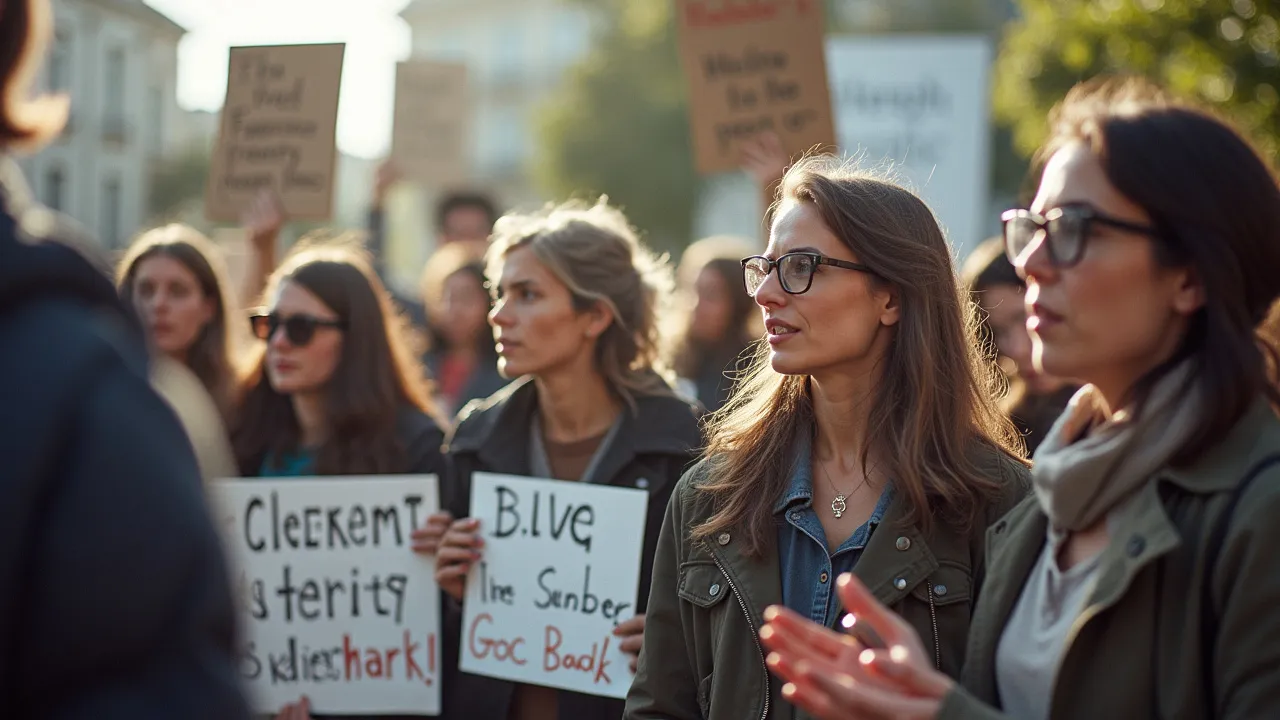
Writers' Rights Day, observed on June 9th, celebrates and advocates for fair treatment, copyright protection, and freedom of expression for authors worldwide. It honors the contributions of writers and highlights ongoing challenges in the publishing industry.
The Historical Origins & Evolutionary Journey
Writers' Rights Day was first conceived in 2010 by the International Federation of Journalists and Writers (IFJW) to draw attention to the precarious conditions faced by writers globally. The date June 9th was chosen to commemorate the signing of the Berne Convention for the Protection of Literary and Artistic Works in 1886, a foundational treaty for copyright law.
The Foundational Catalyst
Throughout history, writers have struggled for recognition and fair compensation. The invention of the printing press in the 15th century enabled mass distribution but also led to widespread unauthorized copying. The Statute of Anne in 1710 was the first copyright law, granting authors exclusive rights for a limited time. However, enforcement remained weak.
The Legislative/Official Adoption
The Berne Convention established key principles: automatic copyright protection without registration, the concept of "national treatment," and a minimum term of life plus 50 years. This treaty laid the groundwork for modern writers' rights. In the late 20th century, digital technology posed new challenges, leading to the WIPO Copyright Treaty of 1996. Writers' Rights Day was officially adopted by the United Nations Educational, Scientific and Cultural Organization (UNESCO) in 2012 as a day to promote literacy and authors' rights.
Modern Global Legacy
Today, Writers' Rights Day is observed in over 60 countries. It serves as a platform to address issues such as fair contracts, plagiarism, AI-generated content, and freedom of expression. The day also celebrates the diversity of voices in literature and journalism, emphasizing the need for inclusive representation.
How to Celebrate Writers' Rights Day
Writers' Rights Day offers numerous opportunities for individuals, schools, libraries, and organizations to show support for writers and advocate for their rights. Below are actionable strategies organized by audience.
For Individuals
- Educate yourself on copyright laws and fair use. Read about the Berne Convention and local copyright statutes.
- Support independent authors by buying their books directly or borrowing from libraries. Review and recommend their work.
- Share on social media using hashtags like #WritersRightsDay and #FairPayForWriters. Post about a writer who inspires you.
- Write a letter to your elected representative urging stronger protections for authors.
For Schools & Libraries
- Host a workshop on copyright, plagiarism, and citation. Invite a local author to speak.
- Organize a read-in where participants read excerpts from banned or challenged books to highlight freedom of expression.
- Create a display of books about writing, publishing, and authors' rights. Include biographies of famous advocates.
For Organizations & Publishers
- Offer a panel discussion on ethical AI use in publishing. Address concerns about unauthorized training data.
- Launch a mentorship program for emerging writers from underrepresented backgrounds.
- Amend contracts to include fair royalty terms and transparent reporting. Publicly pledge to uphold writers' rights.
Around the World
In Sweden, Writers' Rights Day includes a "Book Night" where bookstores stay open late. In Brazil, authors gather for a public reading marathon. In India, the day is marked by seminars on digital piracy. Each region adapts the celebration to local issues, such as translation rights in Europe or press freedom in conflict zones.
Global Impact and Advocacy Efforts
Writers' Rights Day has galvanized a global movement. Organizations like PEN International, the Authors Guild, and Reporters Without Borders use the day to release annual reports on the state of writers' rights. Key achievements include:
- Increased copyright awareness in developing countries through UNESCO campaigns.
- Policy changes in the EU with the Directive on Copyright in the Digital Single Market (2019), which strengthened protections for authors.
- Emergency funds established for writers in crisis, such as the ICORN network for persecuted authors.
Case Study: The Fight Against Piracy
Piracy costs authors billions annually. In Nigeria, Writers' Rights Day events have led to stricter enforcement against book pirating. In South Korea, a voluntary code of conduct among publishers reduced illegal downloads by 30% in two years.
The Role of Social Media
Hashtag campaigns like #WritersRightsDay trend in multiple languages. In 2023, Twitter users posted over 1 million tweets, leading to coverage in major news outlets. This visibility pressures governments to act.
Key Challenges Facing Writers Today
Despite progress, writers face persistent challenges:
Economic Insecurity
Most authors earn below minimum wage. Advances are shrinking, and the gig economy has eroded freelance rates. Only 10% of published authors can support themselves through writing alone.
Plagiarism and Copyright Infringement
Digital reproduction makes it easy to steal content. AI models trained on copyrighted works without permission have ignited lawsuits. The landmark case of Authors Guild v. Google set precedents for fair use, but uncertainty remains.
Censorship and Persecution
In over 40 countries, writers face imprisonment for their work. Writers' Rights Day amplifies their stories and calls for their release. The day also highlights threats to journalists and whistleblowers.
Lack of Diversity
Publishing remains dominated by white, male, and Western voices. Efforts like the #WeNeedDiverseBooks campaign push for inclusive representation, but structural barriers persist.
The Role of Technology in Writers' Rights
Technology is a double-edged sword for writers. On one hand, self-publishing platforms like Amazon KDP give authors direct access to readers. On the other, tech giants often exploit user-generated content without fair compensation.
Positive Impacts
- Democratization of publishing: E-books and print-on-demand reduce barriers to entry.
- Global reach: Writers can build audiences without traditional gatekeepers.
- Blockchain solutions: Smart contracts can automate royalty payments and prevent piracy.
Negative Impacts
- Algorithmic bias: Platforms may suppress diverse voices in favor of viral content.
- Data scraping: AI companies train models on copyrighted text, often without permission.
- Digital piracy: Illicit sites host millions of pirated books, cutting into authors' income.
Writers' Rights Day advocates for ethical technology use, pushing for regulations like the EU's AI Act that require transparency in training data.
Writers' Rights Day Around the World
While June 9th is the primary date, some countries hold events on different days due to local significance. For example, in the United States, many organizations also celebrate on March 3rd (National Authors Day). However, the official global observance remains June 9th.
Regional Highlights
- France: Emphasis on translation rights and moral rights (droit moral). Events include debates on the status of writers in the digital age.
- Japan: Focus on manga artists' rights, with exhibitions and seminars on copyright.
- Nigeria: Community reading events and public lectures on the importance of copyright registration.
- Mexico: Collaboration with indigenous language writers to preserve oral traditions through written form.
- Australia: Strong focus on indigenous storytelling rights and the protection of cultural heritage.
These regional variations enrich the global tapestry of Writers' Rights Day, proving that while the challenges differ, the universal need for respect and fair treatment binds all writers.
Historical Timeline
The Berne Convention for the Protection of Literary and Artistic Works is signed, establishing international copyright standards. This treaty is a cornerstone of writers' rights and inspired the date of Writers' Rights Day.
The Universal Copyright Convention is adopted under UNESCO's auspices, offering an alternative system for countries that did not join the Berne Convention.
The WIPO Copyright Treaty (WCT) is adopted, updating international copyright for the digital age. It addresses the protection of computer programs and databases.
The EU Copyright Directive harmonizes copyright laws across member states, including provisions for authors' moral rights.
The International Federation of Journalists and Writers declares June 9th as Writers' Rights Day, coinciding with the Berne Convention anniversary.
UNESCO officially recognizes Writers' Rights Day, encouraging member states to promote literacy and authors' rights.
The EU adopts the Directive on Copyright in the Digital Single Market, introducing new rights for press publishers and requiring platforms to obtain licenses for user-uploaded content.
The Authors Guild leads a lawsuit against OpenAI for unauthorized use of copyrighted books to train ChatGPT, highlighting AI-related challenges. Writers' Rights Day sees record participation worldwide.