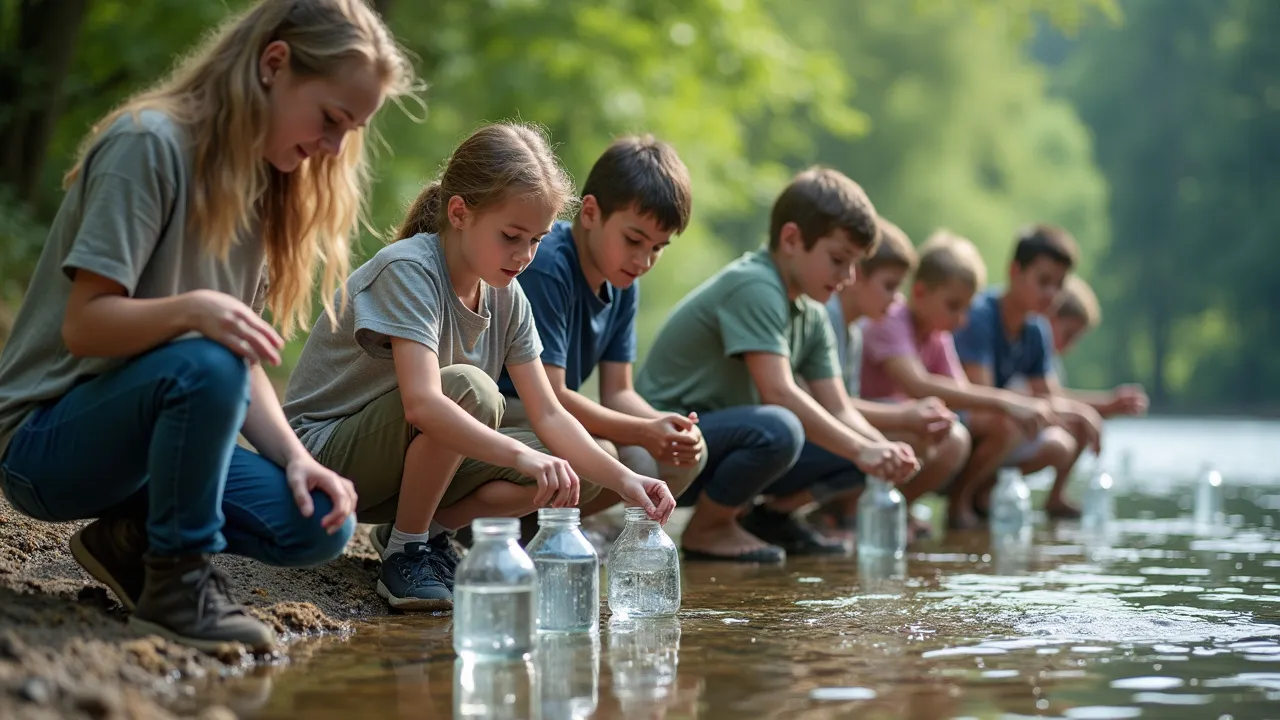
Celebrated on September 18th, World Water Monitoring Day encourages public participation in monitoring the quality of local water bodies. It raises awareness about the importance of clean water and empowers communities to take action for water conservation.
The Historical Origins & Evolutionary Journey
World Water Monitoring Day (WWMD) was established in 2003 by the Water Environment Federation (WEF) and the International Water Association (IWA) to build public awareness and involvement in protecting water resources. The day originally focused on a simple, accessible monitoring test kit that could be used by citizens of all ages to measure four key parameters: temperature, pH, clarity (turbidity), and dissolved oxygen (DO). Over the years, WWMD has evolved into a global educational and outreach initiative, inspiring millions to take a hands-on role in safeguarding their local waterways.
The Foundational Catalyst
In the late 1990s, water quality monitoring was largely conducted by professional scientists and government agencies. The idea behind WWMD was to democratize data collection, empowering ordinary citizens to gather scientifically valid information about their rivers, lakes, and streams. The first test kits, designed by the WEF, were simple enough for a child to use but yielded data that could be pooled into a global database. This grassroots approach resonated with schools, scout troops, and environmental groups worldwide.
The Legislative/Official Adoption
WWMD quickly gained traction. In 2006, the United Nations Environment Programme (UNEP) endorsed the initiative, and by 2008, more than 60 countries participated. The U.S. Environmental Protection Agency (EPA) promoted WWMD as part of its Water Quality Standards Academy. Although never codified into law, WWMD became a cornerstone of citizen science programs worldwide. In 2012, the program was rebranded as the World Water Monitoring Challenge, expanding its reach to include online data submission and global analysis.
Modern Global Legacy
Today, WWMD is observed on September 18th in most countries, though some regions may host events on alternative dates to align with local seasons or water cycles. The initiative has collected millions of data points, which are used by researchers to identify pollution trends and prioritize conservation efforts. The program’s success has inspired similar citizen science projects in air quality, soil health, and biodiversity monitoring.
How to Celebrate World Water Monitoring Day
Participating in World Water Monitoring Day is straightforward and impactful. Whether you are an individual, a school group, or a corporation, there are numerous ways to contribute to water quality awareness and data collection. Below is a comprehensive guide to celebrating this observance.
For Individuals and Families
- Get a Test Kit: Order a WWMD test kit from the official website or a local environmental organization. The standard kit measures temperature, pH, turbidity, and dissolved oxygen.
- Choose a Water Body: Select a nearby river, lake, stream, or pond that is safe to access. Avoid areas with strong currents or hazardous conditions.
- Perform the Tests: Follow the instructions carefully. Record your results on a data sheet. Take photos of your monitoring session to share on social media with #WaterMonitoringDay.
- Submit Your Data: Enter your findings into the global database at the WWMD website. Your data will be used by scientists and policymakers.
- Share Your Experience: Post about your participation on social media, write a blog, or tell your neighbors about the importance of clean water.
For Schools and Educational Groups
- Plan a Field Trip: Organize a class outing to a local water body. Use the opportunity to teach about ecosystems, water cycles, and human impact on water quality.
- Integrate into Curriculum: Incorporate water monitoring into science, geography, or civics lessons. Assign students to analyze historical data from the WWMD database.
- Host a Poster Contest: Encourage students to create posters about water conservation. Display them in the school hallway or community center.
- Invite a Guest Speaker: Contact a local water utility scientist or environmental engineer to talk to the class about career opportunities in water management.
For Organizations and Corporations
- Sponsor a Monitoring Event: Fund the purchase of test kits for local schools or community groups. Provide volunteers to assist with monitoring.
- Adopt a Waterway: Commit to regular clean-ups and monitoring of a specific river or lake segment throughout the year, not just on September 18th.
- Employee Engagement: Organize a team-building outing where employees and their families participate in water monitoring. Publish a sustainability report highlighting the data collected.
Regional Variations
While the official date is September 18th, some countries celebrate on different dates. For example, in Australia, events are often held in October during spring, while in parts of South America, monitoring may occur in March to coincide with World Water Day. Always check local listings for the exact date in your region.
The Global Impact of Water Monitoring
Water monitoring is not just a symbolic act; it yields tangible benefits for communities and ecosystems worldwide. The data collected through World Water Monitoring Day contributes to a global understanding of water quality trends, helping to identify pollution hotspots and track the effectiveness of conservation measures.
Public Health and Safety
Contaminated water causes millions of deaths annually from diseases such as cholera, dysentery, and typhoid. By monitoring pH, dissolved oxygen, and turbidity, citizen scientists can detect early signs of pollution that might affect drinking water sources. Communities that actively monitor their water are more likely to demand better sanitation and treatment infrastructure.
Environmental Protection
Healthy aquatic ecosystems depend on balanced pH and oxygen levels. Monitoring helps track the effects of agricultural runoff, industrial discharge, and climate change on fish habitats and biodiversity. For instance, low dissolved oxygen levels can signal algal blooms, which are harmful to fish and other wildlife.
Empowering Citizens
WWMD transforms ordinary people into active stewards of their environment. When individuals see the direct results of their monitoring efforts, they become more invested in water conservation policies. This sense of ownership is critical for long-term environmental sustainability.
Key Water Quality Parameters Explained
The standard WWMD test kit measures four basic parameters that provide a snapshot of water health. Understanding these metrics is essential for interpreting your results.
- Temperature: Water temperature affects the amount of dissolved oxygen water can hold, as well as the metabolic rates of aquatic organisms. Cold water holds more oxygen than warm water.
- pH: pH measures how acidic or alkaline the water is. Most aquatic life thrives in a pH range of 6.5 to 8.5. Values outside this range can indicate pollution from acid rain or industrial discharge.
- Turbidity: Turbidity measures water clarity. High turbidity can be caused by sediment, algae, or pollution, which blocks sunlight and harms aquatic plants.
- Dissolved Oxygen (DO): DO is the amount of oxygen available to aquatic life. Low DO levels (less than 5 mg/L) can stress fish and lead to dead zones.
Advanced kits may also measure nitrates, phosphates, and bacteria, providing a more comprehensive assessment.
The Role of Citizen Science in Water Conservation
Citizen science, the involvement of volunteers in scientific research, is at the heart of World Water Monitoring Day. By engaging the public in data collection, WWMD generates large-scale data sets that would be impossible for professional scientists to gather alone.
Building a Global Database
Since 2003, millions of data points have been uploaded to the WWMD database. Researchers use this information to map water quality trends across continents and over time. For example, long-term data has shown improvements in some urban rivers due to better wastewater treatment.
Educating the Next Generation
Schools that participate in WWMD often report increased student interest in STEM (science, technology, engineering, and math) careers. The hands-on nature of water monitoring makes abstract scientific concepts tangible and memorable.
Policy Influence
When citizens present collected data to local governments, it can lead to policy changes. Community monitoring has been instrumental in enforcing clean water laws and proposing new regulations to protect vulnerable watersheds.
Corporate and Government Involvement
World Water Monitoring Day has garnered support from a wide range of stakeholders, including multinational corporations, local utilities, and national agencies. Their involvement provides funding, expertise, and legitimacy to the initiative.
Corporate Partnerships
Companies in the water, technology, and outdoor recreation sectors often sponsor WWMD events. For example, a bottled water company might donate test kits, or a tech firm could develop a mobile app for data submission. Such partnerships align corporate social responsibility goals with environmental education.
Government Agencies
In the United States, the EPA has provided grants for WWMD activities. In Europe, the European Environment Agency encourages participation as part of its Water Information System for Europe (WISE) framework. Many national parks offer special programs on September 18th with free admission for participants.
Non-Governmental Organizations
NGOs like the World Wildlife Fund (WWF) and The Nature Conservancy use WWMD data to advocate for water conservation policies. They also train local leaders to sustain monitoring programs year-round.
Historical Timeline
World Water Monitoring Day is launched by the Water Environment Federation (WEF) and the International Water Association (IWA) with support from the U.S. Environmental Protection Agency and the U.S. Geological Survey. The first event involves thousands of participants testing water in their local rivers and lakes.
The United Nations Environment Programme (UNEP) endorses World Water Monitoring Day, expanding its reach to more than 60 countries. The program is integrated into the UN's Water for Life Decade initiative.
Participation surpasses 100,000 people globally. The WWMD database now contains over 500,000 data points, providing a valuable resource for researchers studying water quality trends.
The program is rebranded as the World Water Monitoring Challenge to emphasize ongoing, year-round monitoring efforts. A mobile app is launched to simplify data submission and display real-time maps of monitoring results.
World Water Monitoring Challenge partners with the EarthEcho International's Water Challenge program, led by explorer Philippe Cousteau. The collaboration brings in additional educational resources for schools.
During the COVID-19 pandemic, the program introduces virtual monitoring events. Participants are encouraged to test water from their own taps and share results online, maintaining engagement despite lockdowns.
The 20th anniversary of World Water Monitoring Day/Challenge. More than 1 million people in over 100 countries have participated since inception, and the database contains over 3 million data points.