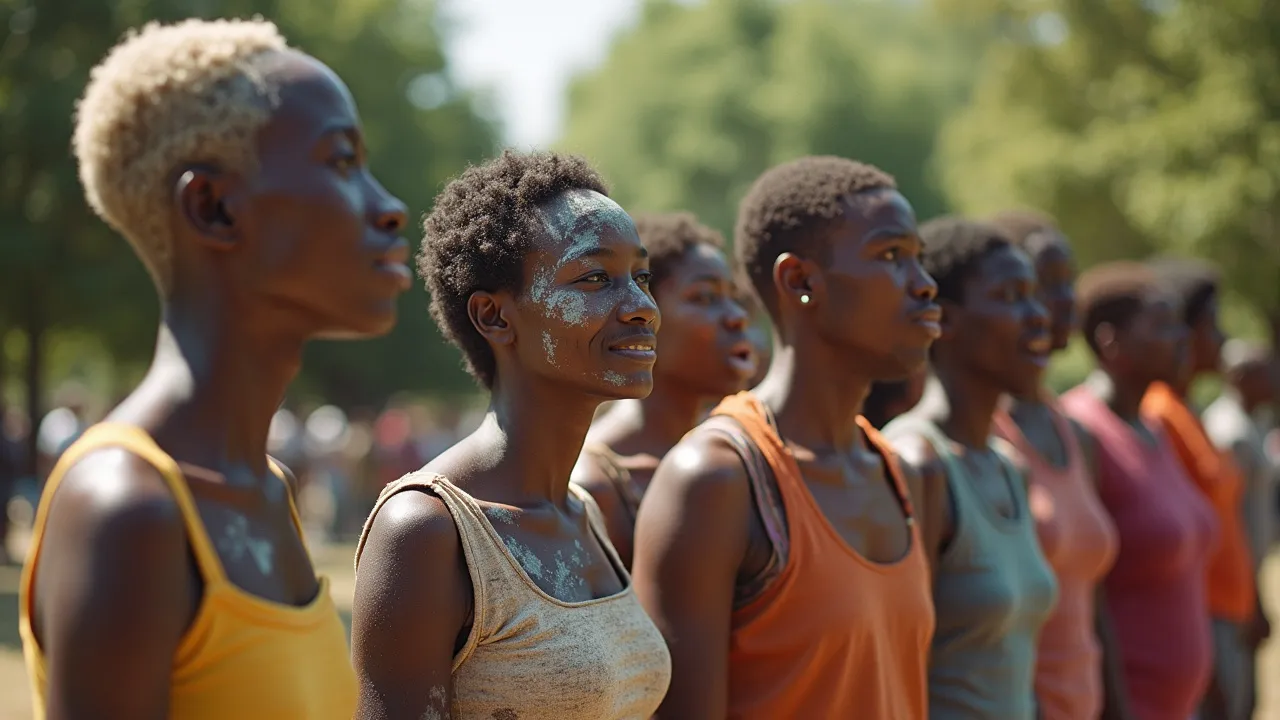
World Vitiligo Day, observed on June 25th, raises global awareness about vitiligo, an autoimmune condition causing skin depigmentation. It aims to reduce stigma, promote inclusion, and celebrate the beauty of diversity.
The Historical Origins & Evolutionary Journey
World Vitiligo Day, observed annually on June 25th, traces its roots to a global effort to spotlight vitiligo—a chronic autoimmune disorder that destroys melanocytes, leading to white patches on the skin. The date was chosen deliberately as it marks the birthday of pop legend Michael Jackson, who publicly lived with vitiligo and helped destigmatize the condition.
The Foundational Catalyst
The initiative began gaining traction in the early 2000s as patient advocacy groups, dermatologists, and social media communities united to demand visibility. In 2009, the Global Vitiligo Foundation (GVF) spearheaded a petition to establish a dedicated awareness day. The first official World Vitiligo Day was celebrated on June 25, 2011, with events in India, the United States, and the United Kingdom.
The Legislative/Official Adoption
While not a public holiday, the day has been officially recognized by numerous medical associations and governments. For instance, the Indian Ministry of Health endorsed it in 2014, and the U.S. National Institutes of Health have since supported awareness campaigns. The observance gained further legitimacy through partnerships with the World Health Organization and the International League of Dermatological Societies.
Modern Global Legacy
Today, World Vitiligo Day is marked by over 50 countries. It has expanded from small local rallies to global virtual conferences, art exhibitions, and fundraising walks. The movement has significantly shifted cultural perceptions: from viewing vitiligo as a curse or contagious disease to embracing it as a natural variation of human skin. Social media hashtags like #WorldVitiligoDay and #VitiligoAwareness generate millions of impressions annually.
How to Celebrate World Vitiligo Day
World Vitiligo Day offers countless ways to participate, whether as an individual, a school, or an organization. Below are actionable strategies to foster awareness and inclusion.
For Individuals
- Share Your Story: Post a personal testimonial on social media using #WorldVitiligoDay to humanize the condition.
- Wear Social Media Frames: Use official filters or frames to show solidarity.
- Educate Yourself: Read books like Living with Vitiligo or watch documentaries.
For Schools
- Host a Diversity Assembly: Invite dermatologists or patients to speak about vitiligo.
- Art Projects: Have students create murals depicting skin diversity.
- Inclusive Curriculum: Include vitiligo in health or biology lessons.
For Organizations
- Light Up Landmarks: Illuminated buildings in purple (the vitiligo awareness color) on June 25th.
- Sponsor Free Screenings: Partner with clinics to offer free skin checks and counseling.
- Host Webinars: Conduct virtual panel discussions with experts.
Different countries have unique traditions. In India, community walks and temple lighting are common. In the U.S., corporate employees often wear purple badges. In Nigeria, radio jingles spread awareness. The key is to adapt activities to local culture while maintaining a consistent message of acceptance.
Understanding Vitiligo: Medical Insights and Myths
Vitiligo affects 1-2% of the global population, regardless of ethnicity or gender. It is an autoimmune condition where the immune system attacks melanocytes, the cells that produce pigment. The exact trigger is unknown, but genetic and environmental factors play a role.
Common Myths Debunked
- Myth 1: Vitiligo is contagious. Fact: It is absolutely not; you cannot catch it through touch.
- Myth 2: It is linked to leprosy. Fact: No connection exists; both conditions are distinct.
- Myth 3: Vitiligo only affects the skin. Fact: It can also affect hair and mucous membranes, but internal organs are unaffected.
Available Treatments
While there is no cure, treatments can help repigment skin, such as topical corticosteroids, phototherapy (narrowband UVB), and surgical grafting. Psychological support is equally crucial, as visible stigma can cause anxiety and low self-esteem.
Global Impact and Awareness Campaigns
World Vitiligo Day has catalyzed widespread change. In 2016, the Vitiligo International Conference in Dubai drew over 500 attendees from 40 countries. Campaigns like "Vitiligo is Beautiful" have featured models with vitiligo on runways and billboards, challenging conventional beauty standards.
Media Representation
Television shows and films have started including characters with vitiligo. For example, the Netflix series Never Have I Ever featured a teen with vitiligo, normalizing the condition. Social media influencers like Winnie Harlow have become prominent advocates, proving that vitiligo does not limit beauty or success.
Economic and Social Impact
In countries like India, vitiligo has historically led to ostracization and even divorce. Awareness campaigns have reduced such discrimination, with some states enacting laws against workplace discrimination based on skin appearance. Global sales of vitiligo-friendly makeup and sunscreen have also increased, reflecting greater inclusivity.
Key Milestones in the Movement
The journey toward global recognition includes several pivotal moments:
- 2011: First World Vitiligo Day observed in multiple nations.
- 2013: The Global Vitiligo Foundation launches the "Vitiligo Support Network" providing free resources.
- 2016: United Nations acknowledges the day through a supportive statement.
- 2018: First-ever Vitiligo Walk in New York City raises over $500,000 for research.
- 2020: Virtual events surpass in-person due to COVID-19, expanding reach.
- 2023: India passes a resolution recognizing June 25 as Vitiligo Awareness Day nationally.
The Role of Advocacy and Community Support
Advocacy groups are the backbone of this observance. Organizations like the Vitiligo Research Foundation and Global Vitiligo Foundation offer online portals, local meetups, and research grants. They empower patients to connect and share coping strategies.
How You Can Get Involved
- Donate: Contribute to vitiligo research via credible foundations.
- Volunteer: Help organize local events or moderate online forums.
- Petition: Urge governments to adopt policies protecting vitiligo patients.
The community's resilience has been inspiring. Many patients report that World Vitiligo Day gives them a sense of belonging and strength to embrace their skin.
Historical Timeline
Michael Jackson is born on June 25. He later publicly reveals his vitiligo in 1993, bringing global attention to the condition.
The Global Vitiligo Foundation launches a petition to establish a worldwide vitiligo awareness day on June 25.
First official World Vitiligo Day celebrated on June 25 with events in India, UK, and USA.
Indian Ministry of Health officially endorses World Vitiligo Day.
Vitiligo International Conference held in Dubai with 500+ attendees from 40 countries.
First Vitiligo Walk in New York City raises over $500,000 for research.
COVID-19 shifts celebrations to virtual platforms, greatly expanding global participation.
India passes national resolution recognizing June 25 as Vitiligo Awareness Day.