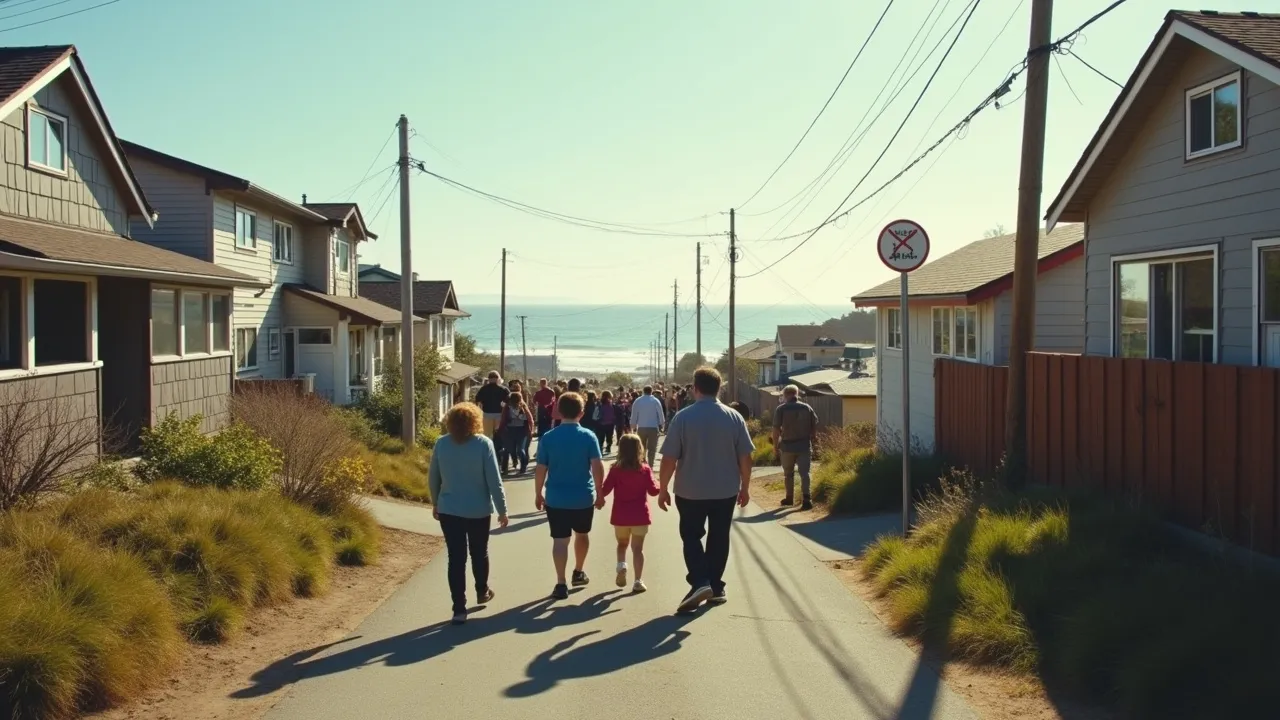
World Tsunami Awareness Day, observed on November 5th, aims to raise global awareness about tsunami risks and promote effective evacuation strategies. This day commemorates the 1854 story of Hamaguchi Goryou, who saved his village by setting fire to rice sheaves to guide people to higher ground.
The Historical Origins & Evolutionary Journey
The Foundational Catalyst
World Tsunami Awareness Day traces its roots to the devastating 2004 Indian Ocean tsunami, which claimed over 230,000 lives and spurred global momentum for disaster preparedness. However, the observance date—November 5th—honors a much older story of resilience. In 1854, Japanese farmer Hamaguchi Goryou, witnessing an unusual ebb tide (a precursor to a tsunami), set fire to his valuable rice sheaves to evacuate his village to higher ground. His quick thinking saved hundreds of lives, embodying the spirit of community-led disaster risk reduction.
The Legislative/Official Adoption
In December 2015, the United Nations General Assembly adopted Resolution A/RES/70/203, designating November 5th as World Tsunami Awareness Day. The resolution was spearheaded by Japan, which has deep cultural and historical ties to tsunami awareness. The day was first officially observed on November 5, 2016, and has since become a platform for governments, NGOs, and communities to promote tsunami preparedness, early warning systems, and resilient infrastructure.
Modern Global Legacy
Since 2016, the UN has partnered with the UN Office for Disaster Risk Reduction (UNDRR) to coordinate annual themes. Past themes have included "Reduce Disaster Risk, Build Resilience" and "Invest in Early Warning Systems." The day now encompasses a wide range of activities—from school evacuation drills to international conferences—and continues to grow as a cornerstone of the Sendai Framework for Disaster Risk Reduction (2015-2030).
How to Celebrate World Tsunami Awareness Day
World Tsunami Awareness Day offers actionable opportunities for individuals, schools, businesses, and governments to enhance resilience. Below are key practices organized by audience:
For Individuals and Families
- Know Your Risk: Check tsunami hazard zones for your area using local maps or apps.
- Create a Plan: Design and practice an evacuation route to higher ground (at least 30 meters above sea level or 3 km inland).
- Build a Go-Bag: Prepare an emergency kit with water, food, first aid, and important documents.
For Schools and Students
- Conduct Drill: Organize a "drop, cover, and hold on" drill followed by an evacuation simulation.
- Educational Activities: Use UN-supplied materials to teach tsunami science and the Hamaguchi story.
- Art Projects: Have students create awareness posters or short videos for social media.
For Communities and Local Governments
- Update Early Warning Systems: Test sirens, SMS alerts, and public address systems.
- Map Evacuation Routes: Install multilingual signage and conduct community workshops.
- Host Public Forums: Invite experts to discuss lessons from past tsunamis (e.g., 2011 Tohoku).
Global Variations
While November 5th is the UN-designated date, some regions have unique observances: Japan marks the day with nationwide simulations and temple bell ceremonies; Indonesia integrates it into broader disaster preparedness weeks; and the United States holds coastal town hall meetings. In all cases, the core message remains: preparedness saves lives.
The Global Impact of Tsunamis and Preparedness
Tsunamis are among the deadliest natural hazards, with an average of two tsunamis per year causing widespread destruction. The 2004 Indian Ocean tsunami alone killed over 230,000 people across 14 countries. Since then, global preparedness has improved significantly, but challenges remain. World Tsunami Awareness Day emphasizes key statistics:
- Over 700 million people live in low-lying coastal areas exposed to tsunamis.
- Only 50% of exposed countries have functional early warning systems (as of 2023).
- Economic losses from tsunamis exceed $10 billion per decade.
The day encourages investment in people-centered early warning systems and resilient infrastructure. The UN's Early Warnings for All initiative aims to protect every person by 2027.
The Role of Early Warning Systems
How They Work
Tsunami early warning systems rely on seismic monitoring, deep-ocean pressure sensors, and coastal tide gauges. When an earthquake occurs, data is analyzed within minutes to issue alerts via SMS, sirens, and radio. The Indian Ocean Tsunami Warning System (IOTWS), established after 2004, now serves 28 countries.
Gaps and Improvements
Despite progress, many systems fail due to lack of maintenance or public awareness. World Tsunami Awareness Day promotes regular drills and community feedback loops to ensure alerts lead to action. For example, Japan's "autonomous" approach empowers residents to evacuate without waiting for official orders, based on natural signs like receding water.
Community Resilience and Education
Educational programs are the bedrock of tsunami preparedness. The UNESCO Intergovernmental Oceanographic Commission (IOC) provides free educational resources, including the Tsunami Ready recognition program for communities. Key elements include:
- Risk Knowledge: Understanding local hazards and historical events.
- Response Skills: Teaching "Drop, Cover, and Hold On" for earthquakes (primary tsunami trigger) and immediate evacuation to high ground.
- Social Campaigns: Using memes, theater, and local influencers to spread messages.
In Chile, schools conduct monthly tsunami drills. In Fiji, villages practice "self-evacuation" using traditional knowledge. World Tsunami Awareness Day showcases these best practices globally.
International Cooperation and Policy Frameworks
World Tsunami Awareness Day is part of a broader international architecture for disaster risk reduction. The Sendai Framework (2015-2030) sets seven targets, including substantially reducing disaster mortality by 2030. Tsunami-specific cooperation includes:
- The Pacific Tsunami Warning Center (PTWC) serves 25 countries in the Pacific.
- The Tsunami and Other Coastal Hazards Warning System (TOCWS) for the Caribbean and adjacent regions.
- Regional exercises like Pacific Wave and Indian Ocean Wave test multi-country response.
Annual UN observations in New York bring together diplomats, scientists, and civil society to review progress and pledge funding. The day also leverages World Tsunami Awareness Day Awards to honor outstanding preparedness initiatives.
Historical Timeline
Hamaguchi Goryou uses fire to guide villagers to safety during the Nankai earthquake tsunami in Japan, inspiring the date of World Tsunami Awareness Day.
The Sanriku earthquake and tsunami kills over 22,000 people in Japan, prompting early warning research.
Indian Ocean tsunami kills over 230,000 across 14 countries; global pressure for a warning system begins.
The Intergovernmental Oceanographic Commission establishes the Indian Ocean Tsunami Warning System (IOTWS).
Tohoku earthquake and tsunami (Japan) kills nearly 20,000, highlighting the need for continuous vigilance.
UN General Assembly adopts resolution A/RES/70/203, designating November 5th as World Tsunami Awareness Day.
First official observance of World Tsunami Awareness Day on November 5th.
UN launches 'Sendai Seven' campaign, with World Tsunami Awareness Day focusing on target (e) of the Sendai Framework.
Over 60 countries participate in tsunami drills and awareness events; theme: 'Bridging the Gap' between early warning and early action.