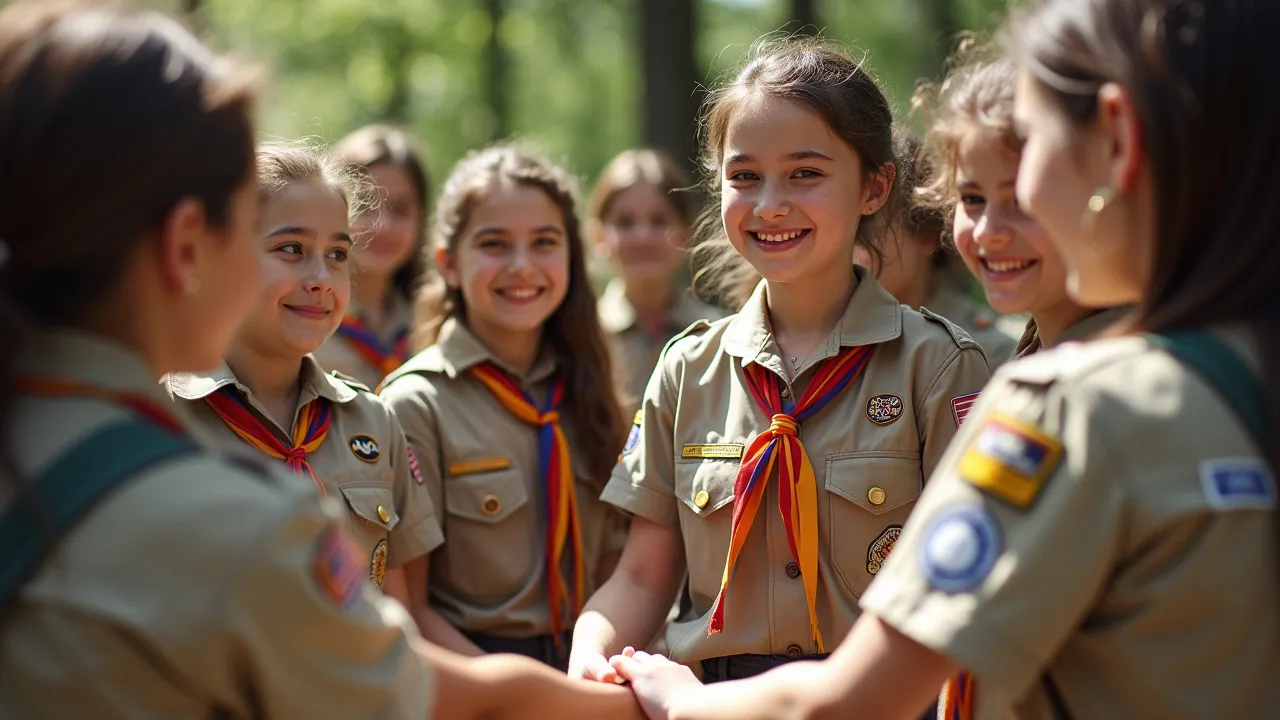
World Thinking Day, observed on February 22nd, is a global celebration of Girl Guides and Girl Scouts fostering international friendship, solidarity, and action on pressing world issues. It honors the founding of the World Association of Girl Guides and Girl Scouts (WAGGGS) in 1926.
The Historical Origins & Evolutionary Journey
World Thinking Day began in 1926 at the 4th World Conference of the World Association of Girl Guides and Girl Scouts (WAGGGS) held at Camp Edith Macy in New York. Delegates from 26 countries chose February 22nd—the joint birthday of Lord Baden-Powell (founder of Scouting) and his wife Olave Baden-Powell (World Chief Guide)—as a day for members to 'think' of each other and express gratitude for the international movement.
The Foundational Catalyst
The idea for a dedicated day arose from a desire to strengthen global bonds among Girl Guides and Girl Scouts, which at the time were rapidly expanding across continents. The first official celebration in 1927 encouraged members to send letters, small gifts, or donations to WAGGGS headquarters to support the growth of guiding in other countries. This simple concept of 'thinking' literally—taking a moment to reflect on sisterhood—became a yearly tradition.
Legislative/Official Adoption
While not a government-backed holiday, WAGGGS formally institutionalized Thinking Day in 1932, introducing the 'Thinking Day Fund' to finance projects aiding Girl Guide and Girl Scout associations in developing nations. Over subsequent decades, the day gained recognition from the United Nations and was linked to the Sustainable Development Goals (SDGs) post-2015.
Modern Global Legacy
Today, World Thinking Day is celebrated by over 10 million Girl Guides and Girl Scouts in 152 countries. Themes like 'Our World, Our Future' (2019) and 'Our Impact' (2021) shift the focus from inward reflection to outward action—addressing climate change, gender equality, and mental health. The day remains a cornerstone of WAGGGS' identity, combining tradition with evolving global challenges.
How to Celebrate World Thinking Day
World Thinking Day offers a unique opportunity for Girl Guide and Girl Scout troops, schools, and individuals to connect with the global movement. Below are proven strategies and traditions practiced worldwide.
For Individuals and Small Groups
- Write a letter or email to a Girl Guide troop in another country via WAGGGS' twin-troop programs.
- Donate to the Thinking Day Fund to support leadership training and disaster relief projects.
- Learn about a different country's guiding culture by researching its symbols, songs, and service activities.
For Troops and Schools
- Host a global friendship fair: Set up booths representing different WAGGGS member countries, featuring traditional food, games, and uniform displays.
- Organize a community service project aligned with the annual Thinking Day theme (e.g., a tree-planting drive for environment-themed years).
- Send a collective message to WAGGGS headquarters, often shared on social media with hashtags like #WorldThinkingDay.
Corporate and Organizational Rituals
Many Girl Guide associations host virtual webinars, panel discussions, and fundraising galas. For instance, the UK's Girlguiding encourages 'Think & Do' challenges—combining reflection with tangible action. In India, Bharat Scouts and Guides organize rallies to raise awareness about girls' education.
Regional Variations
United Kingdom: Often includes a 'Thinking Day service' in local churches. United States: Girl Scouts host 'Troop-to-Troop' video calls with sister troops abroad. Kenya: Members plant trees and conduct clean-up campaigns. Japan: Focus on peace origami workshops and cultural exchanges.
Global Impact & Societal Themes
World Thinking Day transcends its origins to become a platform for addressing critical global issues. Each year, WAGGGS selects a theme tied to the UN Sustainable Development Goals (SDGs), mobilizing millions of young women and girls to take action.
Key Societal Contributions
- Empowerment of Girls: Over 70% of Thinking Day Fund projects directly support female leadership, education, and health initiatives in low-income countries.
- Environmental Stewardship: Themes like 'Our Planet, Our Future' (2018) drove massive tree-planting campaigns across Africa and Latin America.
- Peacebuilding: In conflict zones like Palestine and Colombia, Thinking Day events foster cross-community dialogue and reconciliation.
Economic and Cultural Influence
The day generates significant charitable contributions—the UK alone raised over £1 million in 2022. Culturally, it reinforces the concept of global citizenship, teaching members that their local actions echo worldwide. The uniform itself becomes a symbol of unity; on February 22nd, members often wear each other's scarves or badges to signify solidarity.
Annual Themes & Their Evolution
Since the 1990s, WAGGGS has assigned specific themes to World Thinking Day, shifting from introspective reflection to outward activism.
Historical Theme Progression
- 1990s: Themes like 'Our Heritage' and 'Friendship Around the World' emphasized tradition and connection.
- 2000s: 'Girls Worldwide Say' (2008) and 'Our Right to a Healthy Planet' (2012) introduced rights-based and environmental foci.
- 2020s: 'Our Impact, Our Future' (2021) and 'Our World, Our Thriving Future' (2023) center on sustainability, mental health, and inclusive leadership.
Each theme comes with an activity pack—accessible in multiple languages—that includes games, discussion guides, and service ideas. This digital evolution has broadened participation, especially during the COVID-19 pandemic when virtual celebrations became the norm.
Unique Traditions Around the World
While the core spirit of 'thinking' is universal, local customs infuse World Thinking Day with rich diversity.
Notable Celebrations
- Zambia: Girl Guides perform traditional dances and share meals with elderly women in their communities.
- Iceland: Members light candles in snow lanterns and hold vigils for peace.
- Australia: Beach clean-ups followed by barbeques integrate environmental action with social bonding.
- Lebanon: Interfaith events bring together Muslim, Christian, and Druze Girl Guides for joint service projects.
The common thread is the 'Thinking Day Service'—a ceremony often held in places of worship or community halls, where members renew their promise and read messages from sister troops. In many countries, a special 'Thinking Day badge' is earned by completing themed activities.
The Future of World Thinking Day
As the world grapples with digital divides, climate crises, and geopolitical tensions, World Thinking Day is adapting to remain relevant.
Digital Transformation
WAGGGS has launched a 'Thinking Day Digital Hub' featuring virtual reality tours of WAGGGS World Centres (Pax Lodge in London, Our Chalet in Switzerland). Live-streamed events connect troops across time zones, and an interactive map displays global activities in real time.
Youth-Led Agendas
Increasingly, the day is shaped by young members themselves through the 'Global Youth Forum', which votes on future themes. This ensures the issues that matter most to girls—like menstrual equity, online safety, and climate justice—stay at the forefront.
Potential Expansion
Proposals exist to open Thinking Day participation to non-member youth organizations, similar to the UN's International Youth Day. If adopted, this could amplify its impact, making February 22nd a global day of youth-led action for the Sustainable Development Goals.
Historical Timeline
At the 4th World Conference of WAGGGS in New York, delegates establish February 22nd as a day for Girl Guides and Girl Scouts to 'think' of one another.
First official World Thinking Day celebrated with letter exchanges and small donations to support guiding in other countries.
WAGGGS formally creates the 'Thinking Day Fund' to finance international guiding projects, particularly in developing nations.
Introduction of annual themes, starting with 'Our Heritage', shifting focus from mere reflection to actionable global education.
WAGGGS links Thinking Day to the UN Millennium Development Goals, integrating it into broader international development agendas.
Alignment with the UN Sustainable Development Goals (SDGs); themes now directly tackle issues like poverty, gender equality, and climate action.
First fully digital World Thinking Day due to the COVID-19 pandemic, with virtual ceremonies and online activity packs reaching record participation.
Theme 'Our World, Our Thriving Future' emphasizes mental health, inclusive leadership, and environmental sustainability, reflecting youth priorities.