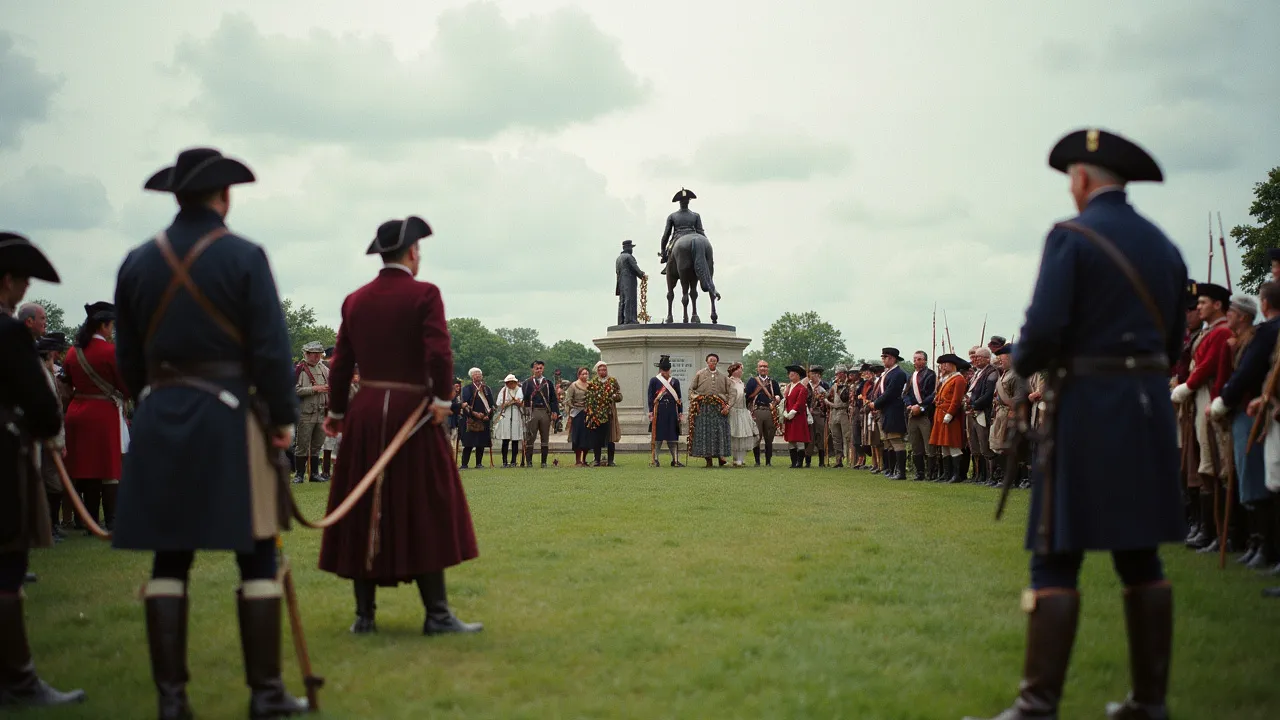
George Washington's Birthday, observed on February 22nd, honors the first U.S. president. While the federal holiday is often moved to the third Monday in February as Presidents' Day, the original date remains a significant historical marker celebrated with ceremonies and educational events.
The Historical Origins & Evolutionary Journey
George Washington's Birthday, celebrated on February 22nd, marks the birth of the first President of the United States. The observance has evolved over centuries from a simple commemorative gesture to a federal holiday with deep cultural significance.
The Foundational Catalyst
George Washington was born on February 22, 1732 (Old Style: February 11, 1731) in Westmoreland County, Virginia. Even during his lifetime, Americans celebrated his birthday with balls, parades, and public addresses. After his death in 1799, the tradition grew more formal. In 1832, the centennial of his birth prompted widespread festivities. However, it was not until 1879 that the U.S. Congress declared Washington's Birthday a federal holiday for the District of Columbia, and in 1885 it was expanded to all federal offices.
The Legislative/Official Adoption
The holiday originally fell on February 22nd each year. But in 1971, the Uniform Monday Holiday Act shifted the observance to the third Monday in February, creating a three-day weekend. This change also merged the celebration with Abraham Lincoln's birthday (February 12) into what many now call Presidents' Day. Officially, however, the federal holiday remains Washington's Birthday.
Modern Global Legacy
Today, George Washington's Birthday is observed across the United States with public ceremonies, educational programs, and sales events. Schools often focus on his leadership and the founding era. Internationally, the day is less commonly celebrated, but U.S. embassies and expatriate communities hold events. The date February 22nd still holds historical significance for historians and traditionalists who prefer the original date.
How to Celebrate George Washington's Birthday
Whether you are an individual, a school, or an organization, celebrating George Washington's Birthday can be both educational and engaging. Here is a guide to maximizing the experience across different regions.
United States
- Attend or host a reenactment: Many historic sites, such as Mount Vernon, hold special events with costumed interpreters, cannon firings, and cherry pie tastings.
- Educational activities: Schools organize lessons on the Revolutionary War, the Constitution, and Washington's leadership. Create a timeline or write a letter from Washington's perspective.
- Community service: Washington advocated for civic virtue. Volunteer at a local charity or clean up a park.
- Presidents' Day sales: While commercialized, taking advantage of sales can be a modern tradition.
International Observances
In the United Kingdom, Washington's birthplace in Sulgrave Manor occasionally holds open days. In Canada, some school districts discuss Washington's role in the American Revolution. To celebrate abroad:
- Host a dinner with American colonial dishes like roasted turkey, cornbread, and apple pie.
- Screen documentaries or historical films about the Founding Fathers.
- Organize a debate on Washington's policies and their global impact.
Tips for Authentic Celebration
Use the original February 22nd date for historical accuracy. Read excerpts from Washington's Farewell Address. Discuss his legacy of republican government.
Cultural Impact and Modern Observance
George Washington's Birthday has immense cultural weight in the United States. The holiday has shaped American identity and consumer behavior.
National Identity and Civic Pride
Washington is often called the "Father of His Country." His birthday reinforces ideals of leadership, democracy, and independence. Parades and naturalization ceremonies on this day strengthen civic bonds. The holiday also serves as a reminder of the nation's founding struggles.
Consumerism and Commerce
Retailers have turned Presidents' Day into a major sales event, especially for automobiles and home appliances. This commercial aspect sometimes overshadows the historical meaning, but it also keeps the date prominent in public consciousness.
Media and Education
Television networks air documentaries about Washington, and museums offer free admission. Libraries stock biographies. Social media sees a surge of quotes from Washington's writings.
Regional Variations and International Recognition
While the U.S. federal holiday is fixed to the third Monday in February, the original February 22nd date is still observed by various groups. Understanding regional variations is key to appreciating the holiday's full scope.
United States
- Federal observance: Officially called "Washington's Birthday," it is celebrated on the third Monday in February. Many states also recognize Presidents' Day, honoring both Washington and Lincoln.
- Traditionalists: Some schools and heritage organizations exclusively celebrate on February 22nd, holding readings of the Farewell Address.
- Virginia: As Washington's home state, Virginia has a state holiday on the third Monday but also notes the original date.
International
Outside the U.S., the day is not a public holiday. However, U.S. embassies host receptions. In the United Kingdom, the Sulgrave Manor, ancestral home of the Washington family, holds a commemoration. In China, some English-language schools use the day to teach American history.
Unique Traditions Abroad
In Canada, some communities with Loyalist heritage mark the day quietly. In the Philippines, formerly a U.S. territory, some schools still teach about Washington but do not celebrate.
The Legacy of George Washington in American Society
George Washington's Birthday is more than a date; it symbolizes the enduring legacy of the man who shaped the presidency and the nation.
Political Legacy
Washington established precedents such as the two-term limit, the cabinet system, and a neutral foreign policy. His Farewell Address warned against party factionalism and foreign entanglements—advice still referenced today.
Social and Ethical Impact
Washington owned slaves but expressed conflicted views. His evolving stance on slavery is studied as part of America's complex history. Modern celebrations often include discussions on liberty and justice.
Commemorative Symbols
The Washington Monument, Mount Vernon, and countless statues ensure his memory endures. The holiday itself is a living tribute.
Economic and Social Significance of the Holiday
As a federal holiday, George Washington's Birthday has tangible economic and social effects.
Economic Impact
The day is a major retail event, with sales generating billions. Auto dealers report Presidents' Day as one of the busiest weekends. Similarly, tourism spikes at historic sites like Mount Vernon, boosting local economies.
Social Effects
Federal and school closures give families time for trips or community events. The three-day weekend encourages travel, dining out, and recreation. However, essential services remain operational, affecting shift workers.
Long-Term Trends
Over the past decades, the retail aspect has grown while historical observances have become more niche. Schools increasingly integrate digital resources to teach about Washington.
Historical Timeline
George Washington is born on February 22nd (Old Style February 11) at Pope's Creek, Virginia.
Washington is inaugurated as the first President of the United States on April 30.
Washington dies at Mount Vernon, sparking national mourning and annual commemorations of his birthday.
Centennial of Washington's birth celebrated with large public events across the country.
U.S. Congress makes Washington's Birthday a federal holiday for the District of Columbia.
The holiday is expanded to all federal offices nationwide.
The Uniform Monday Holiday Act moves the observance to the third Monday in February, creating Presidents' Day.
George Washington's Birthday continues to be observed as a federal holiday, with February 22nd marked by traditionalists and historical societies.