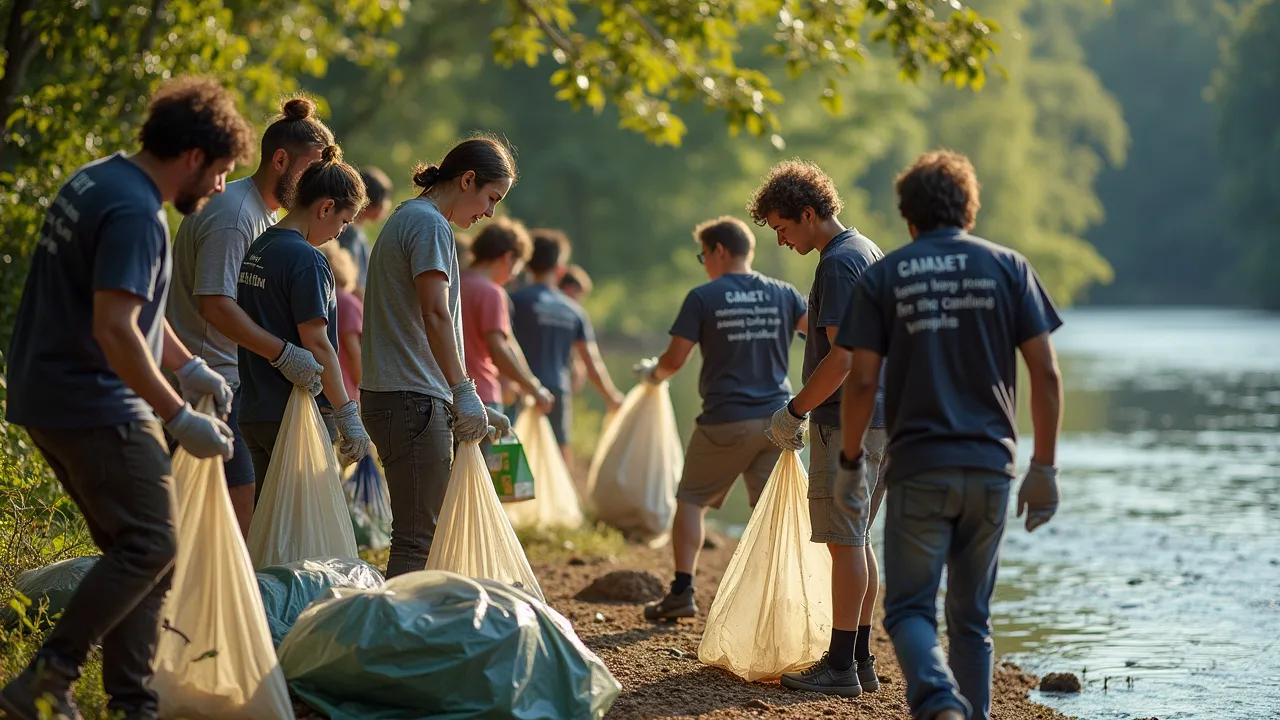
World Rivers Day, observed on the fourth Sunday in September, celebrates the vital importance of rivers worldwide. Founded by Canadian river conservationist Mark Angelo, it originated from BC Rivers Day and became a global event in 2005, uniting millions in river stewardship.
History of World Rivers Day
World Rivers Day is a global celebration of the world's waterways, observed annually on the fourth Sunday in September. It was founded by Canadian river conservationist Mark Angelo, who also initiated BC Rivers Day in British Columbia in 1980. The United Nations officially endorsed World Rivers Day in 2005, with the first global observance taking place that same year. The day aims to highlight the critical role of rivers for biodiversity, human health, and culture, while encouraging communities to take action to protect them.
The Foundational Catalyst
Mark Angelo, a raft guide and teacher from British Columbia, was inspired by his deep connection to rivers. In 1980, he launched BC Rivers Day as a local initiative to raise awareness about the health of rivers in his province. The event quickly gained traction, with schools, community groups, and governments participating in cleanups and educational activities. Angelo's vision expanded beyond borders, leading to discussions with the United Nations Environment Programme (UNEP) and other international bodies.
The Legislative/Official Adoption
In 2005, the United Nations officially recognized World Rivers Day, leveraging the momentum from the UN's Water for Life Decade (2005-2015). The UNEP and the International Rivers Network provided support, and the first official World Rivers Day was celebrated on September 25, 2005. The date was set as the fourth Sunday in September to align with BC Rivers Day and maximize global participation. Since then, millions of people in over 100 countries have taken part.
Modern Global Legacy
Today, World Rivers Day is a flagship event for river conservation. It has inspired numerous local and national policies, including cleanup programs, dam removal projects, and water quality monitoring. The day also serves as a platform for indigenous communities to share traditional knowledge about river stewardship. With climate change and pollution intensifying threats, World Rivers Day continues to grow as a vital call to action.
How to Celebrate World Rivers Day
World Rivers Day offers countless ways for individuals, schools, businesses, and governments to honor and protect rivers. Here are actionable strategies organized by audience:
For Individuals
- Organize a river cleanup: Gather friends, family, or neighbors to pick up trash along a local riverbank. Use gloves and reusable bags, and ensure proper disposal or recycling.
- Reduce water pollution: Avoid pouring chemicals, oils, or pharmaceuticals down drains. Switch to eco-friendly household products that won't harm aquatic life.
- Learn about your local watershed: Use online maps or apps to discover which river or stream flows near you. Attend a workshop or guided tour hosted by a conservation group.
- Share on social media: Post photos, stories, or facts about rivers using hashtags like #WorldRiversDay and #RiverProtection to raise awareness.
For Schools and Universities
- Host an educational fair: Invite experts to speak about river ecology, water conservation, and careers in hydrology. Set up interactive exhibits with hands-on activities like water testing.
- Take a field trip: Visit a local river, wetland, or water treatment plant. Students can collect water samples, identify macroinvertebrates, and assess river health.
- Launch a year-long river monitoring project: Partner with citizen science programs to track water quality, flow rates, and species diversity over time.
For Organizations and Governments
- Fund restoration projects: Allocate grants for planting native riparian vegetation, removing invasive species, or reconnecting floodplains.
- Implement green infrastructure: Invest in rain gardens, permeable pavements, and constructed wetlands to reduce stormwater runoff into rivers.
- Create public access points: Build parks, trails, and boat launches that encourage responsible recreation while protecting sensitive habitats.
Different countries have unique traditions. In Canada, large-scale cleanups are common; in India, communities perform rituals honoring the Ganges; in Europe, festivals feature river-inspired art and music. No matter where you live, the key is to take action and inspire others.
The Global Impact of Rivers on Biodiversity and Climate
Rivers are essential to planetary health. They support 10% of all known species despite covering less than 1% of Earth's surface. Healthy rivers act as corridors for migratory fish, birds, and mammals, and they help regulate the climate by storing carbon in floodplains and wetlands.
Biodiversity Hotspots
- Freshwater fish: Over 18,000 species, including salmon, catfish, and trout, rely on rivers for spawning and feeding. Many are threatened by dams and overfishing.
- Riparian zones: The vegetation along riverbanks provides habitat for insects, amphibians, and small mammals. These zones also filter pollutants and prevent erosion.
- Endemic species: Rivers like the Amazon and Mekong host thousands of species found nowhere else, such as the pink river dolphin and the giant freshwater stingray.
Climate Regulation
Rivers play a crucial role in the water cycle, transporting moisture from land to oceans and releasing water vapor that forms clouds. Floodplains store excess carbon, and healthy river systems can buffer against extreme weather events like floods and droughts. Wetlands connected to rivers absorb greenhouse gases, making them natural climate solutions. However, dam construction and drainage for agriculture disrupt these processes, releasing stored carbon and worsening climate impacts.
Threats Facing World Rivers: Pollution, Dams, and Overuse
Rivers worldwide face unprecedented threats from human activities. Understanding these dangers is the first step toward effective conservation.
Pollution
- Industrial waste: Factories often discharge heavy metals, chemicals, and toxins directly into rivers, causing dead zones and bioaccumulation in wildlife.
- Agricultural runoff: Fertilizers and pesticides wash into waterways, fueling algae blooms that deplete oxygen and create 'hypoxic' zones.
- Plastic waste: Rivers carry an estimated 1-2 million tonnes of plastic into oceans annually, much of it from mismanaged waste in developing nations.
Dams and Infrastructure
Dams have fragmented over 60% of the world's major rivers. They block fish migration, alter natural flow regimes, and trap sediment that nourishes floodplains. While some dams provide renewable energy, their ecological costs are immense. Dam removal is now a growing trend in the United States and Europe, restoring river health and revitalizing communities.
Overuse and Climate Change
Excessive water extraction for agriculture, industry, and domestic use depletes rivers, especially in arid regions like the Colorado River basin and the Indus. Climate change exacerbates this by melting glaciers that feed many major rivers, altering precipitation patterns, and increasing evaporation. These combined pressures threaten water security for billions of people.
The Economic Significance of River Systems
Rivers are economic powerhouses. They provide water for agriculture (70% of global freshwater use), support fisheries worth billions, enable transportation, and generate hydropower. Healthy rivers also boost tourism, recreation, and property values.
Agriculture and Food Security
Major river deltas and floodplains, such as the Nile, Ganges, and Mekong, are among the world's most productive agricultural regions. These areas grow rice, wheat, and other staples for hundreds of millions of people. However, unsustainable irrigation and salinization threaten long-term productivity.
Fisheries and Livelihoods
Inland fisheries employ over 60 million people, many in developing countries. Freshwater fish provide essential protein for rural communities. But overfishing, habitat loss, and invasive species are causing declines. Sustainable management, including fishing quotas and protected areas, can help preserve this vital resource.
Hydropower and Renewable Energy
Dams generate about 16% of the world's electricity. While hydropower is renewable, it comes with trade-offs. Small-scale and run-of-river projects have lower ecological impacts than large dams. Balancing energy needs with river health is a major challenge for the 21st century.
Educational and Community Involvement Initiatives
World Rivers Day inspires year-round educational and community programs that foster river stewardship. These initiatives range from school curricula to citizen science projects.
School Programs
- River literacy curricula: Many countries integrate river health into science and geography lessons. Students learn about watersheds, water cycles, and human impacts through hands-on activities.
- Youth ambassador programs: Organizations like River Network and World Wildlife Fund train young leaders to organize river cleanups and advocate for policy change.
Citizen Science
Volunteers monitor water quality, record species sightings, and report pollution using apps like Creek Watch and Water Rangers. This data informs conservation decisions and builds public awareness. On World Rivers Day, many groups host 'bioblitzes' where participants document as many species as possible in a short time.
Corporate and Government Partnerships
- Corporate sponsorships: Companies often fund river restoration projects as part of corporate social responsibility (CSR) initiatives. For example, Coca-Cola's partnership with WWF focuses on water replenishment in vulnerable basins.
- Government grants: National and local agencies allocate funds for riverfront parks, green infrastructure, and dam removals. World Rivers Day serves as a deadline for announcing new projects.
Future Outlook for River Conservation
The future of rivers depends on global cooperation, innovation, and a shift in values. Key trends include:
Dam Removal and River Restoration
Dozens of dams are removed each year in North America and Europe, with benefits like restored fish runs and improved water quality. The open-source Dam Removal Database tracks these efforts. In the coming decades, more obsolete dams will likely come down, especially in the U.S. where thousands are aging.
Nature-Based Solutions
Instead of concrete channels, engineers are turning to natural flood management: reconnecting rivers to floodplains, planting riparian forests, and restoring wetlands. These approaches reduce flood risk, enhance biodiversity, and store carbon.
International Agreements
Transboundary river management is critical for peace and sustainability. Agreements like the UN Watercourses Convention and the Mekong River Commission provide frameworks for cooperation. Indigenous rights and knowledge are increasingly recognized in river governance.
World Rivers Day will continue to be a rallying cry for these efforts. By celebrating rivers on the fourth Sunday in September, millions reaffirm their commitment to protecting the lifeblood of our planet.
Historical Timeline
Mark Angelo launches BC Rivers Day in British Columbia, Canada, as a local initiative to promote river stewardship. The event includes cleanups, educational programs, and community celebrations.
Angelo proposes a global rivers day to the United Nations Environment Programme (UNEP) during the World Summit on Sustainable Development in Johannesburg.
The United Nations officially endorses World Rivers Day, with the first global observance held on September 25. The date is set as the fourth Sunday in September to align with BC Rivers Day.
World Rivers Day expands to over 30 countries, with major events in India, Brazil, and Australia. The day receives media coverage and corporate sponsorships.
The UN Water for Life Decade concludes, but World Rivers Day continues as an annual event. Participation reaches over 100 countries.
The 'River Prize' is established by the International RiverFoundation to honor outstanding river conservation projects, often announced on World Rivers Day.
World Rivers Day focuses on the theme 'Healthy Rivers, Healthy Communities,' highlighting the link between river health and human well-being. Over 500,000 volunteers participate globally.