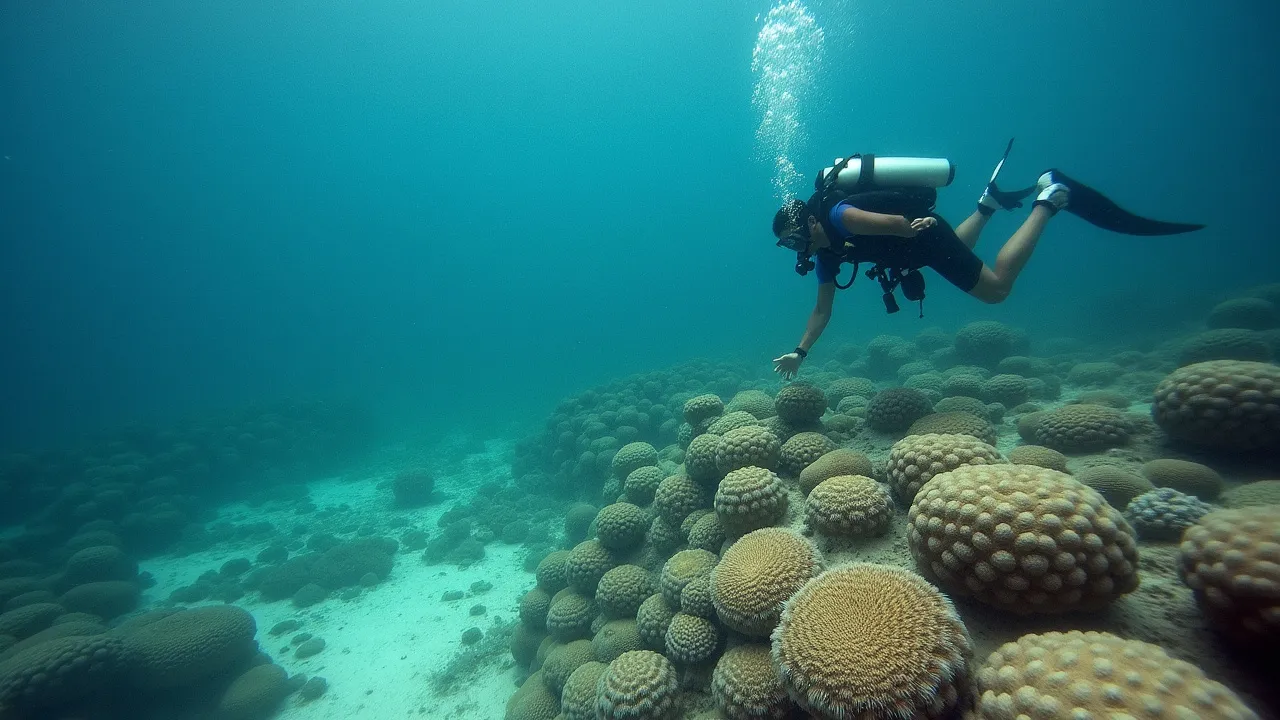
World Reef Awareness Day on June 1st raises global consciousness about coral reef ecosystems. It encourages conservation actions, education, and policy changes to protect these vital marine habitats from threats like climate change and pollution.
The Historical Origins & Evolutionary Journey
World Reef Awareness Day, observed annually on June 1st, was first conceptualized by the Coral Reef Alliance (CORAL) in 2014 to address the escalating crisis facing coral reefs worldwide. The day emerged as a focal point for education, advocacy, and action, aiming to halt and reverse the decline of reef ecosystems.
The Foundational Catalyst
By the early 2000s, scientists had documented alarming rates of coral bleaching, ocean acidification, and overfishing. The Great Barrier Reef lost over 50% of its coral cover between 1995 and 2010. In response, conservationists called for a dedicated day to unite global efforts. CORAL, founded in 1994, leveraged its network of scientists, policymakers, and local communities to launch the observance.
The Legislative/Official Adoption
While not a federally recognized holiday, World Reef Awareness Day gained traction through partnerships with the United Nations Environment Programme (UNEP), the International Coral Reef Initiative (ICRI), and numerous NGOs. By 2018, over 20 countries officially endorsed the day, and the U.S. National Oceanic and Atmospheric Administration (NOAA) incorporated it into its annual outreach calendar.
Modern Global Legacy
Today, World Reef Awareness Day is marked by thousands of events—from beach cleanups to virtual summits. It has evolved into a critical platform for advocating science-based policies, such as marine protected areas (MPAs) and sustainable fishing practices. The day also highlights climate action, linking reef health to global temperature goals.
How to Celebrate World Reef Awareness Day
Participating in World Reef Awareness Day can be transformative, whether individually or collectively. Here is a definitive guide with actionable strategies for everyone.
Individual Actions
- Educate Yourself: Watch documentaries like "Chasing Coral" or read reports from the Global Coral Reef Monitoring Network.
- Reduce Your Carbon Footprint: Use public transit, reduce energy consumption, and offset flights.
- Choose Reef-Safe Sunscreens: Avoid oxybenzone and octinoxate, which cause coral bleaching.
- Practice Sustainable Seafood: Use apps like Seafood Watch to avoid overfished species.
School & Community Events
- Organize a Beach Cleanup: Remove debris that smothers reefs and attracts predators. Record trash data for citizen science.
- Hold a Fundraiser: Run a virtual 5K or bake sale to support organizations like CORAL or the Reef Resilience Network.
- Create Educational Displays: Set up posters or digital kiosks at libraries showing reef biodiversity and threats.
Corporate & Social Rituals
- Adopt a Reef: Companies can sponsor a patch of reef restoration through organizations like the Reef Ball Foundation.
- Host Webinars: Invite marine biologists to discuss local reef health and conservation actions.
- Policy Advocacy: Encourage employees to write to legislators supporting the National Coral Reef Management Act.
Global Celebrations
Different countries have unique traditions: In Australia, "Reef Day" includes live underwater tours from the Great Barrier Reef. In Fiji, communities perform traditional ceremonies asking for reef protection. The Philippines organizes mass coral planting events. The Maldives holds educational festivals combining reef snorkeling with marine biology talks.
The Vital Role of Coral Reefs
Coral reefs are often called the "rainforests of the sea" due to their immense biodiversity. They cover less than 1% of the ocean floor but support 25% of all marine species. Ecosystem Services include coastal protection from storms, nursery habitats for fish, and sources of new medicines.
Economic Importance
Reefs contribute over $9.9 trillion annually to the global economy through tourism, fisheries, and shoreline protection. In the Maldives, reef-related tourism accounts for over 40% of GDP. The fishing industry relies on healthy reefs to sustain stocks of snapper, grouper, and other commercial species.
Threats to Reefs
- Climate Change: Rising sea temperatures cause mass bleaching events. The 2016-2017 bleaching killed 50% of the Great Barrier Reef's shallow corals.
- Pollution: Agricultural runoff, sewage, and plastic waste smother corals and introduce pathogens.
- Overfishing: Removing key herbivores like parrotfish allows algae to overgrow and outcompete corals.
Scientific Breakthroughs in Reef Restoration
Recent advances in coral restoration offer hope. Microfragmentation and coral gardening allow nurseries to grow corals 25 times faster than in the wild. Scientists at the Mote Marine Laboratory have successfully bred super-corals that withstand higher temperatures.
Assisted Evolution
Researchers are using selective breeding to create heat-tolerant corals. For example, the Reef Restoration and Adaptation Program (RRAP) in Australia is developing corals that can survive 1-2°C warmer waters. Gene editing tools like CRISPR are being explored to introduce heat-shock proteins.
Artificial Reefs
Deploying structures like the "Reef Balls" or 3D-printed ceramic tiles provides substrate for coral larvae to settle. These artificial reefs also attract fish, boosting local fisheries. In the Caribbean, such projects have restored 80% of coral cover within three years.
Global Policies & Conservation Efforts
World Reef Awareness Day catalyzes policy change. Key international agreements include the Convention on Biological Diversity (CBD) which set targets for protecting 30% of oceans by 2030 (30x30). The International Coral Reef Initiative (ICRI) has members from 45 countries committed to sustainable reef management.
Marine Protected Areas (MPAs)
Well-managed MPAs increase fish biomass by 600% and coral cover by 25%. However, only 3% of reefs are in fully protected reserves. The Papahānaumokuākea Marine National Monument in Hawaii is a model, spanning over 582,000 square miles.
Local Community Management
In Fiji, traditional "qoliqoli" rules empower locals to manage fishing rights. Similar systems in Indonesia's "Sasi" approach have restored reef health while improving livelihoods. Community-led enforcement is often more effective than top-down regulations.
The Impact of Tourism on Reefs
Tourism is a double-edged sword for coral reefs. While it provides revenue for conservation, irresponsible practices cause physical damage. Sustainable Tourism Guidelines are crucial.
Best Practices for Tourists
- Do Not Touch: Even a gentle touch can damage coral polyps and introduce bacteria.
- Choose Eco-Certified Operators: Look for Green Fins or Blue Flag certification.
- Snorkel Responsibly: Maintain buoyancy and avoid fin contact with the reef.
- Support Local Conservation: Many resorts now charge a reef fee that funds monitoring and restoration.
Positive Examples
In Belize, the "Fee for Reef" program collects $5 per tourist, generating over $2 million annually for management. The Great Barrier Reef Marine Park Authority uses part of the visitor entry fee to fund Crown-of-Thorns starfish control and water quality improvements.
Historical Timeline
The Coral Reef Alliance (CORAL) is founded, becoming a leading global organization dedicated to protecting coral reefs.
World Reef Awareness Day is first celebrated on June 1st, initiated by CORAL to draw attention to the plight of coral reefs.
The Great Barrier Reef experiences severe mass bleaching due to El Niño, with 67% of the northern section killed. This galvanizes global awareness.
The International Coral Reef Initiative (ICRI) declares an "International Year of the Reef" to amplify conservation messaging.
NOAA officially incorporates World Reef Awareness Day into its annual outreach programs, providing educational materials and webinars.
The COVID-19 pandemic reduces tourism pressure on reefs, providing a natural reprieve and demonstrating the resilience of some ecosystems.
The Coral Reefs of the World report calculates that 14% of the world's coral has been lost since 2009, sparking urgent calls for action.
UNEP launches the #ForNature campaign on World Reef Awareness Day, calling for individual and corporate pledges to protect reefs.
The first global coral restoration mapping project reveals that active restoration covers only 0.01% of reef area, underscoring the need for scale.
World Reef Awareness Day sees record participation, with over 1,000 events in 80 countries, including a live-streamed virtual dive from the Great Barrier Reef.