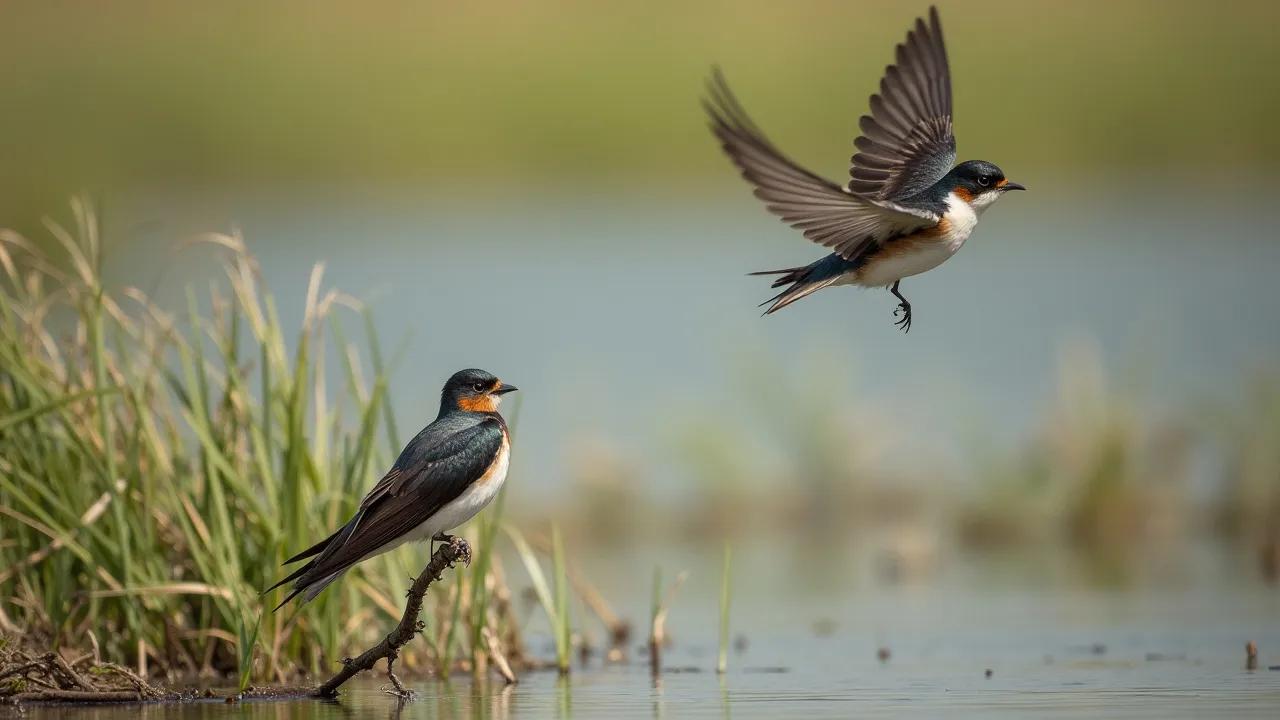
World Migratory Bird Day, observed on the second Saturday in May, highlights the importance of conserving migratory birds and their habitats across the globe. Join millions in birdwatching, education, and conservation action.
The Historical Origins & Evolutionary Journey
World Migratory Bird Day (WMBD) was established to raise awareness about the need to protect migratory birds and their habitats. Its roots lie in international conservation agreements.
The Foundational Catalyst
In the early 2000s, the Secretariat of the Agreement on the Conservation of African-Eurasian Migratory Waterbirds (UNEP/AEWA) and the Convention on the Conservation of Migratory Species of Wild Animals (CMS) recognized the urgent need for a global campaign to highlight the plight of migratory birds. These species face numerous threats, including habitat loss, climate change, and illegal hunting.
The Legislative/Official Adoption
WMBD was first officially celebrated in 2006, with events in over 50 countries. The date was set as the second Saturday in May to coincide with peak migration periods in the Northern Hemisphere. The initiative quickly gained traction, supported by governments, NGOs, and citizen scientists worldwide.
Modern Global Legacy
Today, WMBD has grown into a massive global event, with hundreds of activities including birdwatching walks, educational workshops, art competitions, and conservation projects. The day serves as a platform to promote international cooperation and action for migratory bird conservation. Each year features a specific theme, such as 'Birds Connect Our World' or 'Protect Birds, Be the Solution.' The event also emphasizes the cultural and economic importance of birds, from ecotourism to ecosystem services.
How to Celebrate World Migratory Bird Day
Celebrating WMBD can be both fun and impactful. Here is a definitive global guide to participating.
Individual Actions
- Go birdwatching: Visit local parks, wetlands, or nature reserves. Use binoculars and field guides to identify species.
- Create bird-friendly habitats: Plant native flowers, shrubs, and trees that provide food and shelter. Reduce pesticide use.
- Reduce light pollution: Turn off unnecessary lights at night during migration seasons to prevent disorientation.
- Keep cats indoors: Domestic cats are a major threat to birds. Keep them inside, especially during migration.
School and Community Activities
- Organize a bird count: Join citizen science projects like eBird to collect data on migratory species.
- Host educational workshops: Invite local ornithologists to speak about migration ecology and conservation.
- Art and writing contests: Encourage students to create paintings, poems, or essays about migratory birds.
Corporate and Organizational Involvement
- Sponsor conservation projects: Fund habitat restoration, research, or anti-poaching efforts.
- Promote green roofs and windows: Install bird-safe glass and green spaces on buildings.
- Encourage volunteer days: Support employee participation in local cleanups or bird monitoring.
In different regions, traditions vary. For instance, in the United States, many national wildlife refuges host free events. In Europe, countries like Germany and the Netherlands organize large-scale bird festivals. In Africa, communities engage in birdwatching safaris and educational programs. The core message remains the same: every action counts.
Global Impact of Migratory Birds
Migratory birds play crucial roles in ecosystems worldwide. They are indicators of environmental health, pollinators, seed dispersers, and pest controllers.
Ecological Services
Birds such as hummingbirds and sunbirds pollinate flowers, ensuring plant reproduction. Frugivorous birds disperse seeds, helping forests regenerate. Insectivorous birds control pest populations, reducing the need for chemical pesticides. These services are valued at billions of dollars annually.
Economic Contributions
Birdwatching and ecotourism generate significant revenue. In the United States alone, birders spend over $40 billion annually on travel, equipment, and lodging. This supports local economies, especially in rural and remote areas. Many developing countries benefit from bird-related tourism as well.
Cultural Significance
Birds feature prominently in art, literature, and folklore across cultures. They symbolize freedom, hope, and the changing seasons. Indigenous communities often have deep spiritual connections to migratory birds. WMBD helps preserve these cultural ties.
Threats Facing Migratory Birds
Despite their importance, migratory birds face numerous threats, many driven by human activities.
Habitat Loss and Degradation
Wetlands, forests, and grasslands are being destroyed for agriculture, urban development, and infrastructure. Stopover sites and breeding grounds are shrinking, forcing birds to travel longer distances with fewer resources.
Climate Change
Rising temperatures and shifting weather patterns disrupt migration timing and food availability. Some species are unable to adapt, leading to population declines. Sea-level rise threatens coastal habitats.
Collisions with Man-Made Structures
Buildings, power lines, wind turbines, and communication towers kill millions of birds annually. Light pollution also causes fatal disorientation.
Hunting and Poaching
Illegal hunting and trapping remain a problem in many regions, particularly along migration routes in the Mediterranean and Southeast Asia. Overexploitation for food or the pet trade can decimate populations.
Invasive Species
Non-native predators, such as cats, rats, and snakes, prey on eggs, chicks, and adults. Invasive plants can alter habitat structure and food sources.
Conservation Efforts and Success Stories
Numerous initiatives are working to protect migratory birds. International treaties like the African-Eurasian Migratory Waterbird Agreement (AEWA) and the Bonn Convention provide legal frameworks. National laws protect critical habitats.
Protected Areas
Establishing and managing reserves, such as national parks and Ramsar sites, safeguards key stopover and wintering grounds. Examples include the Wadden Sea in Europe and the Okavango Delta in Africa.
Community-Based Conservation
Local communities engage in sustainable practices, such as eco-tourism and alternative livelihoods. Programs like 'BirdLife International's Important Bird and Biodiversity Areas involve citizens in monitoring and protection.
Technological Innovations
Satellite tracking, radar, and citizen science apps help researchers understand migration routes and threats. Bird-friendly building designs, such as patterned glass, reduce collisions.
Success Stories
The Whooping Crane population has rebounded from fewer than 20 individuals to over 800 thanks to captive breeding and habitat protection. The Saker Falcon has benefited from international cooperation against illegal trade. These examples show that conservation works when we collaborate.
How to Get Involved Year-Round
Beyond WMBD, there are many ways to support migratory birds all year.
- Support conservation organizations: Donate to groups like BirdLife International, Audubon, or local bird clubs.
- Advocate for policy: Urge elected officials to protect wetlands, forests, and migratory corridors. Push for bird-safe building standards.
- Reduce your carbon footprint: Lower emissions to mitigate climate change. Use renewable energy, reduce waste, and choose sustainable products.
- Educate others: Share information about migratory birds on social media, in schools, and within your community.
- Participate in citizen science: Join projects like the Great Backyard Bird Count, eBird, or NestWatch to contribute valuable data.
Every action, no matter how small, contributes to a better future for migratory birds and the planet.
Historical Timeline
First official World Migratory Bird Day celebrated on the second Saturday in May, initiated by UNEP/AEWA and CMS. Events held in over 50 countries.
Theme introduced: 'Migratory Birds in a Changing Climate' to highlight climate change impacts.
WMBD focuses on 'Birds and People: A Shared Journey', emphasizing cultural connections.
The United Nations declares 2015 as the Year of the Bird, coinciding with WMBD activities.
Theme 'Unifying Our Voices for Bird Conservation' promotes global collaboration. Over 700 events worldwide.
Due to COVID-19, WMBD goes virtual with webinars and online birdwatching. Record participation.
Theme 'Water: Sustaining Bird Life' focuses on the importance of wetlands. New partnerships with youth organizations.
WMBD continues to grow, with over 100 countries participating annually. Emphasis on addressing plastic pollution and light pollution.