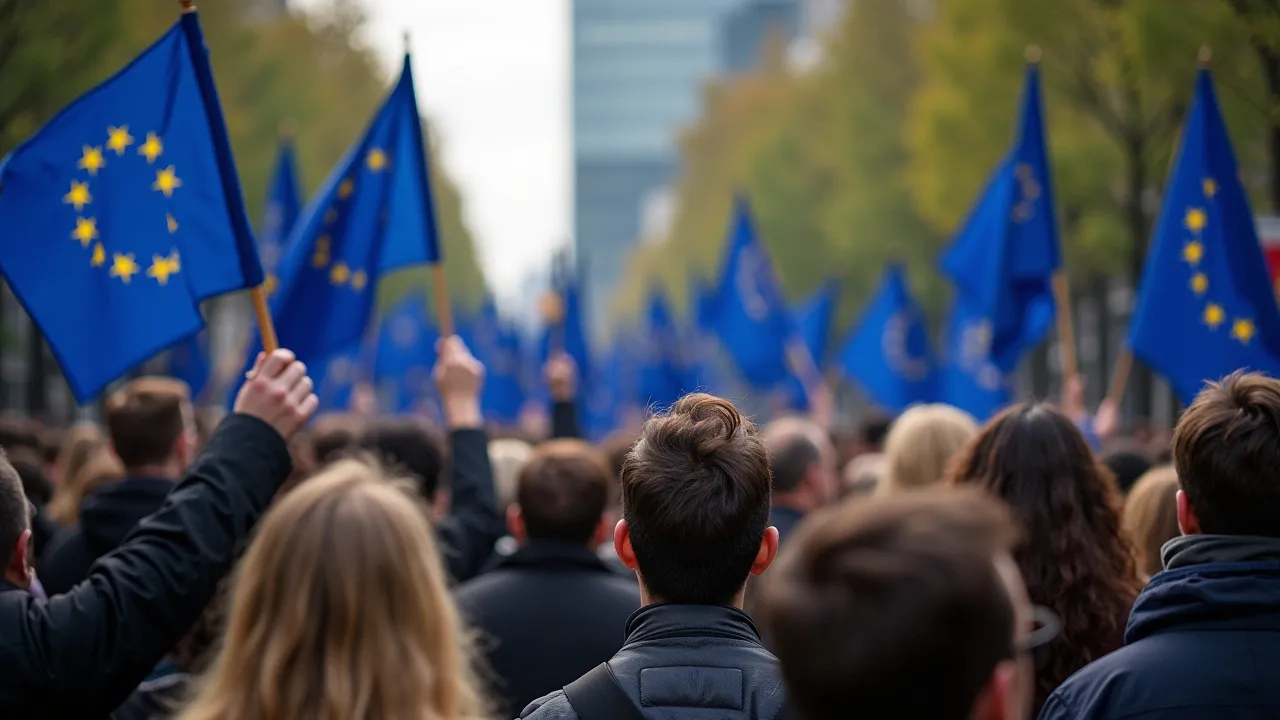
Europe Day, observed on May 9th, celebrates peace and unity in Europe. It commemorates the 1950 Schuman Declaration that laid the foundation for the European Union, fostering cooperation and solidarity among nations.
The Historical Origins & Evolutionary Journey of Europe Day
Europe Day, celebrated annually on May 9th, stands as a powerful symbol of European unity and peace. Its roots trace back to the aftermath of World War II, a period marked by devastation and a fervent desire to prevent future conflicts. The day specifically commemorates the Schuman Declaration of May 9, 1950, in which French Foreign Minister Robert Schuman proposed the creation of a European Coal and Steel Community (ECSC). This groundbreaking initiative aimed to pool the coal and steel resources of France and West Germany, making war between them "not merely unthinkable, but materially impossible."
The Foundational Catalyst
The Schuman Declaration, drafted by Jean Monnet, is widely regarded as the birth of the European Union. It proposed a supranational authority to manage key industries, thereby fostering economic interdependence. The declaration invited other European nations to join, leading to the Treaty of Paris in 1951, which established the ECSC. This foundational step set the stage for deeper integration, culminating in the creation of the European Economic Community (EEC) via the Treaty of Rome in 1957.
The Legislative/Official Adoption
The first official Europe Day celebrations were initiated by the Council of Europe in 1964, recognizing its own founding on May 5, 1949. However, the European Union later adopted May 9 as its own Europe Day in 1985, aligning with the Schuman Declaration anniversary. Today, both the Council of Europe and the EU mark the day, though the EU's celebration is more prominent. Institutions in Brussels, Strasbourg, and Luxembourg hold open houses, while member states organize cultural events, debates, and concerts.
Modern Global Legacy
Over the decades, Europe Day has evolved from a niche political commemoration into a pan-European celebration of identity and values. It serves as a reminder of the EU's achievements: peace, prosperity, and the free movement of people, goods, and ideas. The day also highlights ongoing challenges, such as democratic backsliding and the need for solidarity in crises like the COVID-19 pandemic. In 2020, the 70th anniversary of the Schuman Declaration was marked with virtual events due to lockdowns, demonstrating adaptability. Today, Europe Day is celebrated not only in EU member states but also in candidate countries and partner nations, symbolizing a shared commitment to democracy and human rights.
How to Celebrate Europe Day: A Comprehensive Global Guide
Europe Day offers a unique opportunity for individuals, schools, and institutions to engage with European values. Whether you are in an EU member state or beyond, here are actionable ways to mark the occasion.
For Individuals and Families
- Attend local events: Many cities host concerts, exhibitions, and food fairs. Check your city's official program.
- Fly the EU flag: Display the European flag—a circle of 12 golden stars on a blue background—at home or in your community.
- Learn about EU history: Watch documentaries or read about the Schuman Declaration. The EU's online portal offers free resources.
- Cook a European meal: Prepare dishes from different member states, such as French baguettes, Italian pasta, or Greek moussaka, to celebrate cultural diversity.
- Organize debates: Hold classroom discussions on European integration, climate policy, or digital sovereignty.
- Create art projects: Have students design posters or models representing EU symbols: the flag, the anthem ("Ode to Joy"), or the motto "United in Diversity."
- Invite guest speakers: Arrange talks from EU officials, diplomats, or historians.
For Schools and Educators
For Organizations and Businesses
- Host open days: Government buildings and EU offices often open their doors to the public. Provide guided tours and informational stands.
- Launch initiatives: Announce sustainability or cross-border cooperation projects on this day to align with EU values.
- Use social media: Share posts using hashtags like #EuropeDay, #SchumanDeclaration, or #EUinMyRegion.
Regional Variations
While May 9th is the primary date, some institutions celebrate on May 5th (Council of Europe's founding). In non-EU countries like the UK, Europe Day is marked by pro-European groups but less formally. In the Western Balkans, the day symbolizes European aspirations. Always check local customs.
The Symbolism of the European Flag and Anthem on Europe Day
Europe Day is inextricably linked with the visual and auditory symbols of the European Union. The European flag, adopted in 1985, features a circle of 12 five-pointed golden stars on a deep blue background. The number 12 is a traditional symbol of perfection and unity, not tied to the number of member states. The flag was originally designed for the Council of Europe in 1955 but later adopted by the EU.
The Anthem
Ludwig van Beethoven's "Ode to Joy" serves as the European anthem. It was chosen in 1972 and arranged by Herbert von Karajan. The anthem represents the ideals of freedom, peace, and solidarity. On Europe Day, it is often performed at official ceremonies and public gatherings.
The Motto
The EU's motto, "United in Diversity," highlights the coexistence of different cultures, languages, and traditions within a shared framework. Europe Day celebrations frequently emphasize this message through multicultural events.
These symbols are not just ornamental; they foster a sense of belonging among Europeans. On May 9th, they are prominently featured in parades, light shows, and educational materials, reinforcing the values of the European project.
Europe Day as a Catalyst for European Integration
Europe Day is more than a commemoration; it is a driver of further integration. The Schuman Declaration was the first step in a process that expanded from six to twenty-seven member states. Key milestones include:
- 1957 Treaty of Rome: Established the European Economic Community (EEC) and Euratom.
- 1992 Maastricht Treaty: Created the European Union and introduced the euro currency.
- 2004 Enlargement: Ten new countries joined, reuniting Eastern and Western Europe.
- 2009 Lisbon Treaty: Streamlined EU institutions and gave more power to the European Parliament.
Each enlargement and treaty revision is often celebrated or debated on Europe Day. The day serves as a moment for citizens to reflect on the benefits of integration, such as peace, trade, and freedom of movement. It also raises awareness of ongoing challenges, including democratic deficits and migration. By fostering public engagement, Europe Day helps legitimize the EU project and encourages civic participation.
Modern Observances and Global Impact of Europe Day
While Europe Day is primarily celebrated within EU institutions and member states, its influence extends globally. The EU uses the day to promote its values abroad through diplomatic events and development programs. For instance:
EU Delegations Worldwide
Embassies and delegations host receptions, film screenings, and cultural festivals in cities like Washington D.C., Tokyo, and New Delhi. These events highlight EU partnerships in trade, climate action, and human rights.
Candidate Countries
Nations aspiring to join the EU, such as Ukraine, Moldova, and Western Balkan states, celebrate Europe Day as a symbol of their European identity and reform progress. In Ukraine, Europe Day is observed on the third Saturday of May, aligned with the EU's date.
Social Media and Digital Engagement
The European Commission runs #EuropeDay campaigns, featuring interactive maps, quizzes, and live streams from Brussels. In 2023, the digital reach exceeded 100 million impressions, demonstrating global interest.
The day also serves as a platform for civil society to advocate for issues like climate change, digital rights, and social justice. Non-governmental organizations organize marches and petitions, linking European ideals to global challenges.
Controversies and Criticisms Surrounding Europe Day
Despite its unifying purpose, Europe Day is not without criticism. Some groups view it as a top-down, elitist celebration that fails to resonate with ordinary citizens. Eurosceptic parties often dismiss the day as political propaganda. Additionally:
- Historical memory: Critics argue that the day glosses over Europe's colonial past and unresolved conflicts.
- Democratic deficit: Protests on Europe Day sometimes highlight the EU's perceived lack of transparency and democratic accountability.
- Cultural erasure: Nationalists fear that European symbols dilute national identities.
Proponents counter that Europe Day is a constructive opportunity for dialogue. The EU has made efforts to address these concerns by involving civil society and promoting multilingualism. For example, the European Citizens' Initiative allows citizens to propose legislation, and Europe Day is used to showcase such participatory mechanisms.
Historical Timeline
The Council of Europe is founded on May 5, leading to the later establishment of Europe Day by the Council.
French Foreign Minister Robert Schuman presents the Schuman Declaration on May 9, proposing the European Coal and Steel Community.
The Treaty of Paris is signed, establishing the European Coal and Steel Community (ECSC) with six founding members: Belgium, France, Italy, Luxembourg, the Netherlands, and West Germany.
The Treaties of Rome are signed, creating the European Economic Community (EEC) and the European Atomic Energy Community (Euratom).
The Council of Europe first celebrates its founding on May 5, initiating its own Europe Day.
The European Union (then the European Communities) officially adopts May 9 as Europe Day at the Milan summit.
The Maastricht Treaty is signed, formally establishing the European Union and paving the way for the euro.
The largest enlargement of the EU occurs, with ten new countries joining on May 1. Europe Day celebrations highlight the reunification of Europe.
The Lisbon Treaty comes into force, reforming EU institutions and strengthening the role of the European Parliament.
The 70th anniversary of the Schuman Declaration is celebrated virtually due to the COVID-19 pandemic, with online events and digital campaigns.
Europe Day features a focus on Ukraine and Moldova, emphasizing EU support for candidate countries amid ongoing conflict.