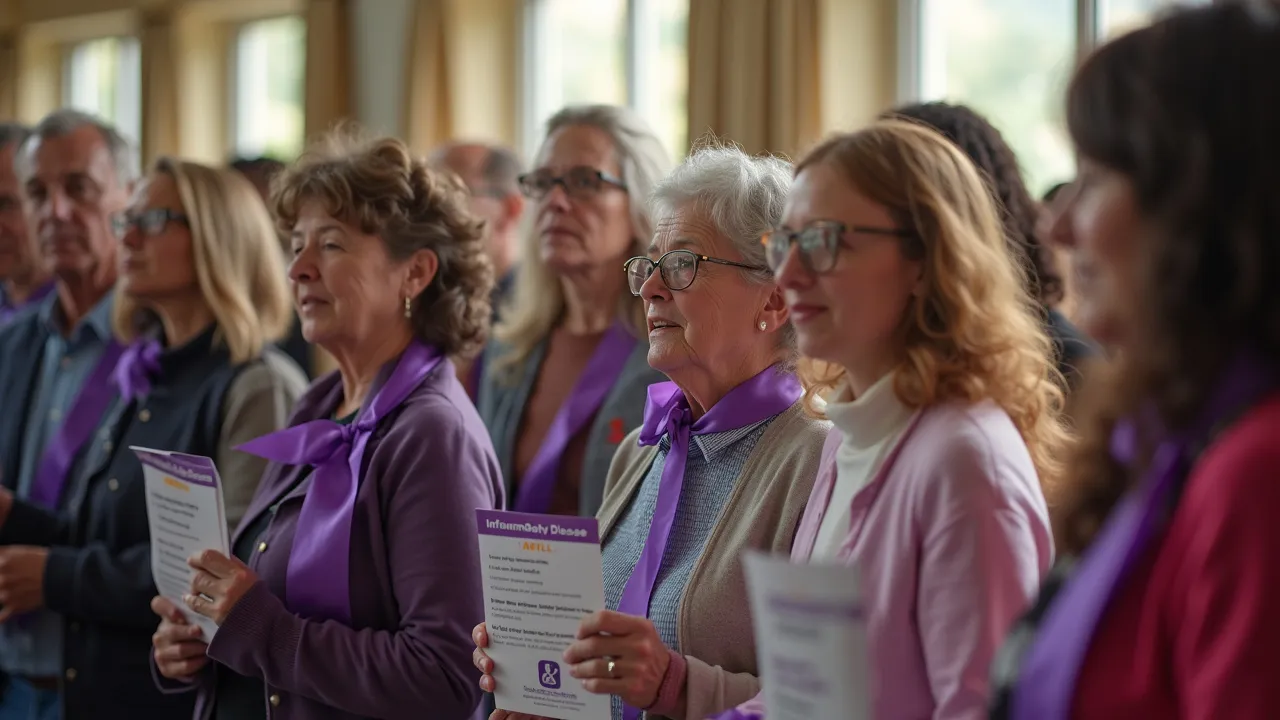
World Inflammatory Bowel Disease Day on May 19th unites the global IBD community to raise awareness, reduce stigma, and improve patient care. Learn about its history, impact, and how to participate in advocacy events worldwide.
The Historical Origins & Evolutionary Journey
World Inflammatory Bowel Disease (IBD) Day, observed annually on May 19th, was established in 2010 as a unified global campaign to raise awareness about Crohn's disease and ulcerative colitis. The initiative was spearheaded by the European Federation of Crohn's and Ulcerative Colitis Associations (EFCCA) in partnership with patient organizations from North America, Australia, and other regions. The date May 19th was chosen to coincide with the birthday of the late Professor Dr. John H. Walsh, a pioneer in IBD research, though this connection is sometimes cited differently; the primary reason was to create a consistent global day of action.
The Foundational Catalyst
Before 2010, IBD awareness activities were fragmented across countries, with small local events often overlapping. The need for a single, powerful voice became evident as the global burden of IBD rose—affecting over 10 million people worldwide. The founding organizations recognized that a coordinated international effort could amplify patient advocacy, encourage research funding, and combat social stigma. The first World IBD Day in 2010 featured purple-themed events, educational seminars, and social media campaigns that reached an estimated 100,000 people.
The Legislative/Official Adoption
In 2011, the World Gastroenterology Organisation (WGO) officially endorsed May 19th as World IBD Day, giving it institutional credibility. Over the following years, national health ministries in several countries issued proclamations recognizing the day. In 2015, the United Nations formally acknowledged World IBD Day as part of its health awareness calendar, a milestone that elevated the observance to a global health priority. The adoption spurred government-funded screening programs and insurance policy changes in some regions.
Modern Global Legacy
Today, World IBD Day is observed in over 50 countries with events ranging from landmark illuminations (e.g., the Sydney Opera House in purple) to charity walks and patient story campaigns. The day has evolved to embrace digital activism—using the #WorldIBDDay hashtag—and now serves as a platform for launching new clinical trials and patient registries. In 2023, the theme "Building Bridges" focused on improving doctor-patient communication and healthcare access disparities.
How to Celebrate World Inflammatory Bowel Disease Day
World IBD Day is a call to action for patients, caregivers, healthcare professionals, and the general public. Here is the ultimate guide to participating meaningfully across different settings:
For Individuals
- Wear purple—the official color of IBD awareness—and share a selfie on social media with the hashtag #WorldIBDDay and a personal story.
- Educate yourself by reading reliable resources from organizations like the Crohn's & Colitis Foundation or EFCCA, then share a fact with friends.
- Donate to research foundations or local patient support groups, even a small amount helps.
- Volunteer at a virtual or in-person fundraising event, such as a 5K run or online auction.
For Schools and Universities
- Host an awareness assembly with a guest speaker (a local gastroenterologist or patient advocate).
- Organize a purple dress day where students donate a small fee to wear purple attire, with proceeds going to IBD charities.
- Set up an information booth with leaflets and a display about digestive health, using infographics from the Crohn's & Colitis Foundation.
For Organizations and Companies
- Illuminate buildings purple—landmarks like the CN Tower and Niagara Falls have participated.
- Implement workplace wellness policies that include accommodations for employees with IBD, such as flexible bathroom breaks.
- Match employee donations to IBD research up to a certain amount per person.
Unique Traditions Across Countries
In Australia, the day often includes a "Purple Pumpkin Parade" in parks. In Japan, patient groups hold tea ceremonies to reduce stigma. In Brazil, free colonoscopy screenings are offered in mobile units. These local adaptations enrich the global tapestry of the observance.
Global Impact of Inflammatory Bowel Disease
IBD, comprising Crohn's disease and ulcerative colitis, affects an estimated 10 million people worldwide, with incidence rates rising in newly industrialized countries. The disease is chronic, often requiring lifelong medication, surgery, and lifestyle adjustments. World IBD Day shines a light on these burdens and drives progress in several key areas.
Economic Impact
The global economic burden of IBD is staggering, with direct healthcare costs exceeding $25 billion annually in the United States alone. Indirect costs from lost productivity and disability add another $15 billion. Awareness campaigns on May 19th advocate for better insurance coverage and paid sick leave policies.
Social Stigma and Mental Health
Many patients face embarrassment and isolation due to symptoms like urgent bowel movements and chronic pain. World IBD Day promotes open conversations, helping to normalize the disease. Studies show that stigma reduction efforts correlate with improved mental health outcomes among patients.
Research and Innovation
The day acts as a catalyst for research funding announcements. For example, in 2022, the Crohn's & Colitis Foundation launched a $100 million research initiative on World IBD Day. Clinical trials for new biologics and personalized medicine approaches are often highlighted.
Core Themes and Advocacy Priorities
Each year, World IBD Day adopts a central theme to focus advocacy efforts. Past themes include "Make Your Voice Heard" (2018), "Youth and IBD" (2020), and "Access to Care" (2022). The themes address critical gaps in patient support.
Access to Affordable Care
In many low- and middle-income countries, advanced treatments like biologics are prohibitively expensive or unavailable. Advocacy on May 19th urges governments to include IBD medications in essential medicine lists and national health systems.
Pediatric IBD
Approximately 25% of IBD cases are diagnosed in childhood. The day highlights the unique challenges young patients face, such as delayed growth, school absenteeism, and social isolation. Campaigns push for pediatric-specific research and school support programs.
Patient Empowerment
Through digital tools and patient advocacy training workshops (often offered on May 19th), individuals learn to manage their condition proactively. Self-management strategies include dietary tracking, stress reduction, and building strong relationships with healthcare teams.
Industry Transformations Catalyzed by World IBD Day
The annual observance has spurred significant changes in the pharmaceutical, digital health, and food industries.
Pharmaceutical Innovation
World IBD Day provides a platform for announcing the results of late-stage clinical trials for new therapies. Since 2010, the number of approved IBD treatments has doubled, with many drugs targeting specific molecular pathways. The day also publicizes expanded access programs for uninsured patients.
Digital Health & Monitoring
Wearable devices and smartphone apps that track symptoms and predict flare-ups have become more prevalent, often launched on May 19th. These tools empower patients and reduce hospital visits. The day has driven collaborations between tech startups and gastroenterology departments.
Food Industry Adaptation
Recognizing the role of diet in IBD management, some food companies now offer "IBD-friendly" product lines low in insoluble fiber and specific FODMAPs. World IBD Day promotes these innovations and encourages restaurants to provide menu options for patients with dietary restrictions.
Future Directions and How to Get Involved Year-Round
World IBD Day is not limited to May 19th; it inspires ongoing initiatives. The ultimate goal is a world where IBD is preventable, curable, and free of stigma.
Join a Patient Registry
Contributing data to registries like the IBD Partners network helps researchers understand disease patterns and develop better treatments. Many registries launch enrollment drives on May 19th.
Become a Peer Support Volunteer
Organizations often train volunteers to mentor newly diagnosed patients. This role requires empathy and basic knowledge of IBD. Training sessions are frequently offered around World IBD Day.
Advocate for Policy Change
Writing to elected officials or participating in advocacy days can lead to laws that improve patient lives. For example, the IBD Patient Protection Act in some U.S. states was championed by advocates active on May 19th.
By taking action beyond a single day, everyone can contribute to a brighter future for the IBD community.
Historical Timeline
Dr. Burrill Crohn, Dr. Leon Ginzburg, and Dr. Gordon Oppenheimer publish the landmark paper "Regional Ileitis," describing what becomes known as Crohn's disease.
Ulcerative colitis and Crohn's disease are clearly distinguished as separate entities by medical researchers.
The first drug specifically for IBD, sulfasalazine, is widely used; later, 5-ASA compounds become standard therapy.
Infliximab (Remicade), the first biologic therapy for IBD, receives FDA approval, revolutionizing treatment.
The European Federation of Crohn's and Ulcerative Colitis Associations (EFCCA) is established, uniting patient groups across Europe.
First official World IBD Day celebrated on May 19th, with events in multiple European countries and the launch of the purple ribbon symbol.
World Gastroenterology Organisation endorses World IBD Day, and the United Nations includes it on its health observances calendar.
The Crohn's & Colitis Foundation of America (now Crohn's & Colitis Foundation) partners with EFCCA to expand the day globally; landmarks light up purple.
Theme 'Make Your Voice Heard' encourages patient advocacy; social media reach surpasses 10 million impressions.
Virtual events dominate due to COVID-19; the theme 'Youth and IBD' focuses on adolescent patients; digital tools for symptom tracking gain traction.
Theme 'Building Bridges' emphasizes healthcare access and doctor-patient communication; the Sydney Opera House is illuminated purple for the first time.