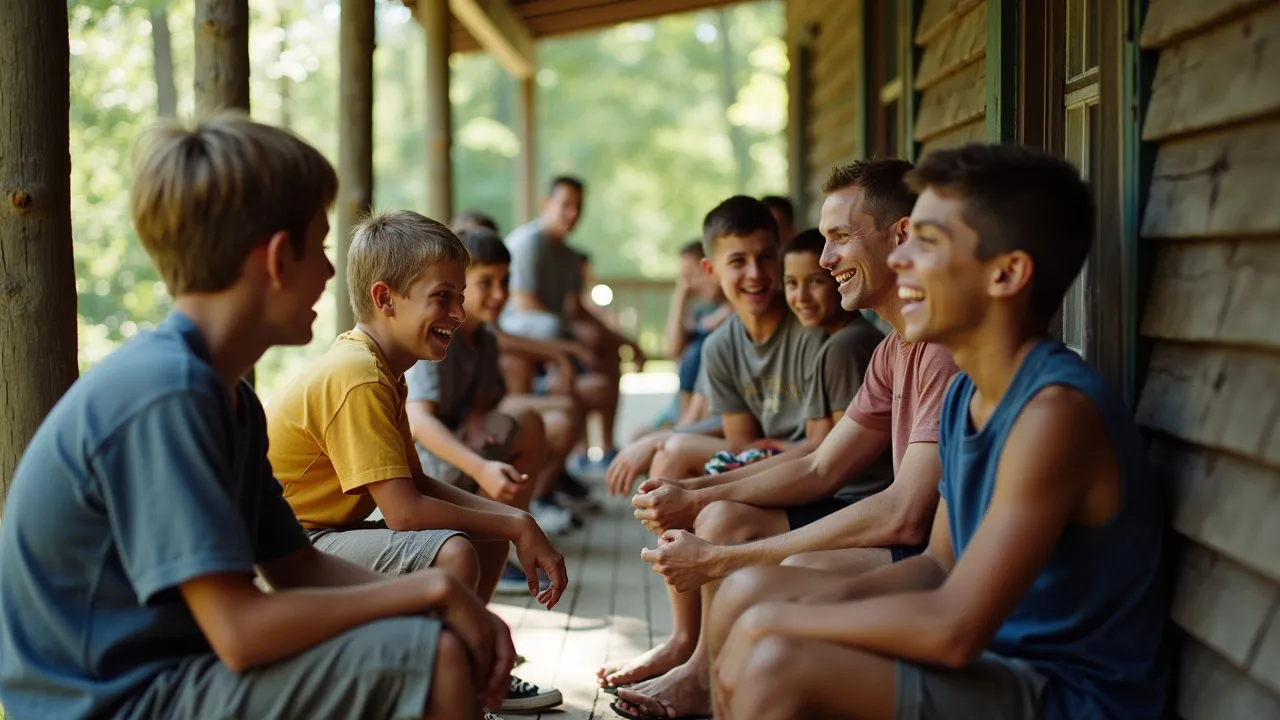
Boy's Club Day, observed on May 19th, celebrates the legacy of boys' clubs and youth mentorship. It honors the positive impact of male role models and community organizations in shaping character, leadership, and camaraderie.
The Historical Origins & Evolutionary Journey
Boy's Club Day traces its roots to the early 20th century, a time when urbanization and industrialization created a pressing need for safe spaces and positive guidance for young boys. The day was first informally observed on May 19th, 1910, to coincide with the founding of the Boy Scouts of America (BSA) by William D. Boyce. However, the concept of boys' clubs predates this, with organizations like the Boys' Club of America (now Boys & Girls Clubs) emerging in the 1860s.
The Foundational Catalyst: The Boys' Club Movement
The first boys' club in the United States was established in 1860 in Hartford, Connecticut, by a group of women who saw the need to keep boys off the streets. This grassroots effort expanded rapidly. By 1906, 53 independent boys' clubs came together to form the Boys' Club Federation, later renamed Boys & Girls Clubs of America. These clubs provided recreational activities, educational support, and moral guidance.
The Legislative/Official Adoption of a Day
Although not a federal holiday, Boy's Club Day gained traction in the 1920s as a local celebration in communities with strong boys' club chapters. In 1946, the Boys & Girls Clubs of America officially endorsed May 19th as a day to recognize the contributions of volunteers and mentors. The date was chosen because it fell near the anniversary of the BSA's founding and the founding of the first boys' club in Hartford.
Modern Global Legacy
Today, Boy's Club Day is observed in over 20 countries, though primarily in the United States, Canada, and the United Kingdom. The day has evolved to include digital mentorship programs, virtual club events, and community service initiatives. It remains a powerful reminder of the enduring need for positive male role models in youth development.
Core Themes and Societal Impact
Boy's Club Day emphasizes several core themes that resonate across cultures:
- Mentorship: The importance of adult male figures who guide boys through adolescence.
- Camaraderie: Building lifelong friendships through shared activities and challenges.
- Character Development: Instilling values such as honesty, responsibility, and perseverance.
- Community Engagement: Encouraging boys to contribute positively to their neighborhoods.
Research shows that boys who participate in structured club programs are 30% more likely to graduate high school and less likely to engage in risky behaviors. The day also highlights the need for more male teachers and mentors, as many boys lack consistent male role models at home.
How to Celebrate Boy's Club Day
Celebrating Boy's Club Day can take many forms, from individual actions to large community events. Here are actionable strategies for different groups:
For Individuals and Families
- Volunteer at a local boys' club: Offer to coach a sport, teach a skill, or simply spend time talking with members.
- Mentor a boy: Commit to regular one-on-one time through programs like Big Brothers Big Sisters.
- Share stories: Post on social media about a male mentor who positively influenced your life using #BoysClubDay.
For Schools and Youth Organizations
- Host a 'Day of Service': Organize a community clean-up or charity event led by boys.
- Invite guest speakers: Bring in local businessmen, athletes, or artists to talk about their journeys.
- Implement a 'Passport to Manhood' workshop: Focus on life skills, financial literacy, and emotional intelligence.
For Corporations
- Sponsor club memberships: Financially support Boys & Girls Clubs or Scout troops.
- Employee volunteer days: Encourage staff to spend the day mentoring at a nearby club.
- Fund scholarships: Create a fund for boys to attend leadership camps or college prep programs.
In the UK, celebrations often include cricket matches and storytelling sessions, while in Japan, boys' clubs (shonen kurabu) focus on martial arts and traditional crafts. Regardless of location, the day is about active engagement and genuine connection.
Global Celebrations and Regional Variations
While May 19th serves as the primary date in North America, other regions celebrate on different days:
- United Kingdom: Many clubs observe 'Boys' Brigade Day' in early May, but some adopt the US date.
- Canada: May 19th is widely recognized, with events like "Take a Boy to Work" day.
- Australia: Scouts and clubs often celebrate on the last Saturday of May.
- Japan: Boys' Day (Kodomo no Hi) is on May 5th, but separate club celebrations occur on May 19th in international schools.
These variations reflect local cultural norms and existing holidays, but the core message of mentorship and camaraderie remains universal.
The Role of Technology in Modern Boys' Clubs
In the digital age, boys' clubs have adapted to include online platforms. Virtual clubhouses offer coding classes, esports leagues, and remote mentoring. On Boy's Club Day, many organizations host webinars on topics like cybersecurity, digital citizenship, and online etiquette. This tech-savvy approach helps reach boys in rural areas or those who cannot attend physical clubs.
Despite these innovations, traditional outdoor activities like camping, hiking, and woodworking remain staples. The balance between screen time and nature is a key discussion point on the day.
Challenges and Future Directions
Boy's Club Day also serves as a platform to address ongoing challenges:
- Funding gaps: Many clubs struggle to maintain facilities and staff.
- Declining membership: Some boys perceive clubs as outdated.
- Inclusivity: Ensuring clubs are welcoming to all boys, regardless of background or ability.
Future celebrations emphasize diversity, mental health awareness, and partnerships with schools. The goal is to evolve the boys' club model to meet the needs of 21st-century youth while preserving timeless values.
Key Personalities and Influential Figures
The history of boys' clubs is rich with influential figures:
- William D. Boyce (1858-1929): Founder of the Boy Scouts of America, whose legacy inspired the date of Boy's Club Day.
- Ernest Thompson Seton (1860-1946): Naturalist and co-founder of the BSA, who emphasized outdoor skills.
- Daniel Carter Beard (1850-1941): Illustrator and founder of the Sons of Daniel Boone, merged into BSA.
- Julius Rosenwald (1862-1932): Philanthropist who funded many early Boys & Girls Clubs.
- Frederick Law Olmsted (1822-1903): Designed parks that housed early club activities.
These individuals exemplify the spirit of selfless service that Boy's Club Day celebrates.
Historical Timeline
The first boys' club in the United States is founded in Hartford, Connecticut, by a group of women to provide a safe haven for street children.
Fifty-three independent boys' clubs form the Boys' Club Federation (later Boys & Girls Clubs of America).
William D. Boyce incorporates the Boy Scouts of America, establishing May 19th as a significant date for youth mentorship.
The Boys & Girls Clubs of America officially endorses May 19th as 'Boys' Club Day' to honor volunteers and mentors.
Congress passes the Economic Opportunity Act, funding many club programs in low-income communities.
Boys & Girls Clubs of America launches the 'Youth for Tomorrow' initiative, expanding club services to include drug prevention.
Boy's Club Day is recognized by a joint resolution of the U.S. Congress, though not as a federal holiday.
Digital clubs emerge; the first virtual Boy's Club Day event hosts over 10,000 participants online.
Boy's Club Day expands to 20+ countries, with virtual and hybrid celebrations due to the COVID-19 pandemic.