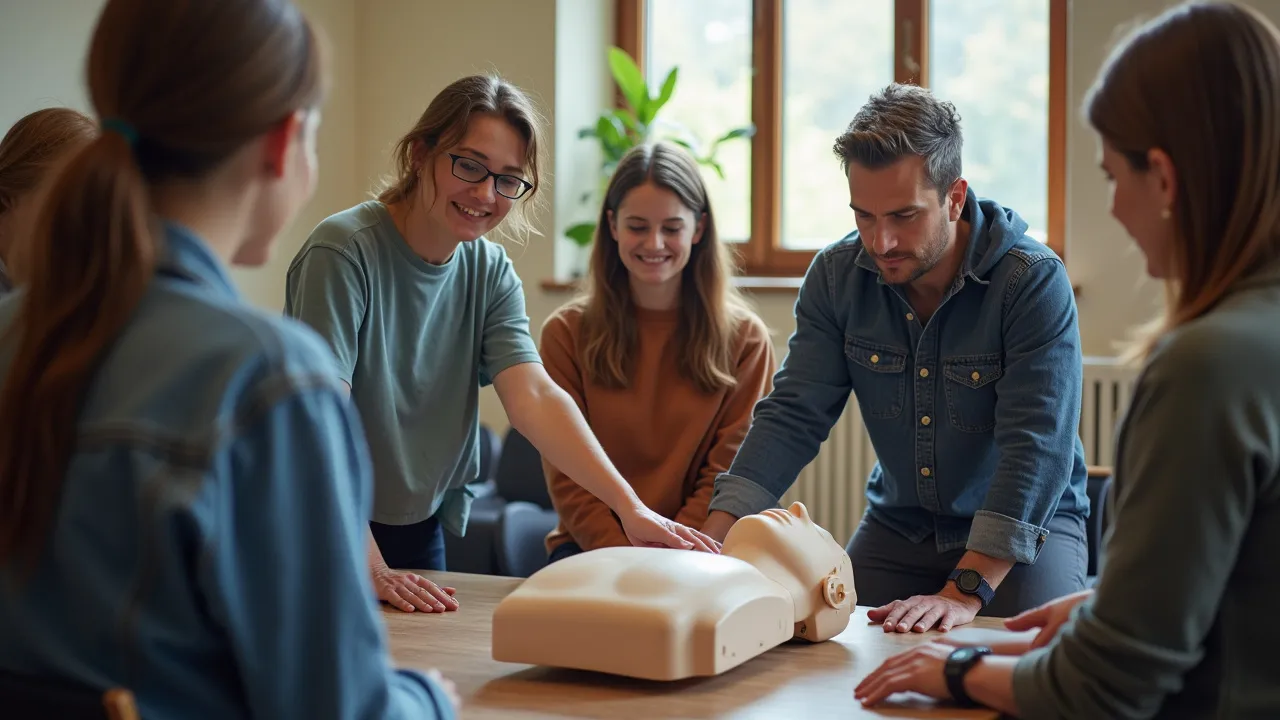
Celebrated on the second Saturday of September, World First Aid Day promotes basic first aid knowledge to save lives in emergencies. It raises awareness about the importance of immediate care and was established by the IFRC in 2000.
The Historical Origins & Evolutionary Journey
World First Aid Day, observed on the second Saturday of September, has a history rooted in global humanitarian efforts. The observance was created to highlight the critical importance of first aid knowledge and to empower individuals to act in emergencies.
The Foundational Catalyst
The idea of a dedicated day for first aid was championed by the International Federation of Red Cross and Red Crescent Societies (IFRC), which had long recognized that basic first aid skills can reduce mortality and morbidity in disasters and everyday accidents. In the late 1990s, the IFRC sought to institutionalize a global awareness campaign that would unite national societies and governments in promoting first aid training.
The Legislative/Official Adoption
In 2000, the IFRC officially proclaimed the second Saturday of September as World First Aid Day. This date was chosen to coincide with the beginning of the academic year in many countries, making it easier for schools and organizations to incorporate first aid education into their programs. Since then, it has been endorsed by numerous health ministries and humanitarian agencies worldwide.
Modern Global Legacy
Over the past two decades, World First Aid Day has evolved from a symbolic campaign into a practical movement. Millions of people have participated in free training sessions, workshops, and public demonstrations. The day has also spurred legislative changes in some countries, such as mandatory first aid training in schools and workplaces. Today, it remains a cornerstone of community resilience and emergency preparedness.
How to Celebrate World First Aid Day
World First Aid Day is an opportunity for individuals, families, schools, and organizations to learn and practice life-saving skills. Below are actionable ways to participate.
For Individuals and Families
- Attend a training session: Contact your local Red Cross or Red Crescent society for free or low-cost first aid courses.
- Update your kit: Check and restock your home and car first aid kits with essentials like bandages, antiseptics, and gloves.
- Practice scenarios: Role-play common emergencies, such as burns, cuts, or choking, with family members to build confidence.
For Schools and Universities
- Integrate into curriculum: Host a first aid workshop during physical education or health classes.
- Organize a competition: Run a first aid skills challenge to engage students in a fun, educational way.
- Invite experts: Bring in local paramedics or Red Cross volunteers for interactive demonstrations.
For Organizations and Businesses
- Mandatory training: Offer or require staff to complete a certified first aid course.
- Public awareness: Use social media to share first aid tips and promote the day using hashtags like #WorldFirstAidDay.
- Community events: Sponsor a free public first aid fair in collaboration with local emergency services.
Celebration traditions vary by region. For example, in India, many schools hold mass CPR drills, while in the UK, the British Red Cross organizes pop-up training stations in city centers. In Kenya, community health workers conduct door-to-door demonstrations. The common goal is universal access to first aid knowledge.
Global Impact of First Aid Awareness
World First Aid Day has contributed to a measurable increase in first aid literacy worldwide. According to the IFRC, nearly 100 million people globally receive first aid training each year through Red Cross and Red Crescent societies alone. This knowledge is particularly vital in regions with limited access to emergency medical services.
Reducing Mortality in Disasters
In disaster-prone areas, first aid training has been shown to reduce mortality by up to 30%. For instance, after the 2004 Indian Ocean tsunami, communities with prior first aid training were better equipped to handle mass casualties. World First Aid Day serves as a reminder that preparedness saves lives.
Impact on Workplace Safety
Many countries now mandate first aid training in workplaces, partly due to the advocacy surrounding this observance. The International Labour Organization (ILO) reports that first aid-trained employees reduce injury severity and recovery times. This day reinforces the business case for investment in first aid.
Economic Benefits
Every dollar spent on first aid training yields an estimated return of $4 in reduced healthcare costs and lost productivity. By promoting widespread training, World First Aid Day contributes to healthier economies and communities.
Core First Aid Skills Everyone Should Know
To observe World First Aid Day effectively, it's essential to master a few key skills. The following are prioritized by the IFRC as the most life-saving.
- CPR (Cardiopulmonary Resuscitation): For victims of cardiac arrest, immediate chest compressions can double survival rates. The recommended ratio is 30 compressions to 2 breaths.
- Choking response: The Heimlich maneuver (abdominal thrusts) can dislodge an airway obstruction. Back blows are an alternative for infants.
- Wound care: Clean a wound with water, apply pressure to stop bleeding, and cover with a sterile dressing. Avoid using alcohol directly on open wounds.
- Burn treatment: Cool the burn under running water for at least 10 minutes, then cover with cling film or a clean cloth. Do not apply ice or butter.
- Shock management: Lay the person down, elevate their legs if possible, and keep them warm until help arrives.
- Allergic reactions: Recognize signs like swelling and hives; use an epinephrine auto-injector if available.
These skills are simple to learn but can make the difference between life and death. World First Aid Day encourages everyone to refresh them annually.
First Aid in Schools and Communities
Integrating first aid education into school curricula is one of the most effective ways to build a resilient society. World First Aid Day provides a platform to advocate for this integration.
School Programs
Countries like Norway and Denmark have made first aid a mandatory part of elementary education. In the United States, the American Red Cross offers the 'First Aid for Youth' program. On World First Aid Day, many schools organize special assemblies where students practice bandaging and CPR on mannequins.
Community-Based Initiatives
In rural areas of sub-Saharan Africa, community health workers conduct mobile first aid training on World First Aid Day, focusing on snakebite management and malaria prevention. In urban centers, fire departments often open their doors for free demonstrations. These community efforts ensure that first aid knowledge reaches vulnerable populations.
Youth Engagement
The IFRC's 'First Aid for Youth' initiative encourages teenagers to become first aid trainers themselves. World First Aid Day often features youth-led workshops, fostering leadership and peer-to-peer learning. Such programs have been shown to improve retention of skills long-term.
The Role of Technology in First Aid Training
In recent years, technology has revolutionized how first aid is taught and practiced. World First Aid Day increasingly highlights digital tools that make training accessible.
Mobile Apps
The Red Cross and other organizations offer apps with step-by-step first aid guides, videos, and emergency call features. These apps are updated regularly and are valuable references during crises.
Virtual Reality (VR) Training
VR simulations allow users to practice scenarios like car accidents or heart attacks in a safe, immersive environment. Some programs are now used in schools on World First Aid Day to engage students.
Online Courses
Many organizations offer free online first aid courses with certification. During the COVID-19 pandemic, these became essential, and World First Aid Day 2020 saw a record number of downloads of the IFRC's first aid e-learning module.
Technology cannot replace hands-on practice, but it greatly expands reach and reduces barriers to learning.
Historical Timeline
Henry Dunant, founder of the Red Cross, witnesses the aftermath of the Battle of Solferino and organizes first aid for wounded soldiers, laying the groundwork for modern first aid.
The St. John Ambulance Association is founded in the UK to train people in first aid, becoming one of the earliest formal first aid organizations.
The IFRC launches the first global first aid program, standardizing training across national societies.
The IFRC officially establishes World First Aid Day, celebrated on the second Saturday of September each year.
World First Aid Day focuses on 'First Aid in the Workplace', leading to new occupational safety guidelines in several countries.
The IFRC releases updated first aid guidelines based on new scientific evidence, shared globally on World First Aid Day.
World First Aid Day theme 'First Aid for All' emphasizes universal access to training, especially in low-income communities.
Due to COVID-19, World First Aid Day promotes digital training resources and hygiene-specific first aid, reaching millions online.
World First Aid Day highlights climate-related emergencies, teaching first aid for heatstroke, hypothermia, and flood-related injuries.