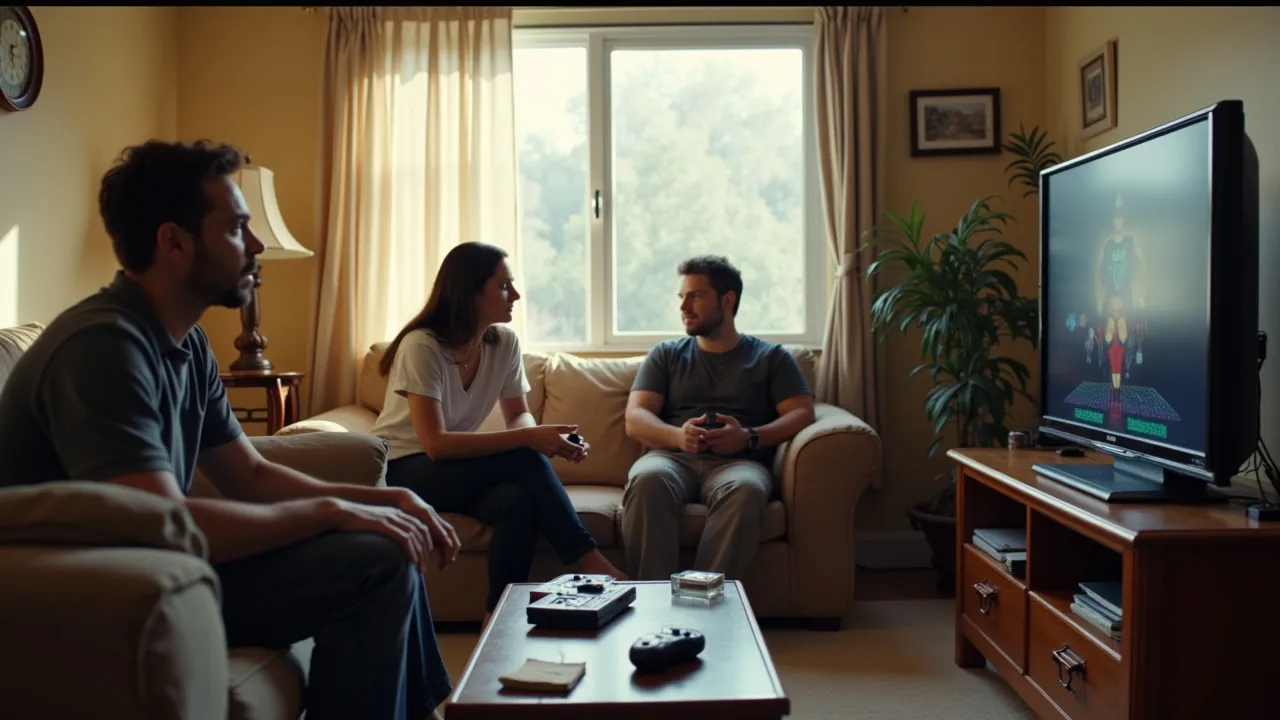
National Video Games Day, observed each September 12, celebrates the history, culture, and impact of video games. Learn about its origins, how to join the fun, and the industry's global influence.
The Historical Origins & Evolutionary Journey
The Foundational Catalyst
The concept of a dedicated day to honor video games emerged in the early 1990s as the medium matured from a niche hobby into a mainstream cultural force. The first commercially successful video games, such as Pong (1972) and Space Invaders (1978), sparked arcade fever. By the late 1980s, home consoles like the Nintendo Entertainment System (NES) brought gaming into living rooms across the United States. Enthusiasts and retailers began informally promoting September 12 as a day to celebrate the industry's contributions to entertainment and technology.
The Legislative/Official Adoption
Unlike many national days, National Video Games Day has no single official proclamation. Instead, it evolved organically through grassroots efforts, annual retail sales events, and media coverage. In the late 1990s, video game trade organizations like the Entertainment Software Association (ESA) unofficially endorsed the date. The day gained traction as a marketing opportunity for new game releases and hardware discounts. By the early 2000s, it was widely recognized by gaming communities, magazines, and online forums. September 12 was chosen partly to coincide with the back-to-school season, giving young gamers a reason to revisit their favorites.
Modern Global Legacy
Today, National Video Games Day is celebrated both online and offline. Major publishers often launch demos, hold tournaments, or announce sequels. Streaming platforms like Twitch and YouTube Gaming host special marathons. Esports organizations run charity events. The day also serves as a reminder of video gaming's evolution from pixelated screens to immersive virtual realities, and its profound influence on culture, education, and social interaction.
How to Celebrate National Video Games Day
Celebrating National Video Games Day can be as simple or as elaborate as you wish. Below are actionable ideas for individuals, groups, and organizations to honor the day:
- Play a Classic or New Release: Dedicate time to a favorite game from your childhood or try a recent blockbuster. Many developers offer free trials or discounts on September 12.
- Host a Local or Online Game Night: Gather friends for a multiplayer session. Use services like Steam Remote Play or PlayStation Share Play to include remote players.
- Attend or Stream a Tournament: Check local gaming cafes or online platforms for events. Alternatively, watch professional esports matches on Twitch.
- Visit a Retro Arcade or Museum: Many cities have arcades with vintage cabinets or video game museums that run special exhibits on this day.
- Support Game Developers: Purchase a game from an independent studio, leave a positive review, or donate to a gaming-related charity like Child's Play.
- Educational Activities: Schools can organize coding workshops or game design challenges. Teachers can use gamification tools to make lessons more engaging.
- United States: Retailers like GameStop and Best Buy offer special sales. Many schools host after-school gaming clubs with tournaments.
- Japan: Though not an official holiday, Japanese developers often announce new titles or hold live concerts featuring game music on September 12.
- United Kingdom: Gaming pubs and bars host quiz nights and retro gaming competitions. Online communities organise charity live streams.
- South Korea: PC bangs (internet cafes) offer reduced rates and special events. Esports teams often hold fan meet-and-greets.
Celebration Around the World
The Video Game Industry: Economic Powerhouse & Cultural Driver
The global video game industry is worth over $200 billion, surpassing the film and music industries combined. This section explores the economic and cultural dimensions that make National Video Games Day relevant beyond mere entertainment.
Economic Impact
Gaming generates millions of jobs, from developers to streamers. Major console launches (e.g., PlayStation 5, Xbox Series X) create hardware shortages and massive retail events. Mobile gaming alone accounts for more than half of industry revenue. Esports tournaments offer prize pools exceeding $40 million, drawing sponsorship from non-endemic brands like Coca-Cola and Nike.
Social and Psychological Benefits
Contrary to stereotypes, video games can improve cognitive skills, problem-solving, and teamwork. Educational games are used in schools to teach subjects like history, math, and programming. Multiplayer games foster social connections across borders, especially for individuals with limited mobility.
Representation and Inclusion
Recent years have seen increased diversity in characters and narratives. Games like The Last of Us Part II and Life is Strange tackle complex themes such as identity and mental health. Accessibility features (colorblind modes, remappable controls) make gaming inclusive for disabled players.
Technological Milestones That Shaped Modern Gaming
From vector graphics to ray tracing, technology has driven the evolution of video games. This section highlights breakthroughs that define the current landscape.
Graphics and Processing Power
Transition from 2D sprites to 3D polygons (1995). Introduction of dedicated GPUs (NVIDIA GeForce 256, 1999). Modern consoles capable of real-time ray tracing and 4K resolution.
Online Connectivity
Dreamcast's SegaNet (2000) pioneered online multiplayer. Xbox Live (2002) popularized subscription-based online services. Cloud gaming (Stadia, GeForce Now) promises streaming without high-end hardware.
Virtual Reality (VR) and Augmented Reality (AR)
Oculus Rift (2016) revived VR gaming. Pokémon GO (2016) brought AR to mainstream audiences. Standalone headsets like Meta Quest 2 make VR accessible.
Esports: From Basement Competitions to Global Spectacles
Esports has transformed competitive gaming into a professional sport with millions of fans. National Video Games Day often coincides with major tournaments.
History of Competitive Gaming
First recognized tournament: Space Invaders Championship (1980) with over 10,000 participants. Rise of fighting games (Evo Championship Series) and real-time strategy (StarCraft in South Korea). Today, games like League of Legends, Dota 2, and Counter-Strike: Global Offensive dominate.
Structure and Economics
Professional teams are owned by venture capital firms and celebrities. Salaries rival traditional athletes. The International (Dota 2) crowdfunded a $40 million prize pool in 2021. Broadcasting rights deals with ESPN and Netflix.
Video Games in Education and Healthcare
Beyond entertainment, games are serious tools for learning and therapy. This section explores their practical applications.
Gamification in Classrooms
Platforms like Minecraft Education Edition teach coding, history, and teamwork. Simulations (e.g., Kerbal Space Program) explain physics. Language learning apps like Duolingo use game mechanics to motivate users.
Healthcare Applications
Exergames (e.g., Ring Fit Adventure) encourage physical activity. VR therapy treats PTSD and phobias. Cognitive training games may help delay dementia symptoms. Surgeons practice complex procedures using virtual reality simulators.
Controversies and Challenges Facing the Industry
Despite its success, the video game industry grapples with issues that affect players and creators. National Video Games Day also serves as a moment to reflect on these challenges.
Addiction and Screen Time
The World Health Organization recognizes "gaming disorder" as a condition. Parents worry about excessive play among children. Game developers implement time-management tools and parental controls.
Microtransactions and Loot Boxes
Randomized in-game purchases have drawn scrutiny for resembling gambling. Several countries have regulated loot boxes. Player backlash forced some publishers to adopt transparent reward systems.
Crunch Culture
Game developers often work excessive overtime ("crunch") to meet deadlines. High-profile exposés (e.g., Rockstar Games, CD Projekt Red) led to unionization efforts and better labor practices.
Historical Timeline
Physicist William Higinbotham creates <strong>Tennis for Two</strong>, one of the first video games, displayed on an oscilloscope at Brookhaven National Laboratory.
Atari releases <strong>Pong</strong>, the first commercially successful arcade video game, sparking the arcade industry.
Namco's <strong>Pac-Man</strong> becomes a cultural phenomenon, leading to the first video game merchandise and animated series.
Nintendo launches the <strong>Nintendo Entertainment System (NES)</strong> in North America, reviving the home console market after the 1983 crash.
National Video Games Day is first informally observed on September 12, promoted by retailers and gaming magazines.
id Software releases <strong>Doom</strong>, popularizing the first-person shooter genre and online multiplayer via LAN.
Sony launches the <strong>PlayStation 2</strong>, which becomes the best-selling console of all time with over 155 million units sold.
Apple launches the <strong>iPhone</strong>, revolutionizing mobile gaming with the App Store in 2008.
Twitch (originally Justin.tv) launches its game-focused streaming platform, creating a new ecosystem for content creators and esports.
<strong>Pokémon GO</strong> becomes a global AR phenomenon, encouraging outdoor exploration and social interaction.
The COVID-19 pandemic drives record engagement in video games, with <strong>Animal Crossing: New Horizons</strong> becoming a cultural touchstone for social connection.