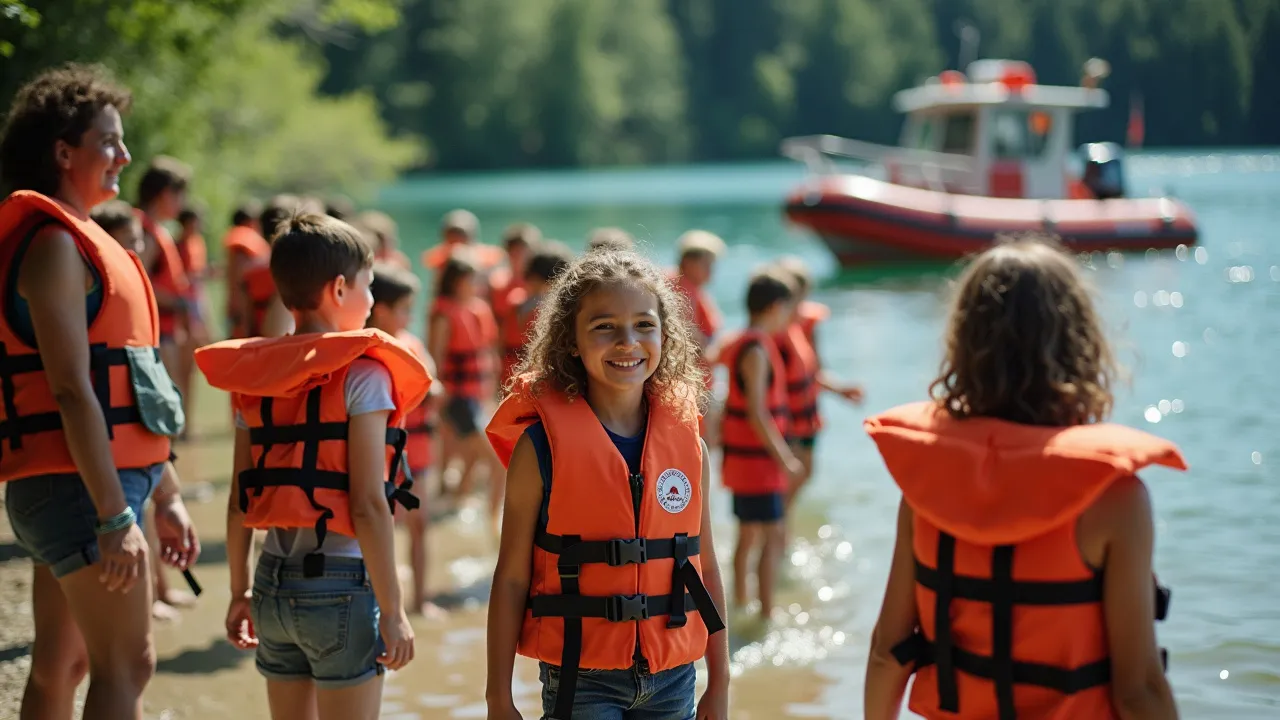
World Drowning Prevention Day, observed on July 25th, is a United Nations initiative to raise awareness and promote actions to prevent drowning, a leading cause of accidental death worldwide.
The Historical Origins & Evolutionary Journey
World Drowning Prevention Day, observed annually on July 25th, is a relatively new but critically important global health observance. Its establishment marks a concerted international effort to combat drowning, which claims over 236,000 lives each year—nearly 650 per day—making it a leading cause of unintentional injury death worldwide.
The Foundational Catalyst
The movement toward a dedicated day gained momentum in the early 2000s as global health organizations began recognizing drowning as a neglected public health issue. The World Health Organization (WHO) published its first Global Report on Drowning in 2014, providing comprehensive data and highlighting effective prevention strategies. This report served as a catalyst, demonstrating that drowning is not an inevitable fate but a preventable tragedy.
The Legislative/Official Adoption
On April 28, 2021, the United Nations General Assembly adopted Resolution A/RES/75/248, co-sponsored by Bangladesh and Ireland, officially designating July 25th as World Drowning Prevention Day. This resolution urged all member states to observe the day and implement evidence-based drowning prevention measures, including installing barriers, providing safe places away from water for children, teaching basic swimming and water safety skills, training bystanders in rescue and resuscitation, and strengthening public awareness campaigns.
Modern Global Legacy
Since its inception, the day has grown rapidly. In 2022, the WHO launched a 'Drowning Prevention' toolkit, and many countries now hold community events, school programs, and media campaigns on July 25th. The day also supports the UN Decade of Action on Nutrition (2016-2025) and contributes to Sustainable Development Goal targets related to health, education, and reducing inequalities.
How to Celebrate World Drowning Prevention Day
Observing World Drowning Prevention Day effectively involves a mix of awareness, education, and direct action. Below are specific, actionable strategies for individuals, communities, schools, and organizations:
For Individuals and Families
- Learn swimming and water safety: Enroll in certified swimming lessons for yourself and your children. Many community pools offer free or discounted classes on July 25th.
- Wear life jackets: Always wear a properly fitted life jacket during boating, kayaking, or when swimming in open water.
- Supervise children actively: Designate a 'water watcher'—an adult who provides constant, undistracted supervision when children are in or near water.
For Schools and Educational Institutions
- Host a water safety assembly: Invite local lifeguards or Red Cross trainers to demonstrate rescue techniques and water safety rules.
- Incorporate drowning prevention into curriculum: Use age-appropriate materials, such as coloring books for younger students or case studies for older ones.
- Organize a poster or essay contest: Encourage creative expression around the theme 'Drowning is Preventable' to reinforce learning.
For Community Organizations and Governments
- Launch a public awareness campaign: Use social media, local radio, and billboards to spread drowning prevention messages. The WHO provides free campaign materials.
- Install safety barriers: Advocate for or install four-sided fencing around swimming pools, and cover wells and cisterns.
- Train bystanders in rescue and CPR: Offer free community workshops on basic rescue techniques and cardiopulmonary resuscitation (CPR).
In high-risk countries like Bangladesh, where drowning is the leading cause of child death, celebrations include community creches and door-to-door education. In Australia, summer water safety initiatives coincide with the day. Globally, landmarks are lit in blue to signify support.
Global Impact: The Toll of Drowning
Drowning is a universal threat, but its impact is unequal. Over 90% of drowning deaths occur in low- and middle-income countries, with the highest rates in the WHO Western Pacific and African regions. Children, especially those aged 1–4, are most vulnerable. In many rural areas, daily activities like fetching water or crossing rivers expose people to risk.
The economic cost of drowning is staggering. In the United States alone, the CDC estimates that drowning-related deaths and injuries cost over $5.2 billion annually in medical costs and lost productivity. In developing nations, each drowning represents a family breadwinner lost, perpetuating cycles of poverty. Moreover, climate change is increasing flood-related drownings, making prevention even more urgent.
Core Societal Themes and Equity
World Drowning Prevention Day underscores several key societal themes: preventive health, child safety, and equity. Drowning is a stark example of a health inequity—those with least access to swimming lessons, safe water play areas, and emergency response are most at risk. The day promotes universal access to water safety education, which aligns with the UN's leave no one behind agenda.
Additionally, the observance highlights the role of gender: globally, males are twice as likely to drown as females, often due to higher exposure to water-related activities and risk-taking behaviors. Tailored interventions for boys and men—such as swimming programs integrated into school sports—are increasingly recommended.
Industry Transformations and Innovation
The global push for drowning prevention has spurred innovations across multiple sectors:
- Technology: Wearable flotation devices with GPS tracking, drone-assisted lifeguarding, and smartphone apps that provide real-time water safety tips are emerging.
- Construction: Pool safety covers, automatic alarms, and self-latching gates are becoming standard in new builds in many countries.
- Insurance: Some insurers now offer discounts for homes with compliant pool fencing or families who complete water safety courses.
- Entertainment: Film and TV productions increasingly include water safety messages; for example, the 'Blue Planet' series inspired reef-safe swimming campaigns.
These innovations not only save lives but also create economic opportunities in safety equipment, training, and surveillance technology.
International Cooperation and Future Directions
World Drowning Prevention Day is a platform for international collaboration. The WHO's Global Status Report on Drowning Prevention tracks progress and provides a roadmap. Key future directions include:
- Expanding legislation: More countries are adopting mandatory pool fencing and requiring life jackets on boats.
- Integrating drowning prevention into Universal Health Coverage: As part of primary care, community health workers can deliver water safety education.
- Strengthening data collection: Accurate national drowning statistics are still lacking in many countries; improved surveillance can guide policy.
- Scaling up community-based interventions: Successful models like Bangladesh's 'Anchal' playgroups (which supervise preschool children while adults work) are being replicated.
The day serves as a reminder that drowning is not inevitable—collective action can turn the tide.
Historical Timeline
The World Health Organization (WHO) holds a first global consultation on drowning prevention, highlighting the need for data and advocacy.
WHO publishes its first Global Report on Drowning, revealing that drowning is the third leading cause of unintentional injury death worldwide, with over 372,000 annual deaths.
Bangladesh and Ireland begin informal discussions at the UN to propose a World Drowning Prevention Day, recognizing drowning as a neglected issue.
A draft UN resolution is circulated, gaining co-sponsorship from over 70 countries, including Australia, Thailand, and the United Kingdom.
The UN General Assembly adopts Resolution A/RES/75/248, officially designating July 25th as World Drowning Prevention Day.
First World Drowning Prevention Day is observed globally, with events in over 100 countries, including blue lighting of landmarks and community water safety workshops.
WHO launches the 'Drowning Prevention' toolkit, providing low-cost, evidence-based resources for low- and middle-income countries.
The UN convenes the first high-level meeting on drowning prevention, with commitments from member states to strengthen national action plans.