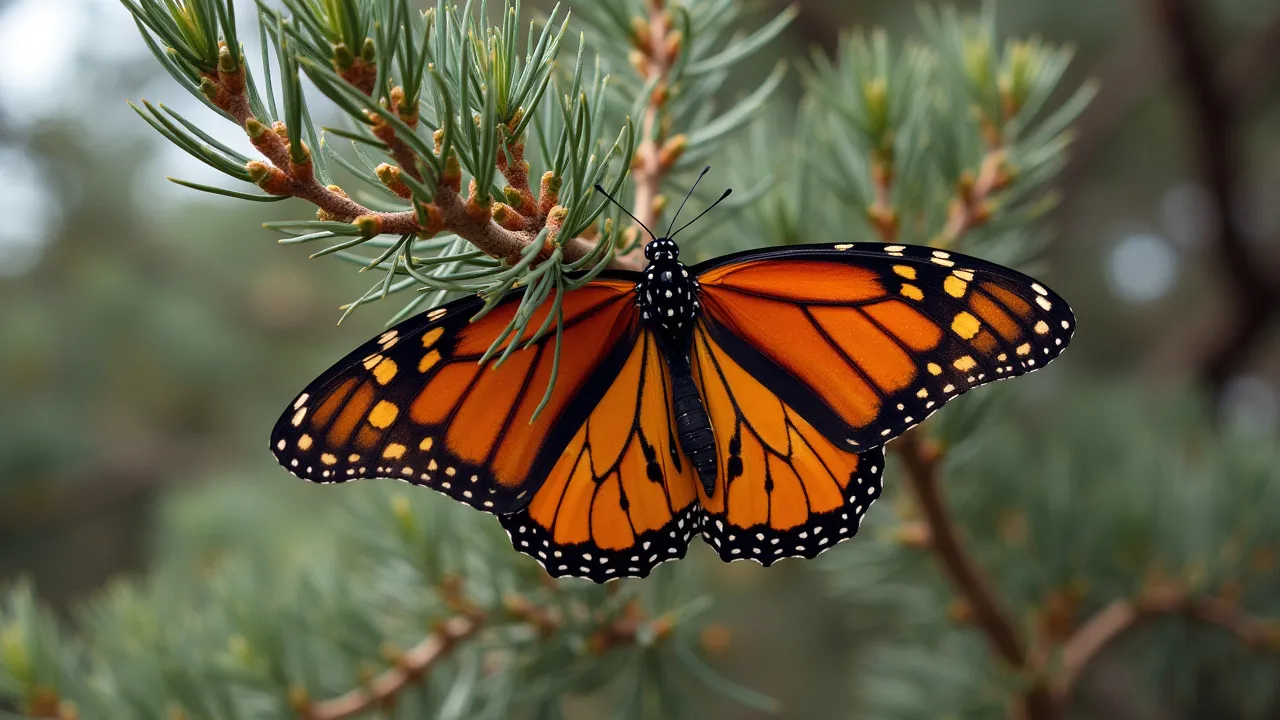
Western Monarch Day, observed on February 5th, honors the migration and conservation of the western monarch butterfly. Established by California in 2020, it raises awareness for this endangered species and its fragile overwintering sites.
History of Western Monarch Day
Western Monarch Day is an annual observance dedicated to the western monarch butterfly (Danaus plexippus plexippus), whose population has declined by over 95% since the 1980s. The day was officially established by the California State Legislature in 2020 through Assembly Bill No. 1234, spearheaded by Assemblymember Robert Rivas. This legislation designated every February 5th as a day to recognize the ecological, cultural, and educational significance of the western monarch and to encourage actions that support its recovery.
The Foundational Catalyst
The western monarch population winters along the California coast, clustering at roughly 300 known sites from Mendocino County to Baja California. In the 1990s, overwintering counts exceeded one million butterflies. By 2017, the count had plummeted to under 200,000, and by 2020, the Xerces Society's Thanksgiving Count recorded fewer than 2,000 butterflies at some key sites. This catastrophic decline prompted urgent conservation advocacy.
Legislative Adoption
Assemblymember Robert Rivas, whose district includes key monarch habitats in the Central Coast, introduced AB-1234 in early 2020. The bill passed with bipartisan support and was signed into law by Governor Gavin Newsom on August 31, 2020, making California the first state to designate a day specifically for the western monarch. The law established February 5 as Western Monarch Day, coinciding with the peak of the overwintering season when monarchs are most visible.
Modern Legacy
Since its inception, Western Monarch Day has been marked by community science efforts, habitat restoration workshops, and school education programs. The day also highlights the broader decline of pollinators and the need for pesticide reduction and native planting. In 2021 and 2022, the Thanksgiving Count showed hopeful signs of recovery, with over 200,000 butterflies in 2021 and over 300,000 in 2022, though numbers remain fragile.
How to Celebrate Western Monarch Day
Western Monarch Day offers many ways for individuals, schools, and organizations to contribute to monarch conservation. Below are actionable steps and best practices for celebrating this day effectively.
For Individuals
- Plant native milkweed: Species like Asclepias fascicularis (narrow-leaf milkweed) are critical for western monarch reproduction. Avoid tropical milkweed, which can harbor parasites.
- Create a pollinator garden: Include nectar-rich flowers such as goldenrod, asters, and California lilac that bloom in fall and winter.
- Participate in the Thanksgiving Count: Join the Xerces Society's annual monarch count by visiting a nearby overwintering site in late November.
- Reduce pesticide use: Avoid neonicotinoids and other harmful chemicals in your yard.
For Schools
- Host a classroom monitoring session: Use Citizen Science tools like iNaturalist to document monarch sightings.
- Teach about migration: Incorporate the monarch's 3,000-mile journey into biology or geography lessons.
- Plant a school butterfly garden: Engage students in designing and maintaining a certified monarch habitat.
For Organizations
- Restore overwintering habitat: Plant native trees (eucalyptus, Monterey cypress) and remove invasive species at known groves.
- Advocate for policy: Support local ordinances that ban pesticide use in public spaces.
- Fund research: Donate to the Xerces Society or other groups tracking monarch health.
Internationally, similar observances occur in Mexico and Canada, where monarchs are also celebrated during their migration. Many groups host bilingual events and virtual tours of sanctuaries.
Ecological Importance of the Western Monarch
The western monarch butterfly is a keystone indicator species for ecosystem health. Its migratory life cycle supports pollination across millions of acres of wildflowers and crops. The sheer density of monarchs at overwintering sites (up to 50,000 per tree) creates a microclimate that sustains other species, including birds and small mammals. Their decline signals broader environmental stressors: climate change, habitat loss, and pesticide contamination. Protecting the western monarch also safeguards coastal forests and grasslands that provide crucial carbon storage and water filtration.
Threats and Conservation Efforts
Western monarchs face multiple interrelated threats:
Habitat Loss
Overwintering groves have been destroyed by development, fire, and tree removal. In 2020, the Dolan Fire in Big Sur burned a major monarch grove. Urbanization has also replaced native milkweed and nectar sources with lawns and exotic plants.
Climate Change
Warmer autumns delay migration, while droughts reduce nectar availability. More frequent wildfires destroy roosting sites and increase smoke stress.
Pesticides
Neonicotinoids, widely used in agriculture and gardens, kill monarchs at low doses and contaminate milkweed. A 2023 study found pesticide residues in 90% of milkweed samples near California farms.
Conservation Actions
Protection of overwintering sites: California has listed several groves as monarch sanctuaries, and the Western Monarch Trail program marks key locations.
Milkweed restoration: The Xerces Society and partners have distributed millions of native milkweed seeds.
Legislative impacts: California's Pollinator Protection Act (2018) restricts neonicotinoid use for non-agricultural purposes.
Global Impact and Related Observances
While Western Monarch Day is specific to California, monarch conservation is a transnational effort. In Mexico, Monarch Butterfly Day is celebrated on January 21, aligning with the peak of their overwintering season in the Oyamel fir forests. Canada recognizes National Monarch Day on June 29, when the first monarchs arrive from the south. International cooperation through the Commission for Environmental Cooperation (CEC) has led to the creation of the Monarch Butterfly Biosphere Reserve in Mexico and the Monarch Butterfly Fund. Western Monarch Day thus complements broader efforts and highlights the unique challenges faced by the western population.
How to Support Western Monarchs Year-Round
Beyond February 5, sustained action is key. Commit to the following:
- Join community science programs: The Western Monarch Milkweed Mapper and iNaturalist projects provide year-round data.
- Certify your habitat: The National Wildlife Federation's Garden for Wildlife program offers certification for monarch-friendly yards.
- Volunteer with local groups: Organizations like the Xerces Society and local Audubon chapters frequently host restoration events and grow native plants.
- Support policy changes: Advocate for the federal Threatened or Endangered listing of monarchs, currently under consideration by the U.S. Fish and Wildlife Service.
Small actions, when multiplied across communities, can help reverse the monarch's decline. Every native milkweed plant and pesticide-free garden adds to a corridor of hope.
Historical Timeline
Western monarch population estimated at over 4 million butterflies overwintering along the California coast.
Thanksgiving Count records roughly 1.2 million western monarchs, the highest count in modern history.
Thanksgiving Count drops to 192,624 butterflies, triggering conservation alarm. The Xerces Society launches a Western Monarch Call to Action.
Thanksgiving Count hits an all-time low of 1,914 monarchs at 97 monitored sites. California Assembly Bill 1234 signed into law, establishing February 5 as Western Monarch Day.
Thanksgiving Count rebounds to 247,237 butterflies, offering hope. Western Monarch Day celebrated for the first time on February 5.
Count reaches 335,479 monarchs. California invests $3 million in monarch habitat restoration through the Wildlife Conservation Board.
Thanksgiving Count again exceeds 300,000. The Western Monarch Trail launches, connecting overwintering sites with educational signage.
U.S. Fish and Wildlife Service proposes listing monarch butterfly as threatened under the Endangered Species Act.