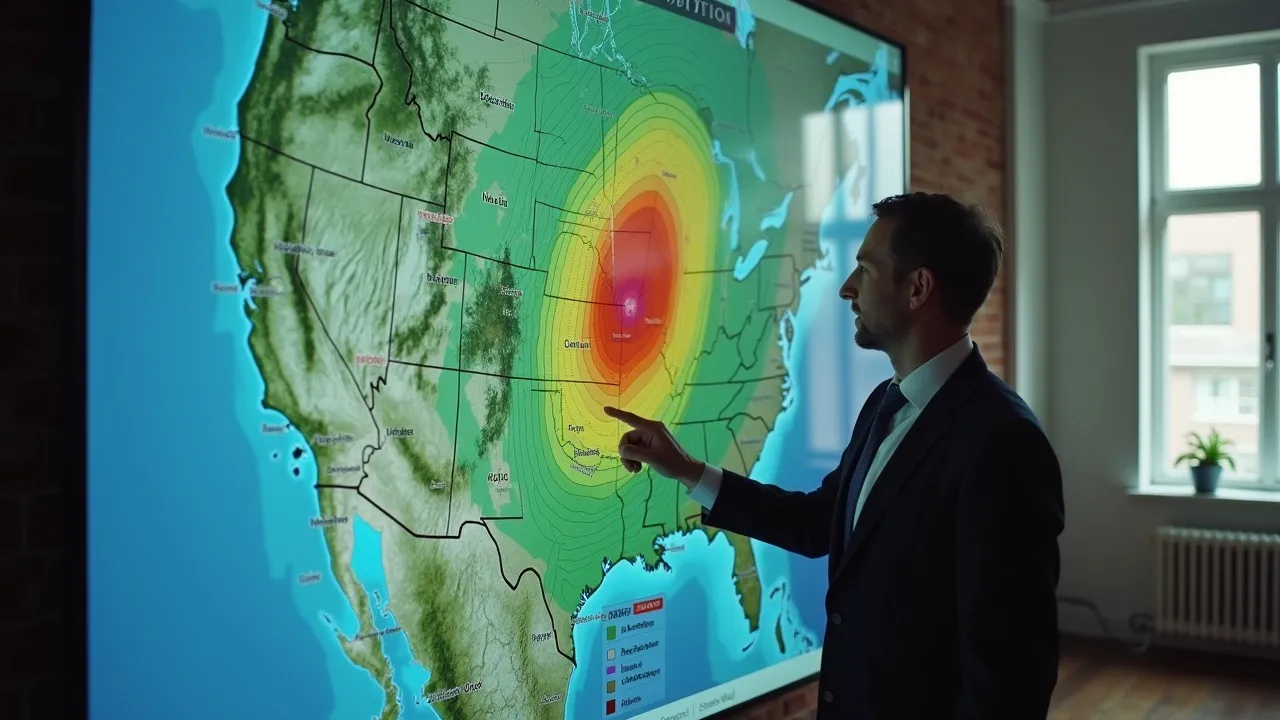
National Weatherperson's Day, observed on February 5th, honors the dedicated meteorologists and weather forecasters who keep us safe and informed. Celebrate by learning about weather science or thanking your local weatherperson.
The Historical Origins & Evolutionary Journey
National Weatherperson's Day is observed annually on February 5th, a date chosen to honor the birth of John Jeffries (1744-1819), a Boston physician and early American weather observer. Jeffries is considered one of the first to systematically record daily weather conditions, and his pioneering work laid the foundation for modern meteorology.
The Foundational Catalyst: John Jeffries
Jeffries began his weather observations in 1774, meticulously documenting temperature, barometric pressure, wind direction, and precipitation. His records, some of the oldest continuous weather data in the United States, were instrumental in understanding weather patterns. During the Revolutionary War, he served as a surgeon, but his passion for meteorology never waned. In 1784, he made the first balloon ascent over England to take atmospheric measurements, a daring experiment that advanced the understanding of upper-air conditions.
The Legislative/Official Adoption
Despite Jeffries' contributions, National Weatherperson's Day was not formally recognized until the late 20th century. The American Meteorological Society (AMS) and the National Weather Service (NWS) began promoting February 5th as a day to appreciate weather professionals. In 1974, the AMS officially designated the date, encouraging public recognition of meteorologists and weathercasters who work tirelessly to predict and communicate weather hazards. The day gained traction through media campaigns and educational outreach, eventually becoming a staple in the United States and spreading to other countries.
Modern Global Legacy
Today, National Weatherperson's Day is celebrated not only in the U.S. but also in parts of Canada, Australia, and Europe. The observance has expanded beyond individual thanks to include social media campaigns, school visits by meteorologists, and public weather station open houses. The day underscores the critical role weather forecasting plays in agriculture, transportation, emergency management, and daily life.
How to Celebrate National Weatherperson's Day
There are many meaningful ways to participate in National Weatherperson's Day, whether you are an individual, a school, or an organization. Below are actionable strategies to show appreciation and deepen your understanding of meteorology.
Individual Actions
- Thank a weatherperson: Send a card, email, or social media shout-out to your local TV meteorologist or National Weather Service office.
- Learn the basics: Spend 15 minutes on weather.gov or a weather app understanding cloud types and pressure systems.
- Start a weather journal: Record daily temperatures and sky conditions to track patterns over a month.
School and Classroom Activities
- Invite a guest speaker: Arrange for a local meteorologist to talk about career paths and storm safety.
- Build a weather station: Use simple tools like a rain gauge, wind vane, and thermometer to collect data.
- Create a weather report: Have students produce a short video forecast using green screen techniques.
Organizational Celebrations
- Host a weather trivia contest: Include questions about record-breaking events and famous hurricanes.
- Promote readiness: Distribute NOAA weather radio information and emergency preparedness checklists.
- Social media campaign: Use #WeatherpersonsDay to share facts and thank meteorologists in your network.
In many countries, observances differ. For example, in Japan, weather presenters receive public recognition through fan letters, while in the UK, the Royal Meteorological Society holds lectures and open days. In India, schools often hold special assemblies on weather safety. Always check local customs.
The Societal Impact of Weather Forecasting
Weather forecasting is a cornerstone of modern society, influencing everything from daily commutes to billion-dollar agricultural decisions. On National Weatherperson's Day, we reflect on the profound ways accurate forecasts save lives and property.
Protecting Life and Property
Timely warnings for hurricanes, tornadoes, floods, and winter storms have dramatically reduced casualties. For instance, the National Weather Service's improved lead times for tornado warnings have cut death rates by over 50% in the last 50 years. Weatherpersons are the critical human interface that translates complex data into life-saving actions.
Economic Benefits
- Agriculture: Farmers rely on 7- to 14-day forecasts for planting and harvesting, saving billions annually in prevented crop damage.
- Transportation: Airlines use wind and turbulence predictions to optimize routes, saving fuel and reducing delays.
- Energy: Utilities adjust power generation based on temperature and storm forecasts, ensuring grid stability.
Public Awareness and Education
Weatherpersons also play a key role in science communication, demystifying terms like 'polar vortex' and 'El Niño'. They inspire young people to pursue STEM careers, and their presence in local communities builds trust in science. The day serves as a reminder of the dedication behind every forecast.
Technological Evolution in Meteorology
The tools of a weatherperson have changed dramatically from John Jeffries' handwritten logs to supercomputer models and satellite imagery. National Weatherperson's Day is an opportunity to appreciate the high-tech revolution that has made forecasts more accurate.
Key Technological Milestones
- 1840s: Invention of the telegraph allows real-time sharing of weather observations, leading to the first official forecasts.
- 1920s: Balloon-borne radiosondes begin measuring upper-air conditions.
- 1960s: TIROS-1, the first weather satellite, sends back cloud images from space.
- 1990s: Doppler radar becomes widespread, enabling detection of rotation in storms.
- 2020s: Artificial intelligence models like Graphcast improve long-range predictions.
The Human Element Remains Essential
Despite advancements, the weatherperson's interpretation and communication are irreplaceable. They translate model uncertainty into clear advice: 'Bring an umbrella' or 'Evacuate now.' The day celebrates both the science and the skilled professionals who apply it.
Famous Weatherpersons in History
National Weatherperson's Day highlights luminaries whose work revolutionized meteorology and set standards for the profession.
Pioneering Figures
- John Jeffries (1744-1819): The namesake of the day, his early records remain a treasure trove for climate studies.
- Robert FitzRoy (1805-1865): Captain of HMS Beagle, he pioneered weather charting and the first storm warnings in the UK.
- Cleveland Abbe (1838-1916): Known as the 'Father of the National Weather Service,' he established systematic daily forecasts.
Modern Icons
- Willard Scott (1934-2021): Beloved Today Show weatherman who brought humor and warmth to forecasts.
- Al Roker (b. 1954): Longtime NBC weather anchor and author, advocating for climate awareness.
- Dr. Joanne Simpson (1923-2010): First woman to earn a Ph.D. in meteorology, studied cloud formation.
These individuals inspired generations to look to the skies and take weather seriously.
Educational Importance of Meteorology
National Weatherperson's Day serves as an educational springboard, encouraging curiosity about the atmosphere and climate. Schools and museums often use the day to introduce weather science in engaging ways.
Why Weather Education Matters
- Safety: Teaching children to understand storm alerts can save lives.
- STEM engagement: Meteorology integrates physics, math, and computer science, attracting diverse students.
- Climate literacy: Understanding weather patterns builds a foundation for grasping climate change.
Hands-On Learning Activities
- Build a barometer: Use a jar, balloon, and straw to measure air pressure changes.
- Track a hurricane: Plot coordinates from the National Hurricane Center to see the storm's path.
- Create a cloud in a bottle: Demonstrate condensation with a two-liter soda bottle and matches.
Professional meteorologists often volunteer in classrooms on this day, sharing their passion and career stories. National Weatherperson's Day is a catalyst for lifelong learning.
Historical Timeline
John Jeffries is born on February 5. He later becomes one of America's first systematic weather observers.
John Jeffries makes the first balloon ascent over London to take upper-air measurements, advancing meteorological science.
The Smithsonian Institution establishes a national weather observation network using the telegraph.
President Ulysses S. Grant creates the U.S. Weather Bureau (later the National Weather Service).
Regular radiosonde launches begin, providing crucial upper-atmosphere data.
TIROS-1, the first successful weather satellite, is launched, revolutionizing forecasting.
The American Meteorological Society first promotes National Weatherperson's Day on February 5.
Doppler radar (NEXRAD) is deployed across the U.S., greatly improving severe storm detection.
Hurricane Katrina highlights the critical role of weatherpersons in disaster communication.
AI-based weather models like Graphcast begin outperforming traditional forecasts.