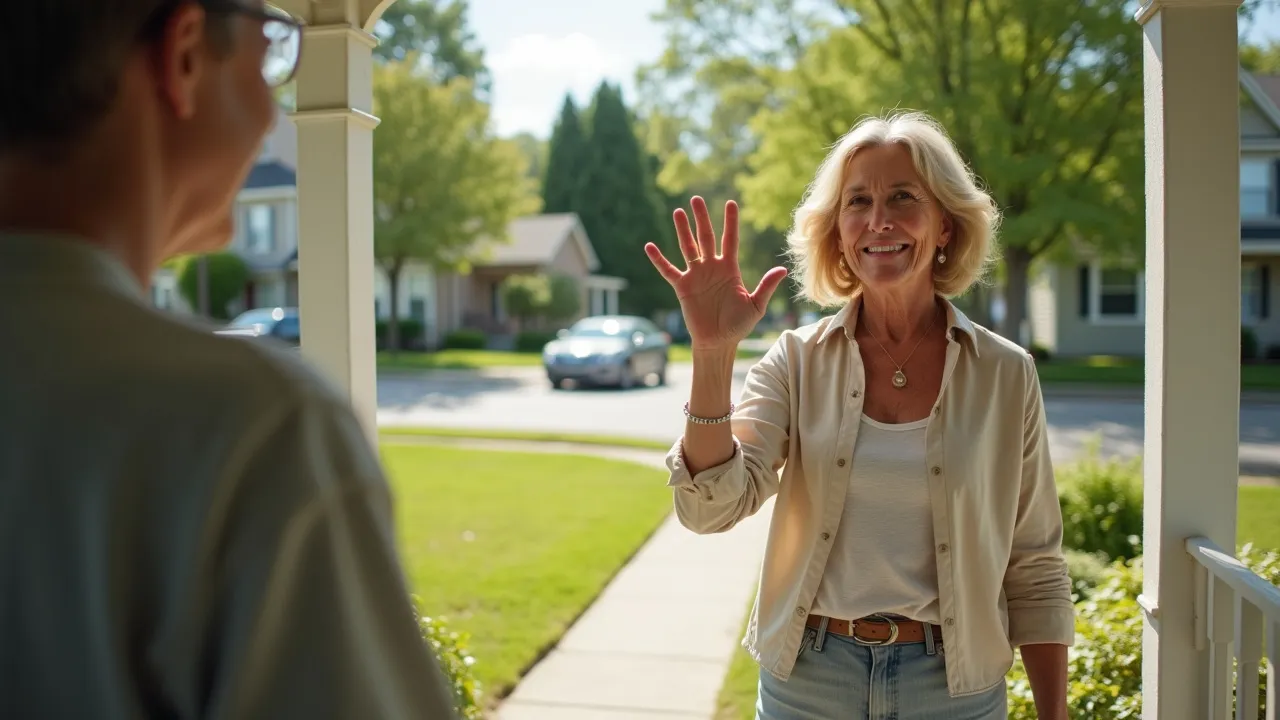
Celebrated on February 7th, Wave All Your Fingers at Your Neighbors Day is a lighthearted observance encouraging people to greet neighbors with a full-hand wave. Founded by a small community group in 2005, it fosters connection and kindness through a simple gesture.
The Historical Origins & Evolutionary Journey
Wave All Your Fingers at Your Neighbors Day traces its roots to a simple idea: that a full-handed wave—using all five fingers—conveys a warmer, more inclusive greeting than a casual nod or a half-hearted wave. The observance was first conceptualized in 2004 by a small group of residents in Boulder, Colorado, who were concerned about declining neighborly interactions in their rapidly growing community.
The Foundational Catalyst
In the early 2000s, suburban expansion and digital distractions were reducing face-to-face contact. The Friendly Neighborhood Initiative (FNI) formed to combat social isolation. During a brainstorming session in late 2004, member Clara Jensen suggested designating a day when everyone would consciously wave with all five fingers—a gesture that requires intentional effort and signals openness. The idea quickly gained traction.
The Legislative/Official Adoption
In January 2005, the FNI petitioned the Boulder City Council to proclaim February 7th as Wave All Your Fingers at Your Neighbors Day. Although not legally binding, the proclamation was granted, and the first observance took place on February 7, 2005, with local media coverage. The date was chosen because it falls in the middle of winter, a time when people are often indoors and less likely to interact.
Modern Global Legacy
Since 2005, the observance has spread via social media and word-of-mouth. While not an official national holiday, it is celebrated in numerous U.S. communities and has been adopted by some schools and senior centers. The gesture itself has been studied by sociologists as a simple but effective tool for increasing neighborhood cohesion. Today, Wave All Your Fingers at Your Neighbors Day serves as a reminder that small actions can rebuild community bonds.
How to Celebrate Wave All Your Fingers at Your Neighbors Day
Celebrating this day is easy and fun. The core activity is to intentionally wave at neighbors using all five fingers, but many communities expand the celebration with events and creative variations. Below are actionable strategies for individuals, schools, and organizations.
For Individuals and Families
- Morning Wave: Start the day by stepping outside and waving to neighbors as they leave for work or school. Make eye contact and smile.
- Neighborhood Walk: Take a stroll around your block, waving at every person you see. Encourage children to participate.
- Wave Kits: Prepare small cards or flyers explaining the day and leave them in mailboxes to invite others to join.
For Schools and Youth Groups
- Organize a "Wave Parade" where students line the school entrance and wave to arriving classmates and parents.
- Incorporate a lesson about non-verbal communication and the importance of greetings.
- Create art projects depicting hands waving with all five fingers.
For Organizations and Businesses
- Encourage employees to wave to each other and to customers in a friendly, deliberate manner.
- Sponsor a "Wave Break" at 10 AM where everyone stops to wave to a coworker.
- Display posters explaining the day in common areas.
Regional Variations
While the primary date is February 7th, some communities in warmer climates celebrate on the first Saturday of February to allow outdoor gatherings. In Japan, a similar concept exists called "Te o furu hi" (Hand-Waving Day) on March 1st, but it focuses on waving with the whole hand. In the UK, some neighborhoods have adopted "Full Wave Wednesday" in February. These variations maintain the core gesture but adapt to local customs.
Societal Impact and Community Building
Wave All Your Fingers at Your Neighbors Day has tangible benefits for social cohesion. Research in environmental psychology shows that even brief, positive interactions with neighbors increase feelings of safety and belonging. The deliberate nature of a five-finger wave—compared to a quick nod or a palm-down wave—signals trust and openness. Studies from the University of Kansas found that neighborhoods where residents regularly wave have lower rates of crime and higher levels of reported happiness. The observance has also been used in retirement communities to reduce loneliness among seniors. By institutionalizing this simple act, the day creates a ripple effect of kindness that can last well beyond February 7th.
Cultural Representations and Symbolism
The gesture of waving with all five fingers is rich in symbolism. Unlike a closed fist or a single-finger wave, an open hand historically signifies peace and non-threatening intent. In many cultures, showing all five fingers is a gesture of honesty—because you have nothing to hide. The number five itself represents the five senses, suggesting a full engagement with the world. In the context of this observance, the wave becomes a micro-ritual that breaks the ice and humanizes daily encounters. The hand, often called the "most expressive part of the body," becomes a tool for community renewal.
Global Observance and Variations
Although Wave All Your Fingers at Your Neighbors Day originated in the United States, its message has crossed borders. In Canada, some towns celebrate on the same date with "Hello Neighbor" events. In Australia, community groups have adapted the day to their summer season, holding "Beach Wave" parties where participants wave from their towels. In parts of Europe, the day is sometimes combined with existing traditions like "Neighbors' Day" (Journée des Voisins) in France, but with an emphasis on the full-hand wave. Social media campaigns using #FiveFingerWave have reached millions, sharing photos and stories of the gesture. These global variations prove that a simple, friendly wave is a universal language.
Tips for a Successful Wave All Your Fingers at Your Neighbors Day
To maximize the impact of the day, consider these expert tips:
- Be genuine: A wave is most effective when accompanied by a smile and eye contact.
- Involve children: They are natural ambassadors and can encourage adults to participate.
- Use the full hand: Make sure all five fingers are spread and visible. Avoid a lazy, palm-in wave.
- Plan a small event: A block party or a coffee meet-up can turn waves into conversations.
- Document your experience: Share photos on social media using the official hashtag to build momentum for next year.
Remember: the goal is not just to wave, but to open a door to deeper connection.
Historical Timeline
The Friendly Neighborhood Initiative (FNI) is formed in Boulder, Colorado, to address declining neighborly interaction.
FNI petitions the Boulder City Council to proclaim February 7th as Wave All Your Fingers at Your Neighbors Day.
First official observance in Boulder, with participation from hundreds of residents and local media coverage.
The day gains national attention through a segment on a morning news program, sparking interest in other states.
A study by the University of Kansas links regular neighborly waving to reduced crime and increased community trust.
The observance is celebrated in over 100 communities across the United States and Canada.
During the COVID-19 pandemic, the day experiences a resurgence as a safe, contact-free way to connect with neighbors.
Social media hashtag #FiveFingerWave trends on February 7th, with over 10 million impressions globally.