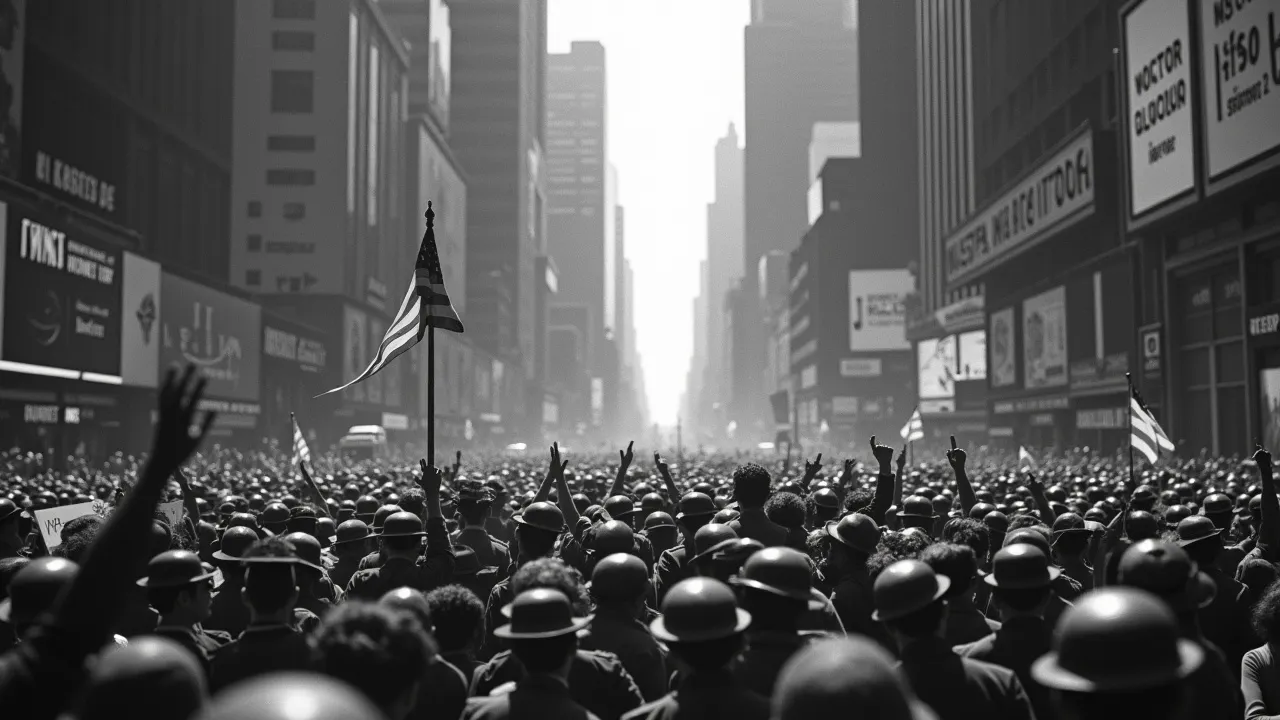
V-J Day on September 2nd marks the formal surrender of Japan, ending World War II. This observance honors the victory and remembers the sacrifices of the war.
The Historical Origins & Evolutionary Journey
V-J Day (Victory over Japan Day) commemorates the formal surrender of Japan on September 2, 1945, which conclusively ended World War II. The day is observed globally, though dates vary.
The End of World War II
After the atomic bombings of Hiroshima and Nagasaki on August 6 and 9, 1945, and the Soviet invasion of Manchuria, Japan announced its surrender on August 15, 1945. However, the formal signing took place on September 2 aboard the USS Missouri in Tokyo Bay. This date became the official V-J Day in many countries, including the United States.
Official Recognition
President Harry S. Truman declared September 2 as V-J Day. Initially celebrated with massive public rejoicing, it later became a day of remembrance. Over time, the observance evolved to honor veterans and reflect on the war's impact.
Regional Date Variations
While September 2 is the primary date, the United Kingdom and some Commonwealth nations observe V-J Day on August 15. Australia celebrates on August 15, while the US also sees informal celebrations on August 14. These variations stem from the initial announcement of surrender. Each region has unique traditions, such as parades, religious services, and moments of silence.
How to Celebrate V-J Day (Victory over Japan Day)
Observing V-J Day involves honoring veterans, remembering the war's end, and promoting peace. Here are actionable strategies for individuals, schools, and organizations:
For Individuals
- Attend local commemorations or memorial services.
- Visit war memorials or museums dedicated to WWII.
- Read firsthand accounts or watch documentaries.
- Participate in moments of silence at 11:00 AM.
For Schools
- Organize educational sessions about the war's end.
- Invite veterans to speak about their experiences.
- Create art projects highlighting peace and reconciliation.
For Organizations
Corporations can sponsor veteran events or donate to related charities. Public ceremonies often include flag-raising and wreath-laying. In the US, many communities hold parades or fireworks. In the UK, services at war memorials are common. Japan itself observes a subdued day of reflection.
Global Impact and Legacy
V-J Day not only ended the deadliest conflict in history but also shaped the post-war world order. The surrender led to the Allied occupation of Japan, the drafting of a new constitution, and the emergence of the US as a global superpower.
Geopolitical Shift
The end of WWII marked the beginning of the Cold War. The division of Asia and the establishment of the United Nations were direct outcomes. V-J Day symbolizes the transition from global war to uneasy peace.
Cultural Memory
In popular culture, V-J Day is depicted in films and literature, often focusing on the euphoria of victory and the atomic bomb's ethical dilemmas. It remains a poignant reminder of the cost of war.
Commemorations and Memorials
Major commemorations occur at the USS Missouri Memorial in Pearl Harbor, where the surrender was signed. The National WWII Museum in New Orleans holds special events. In Washington D.C., a wreath-laying ceremony takes place at the WWII Memorial.
International Observances
- United Kingdom: Services at the Cenotaph in London.
- Russia: Marked as the end of WWII in the East.
- China: Known as Victory Day, with military parades.
Controversies and Criticisms
V-J Day has been criticized for celebrating the atomic bombings, which caused immense civilian suffering. Some argue it should be a day of somber reflection rather than victory. In Japan, the day is not observed as a celebration but as a time to mourn the dead and advocate for peace. These differing perspectives highlight the complex legacy of the day.
Modern Observance and Future Outlook
Today, V-J Day is observed with diminishing participation as WWII veterans age. However, efforts to preserve history continue through educational programs and digital archives. The day remains an opportunity to teach younger generations about the horrors of war and the value of diplomacy. In an era of renewed global tensions, V-J Day's message of peace and reconciliation is more relevant than ever.
Historical Timeline
Atomic bomb dropped on Hiroshima.
Atomic bomb dropped on Nagasaki; Soviet Union declares war on Japan.
Emperor Hirohito announces Japan's surrender via radio broadcast; V-J Day celebrated in UK and elsewhere.
Formal surrender signed aboard USS Missouri; declared V-J Day in US.
First official observance of V-J Day in the United States.
V-J Day observances decline as veterans age; become more reflective.
50th anniversary commemorations; debates over atomic bomb ethics resurface.
70th anniversary; many veterans attend final ceremonies.
75th anniversary; virtual events due to COVID-19 pandemic.