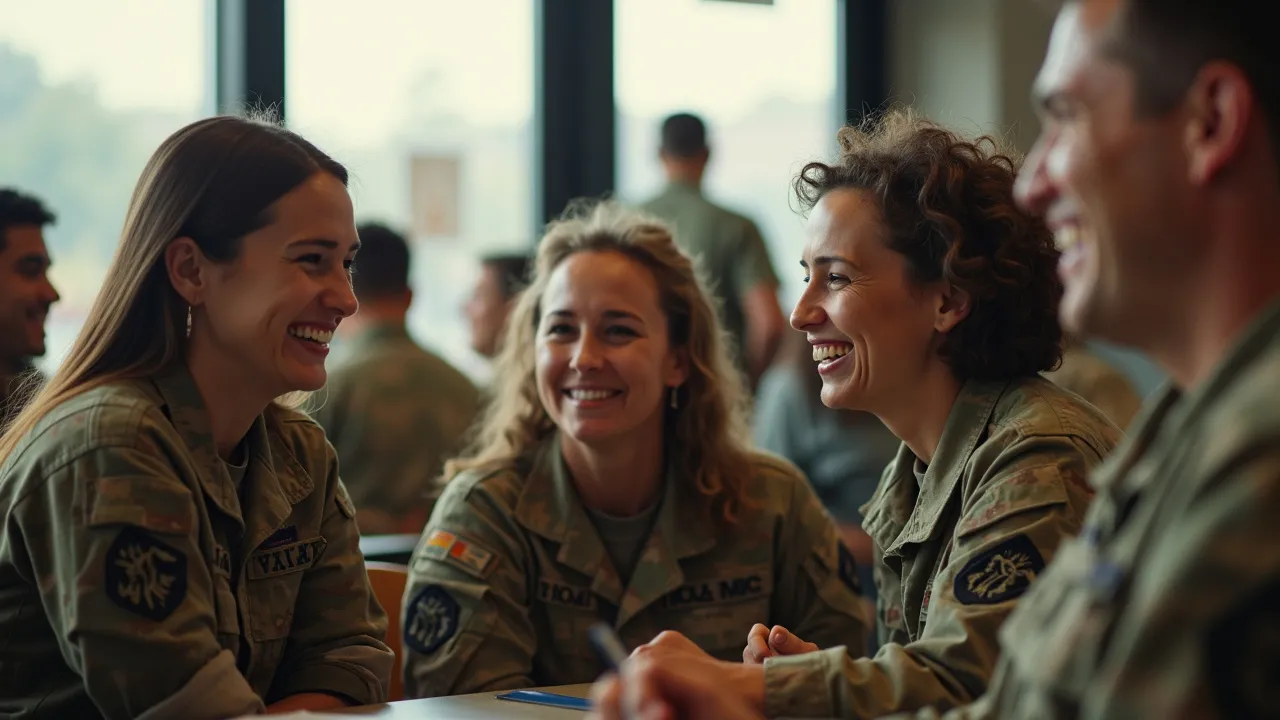
USO Day, observed on February 4th, celebrates the founding of the United Service Organizations in 1941. It honors the nonprofit's enduring mission to boost troop morale and connect service members with a touch of home.
The Historical Origins & Evolutionary Journey
United Service Organizations (USO) Day marks the anniversary of the USO's founding on February 4, 1941. Established by President Franklin D. Roosevelt's request, the USO was created to provide morale-boosting services to members of the U.S. armed forces during World War II. Six civilian agencies—the Salvation Army, Young Men's Christian Association (YMCA), Young Women's Christian Association (YWCA), National Catholic Community Service, National Jewish Welfare Board, and the Travelers Aid Association of America—united to form a single organization. Their shared vision was to offer a "home away from home" for troops, with recreational facilities, social activities, and entertainment.
The Foundational Catalyst
As the U.S. prepared for entry into World War II, military camps swelled with new recruits, often isolated from families and civilian life. The USO rapidly expanded, establishing more than 3,000 clubs, lounges, and canteens worldwide by 1944. These centers became legendary, hosting dances, providing meals, and offering spiritual guidance. Volunteers, including celebrities like Bob Hope and Bing Crosby, performed for troops, setting a precedent for USO entertainment that would continue for decades.
The Legislative/Official Adoption
Though the USO was not a government agency, it operated under a unique public-private partnership. The 1941 founding was a civilian initiative endorsed by the President. After the war, the USO dissolved in 1947 but was reactivated during the Korean War in 1950. Congress formally recognized the USO's value through the USO Commemorative Coin Act of 2000 and subsequent resolutions. In 2011, the USO was named one of the best charities for military support by independent watchdogs.
Modern Global Legacy
Today, the USO operates at more than 200 locations in 14 countries, including airports, military bases, and forward-deployed areas. Its mission has expanded to support not only active-duty troops but also their families, wounded warriors, and military retirees. USO centers offer Wi-Fi, snacks, gaming, and family rooms. The organization’s shift from solely entertainment to comprehensive support reflects changes in military demographics and technology. USO Day serves as both a celebration of this legacy and a call to action for ongoing support.
How to Celebrate USO Day
USO Day on February 4th is an opportunity for individuals, communities, and corporations to show appreciation for troops and the organization that supports them. Celebrations blend personal gestures, volunteerism, and fundraising. Below are actionable ways to participate in the United States and beyond.
For Individuals
- Donate to the USO: Financial contributions fund morale programs, care packages, and family support. Every dollar helps provide a taste of home.
- Write a Letter: The USO’s "Operation Mail Call" program accepts handwritten letters for troops. Include words of gratitude and encouragement.
- Volunteer at a USO Center: Offer your time at a local USO airport lounge or base center. Volunteers serve snacks, assist with luggage, and offer friendly conversation.
For Schools and Youth Groups
- Host a Care Package Drive: Collect items like toiletries, snacks, and entertainment for deployed troops. Coordinate with USO shipping guidelines.
- Educational Activities: Teach students about the USO’s history and the importance of supporting service members. Create cards or posters to display at USO centers.
- Fundraising Events: Organize a bake sale, car wash, or walk-a-thon with proceeds benefiting the USO. Share the event on social media using #USODay.
For Organizations and Corporations
Companies can foster employee engagement by matching donations, sponsoring USO programs, or offering discounts to military personnel. Many businesses host USO-themed lunch-and-learns or coordinate volunteer days at local USO centers. In countries like Japan, Australia, and the United Kingdom, similar support programs exist—such as the Royal British Legion’s Poppy Appeal—which can be highlighted alongside the USO’s work.
The Role of the USO in Modern Military Life
The USO today is more than a nostalgic symbol; it is an essential lifeline for service members and their families. With deployments often lasting months, USO centers provide respite from the rigors of military life. Amenities include private phone booths for family calls, video game lounges, movie nights, and home-cooked meals. The organization also offers specialized programs for military spouses and children, such as the USO Pathfinder program, which helps with transition support, career counseling, and community building. According to the USO’s annual impact report, over 80% of service members say USO services significantly improve their morale. The USO also reaches remote locations through mobile canteens and entertainment tours, bringing a slice of Americana to even the most isolated outposts. In the age of digital communication, the USO has adapted by providing high-speed internet and charging stations, ensuring troops can connect with loved ones across time zones.
USO Entertainment and Morale: A Legacy of Stars
Entertainment has been a cornerstone of USO operations since the 1940s. The first USO show featured Bob Hope, who went on to headline dozens of tours for over 50 years. Following Hope’s lead, celebrities such as Marilyn Monroe, Elvis Presley, and more recently, musicians like Taylor Swift and comedians like Kevin Hart have performed for troops. These events are not just concerts; they are morale-boosting experiences that remind service members they are not forgotten. The USO’s Tour program brings current headliners to military bases worldwide, often deployed to combat zones. The shows are live-streamed to personnel who cannot attend in person. Beyond A-list acts, the USO also supports smaller-scale entertainment through its partnership with NCAA sports teams, magicians, and puppeteers, ensuring variety and cultural connection.
Volunteering and Community Involvement
Volunteers are the backbone of the USO. With over 30,000 active volunteers worldwide, they contribute millions of hours annually. Volunteer roles vary widely: manning welcome desks at airport USO lounges, preparing meals, organizing clothing drives, or simply spending time talking with troops. Many USO centers are located in airports, providing a crucial first hello for soldiers returning from deployment. Volunteers often share that serving as a USO volunteer is as rewarding for them as for the troops. On USO Day, many centers host open houses to recruit new volunteers and showcase their work. Schools and churches often partner with the USO to create care packages or collect donated goods. The USO also offers corporate volunteer programs, enabling employees to engage in team-building while supporting the military.
Global Impact of the USO and International Variations
While the USO is a uniquely American organization, its impact has global reach. USO centers are found in countries such as Germany, Japan, South Korea, Kuwait, and Afghanistan. In each region, services are tailored to local conditions. For example, in South Korea, the USO runs a dedicated center near the DMZ, offering English classes and cultural exchange events. In Japan, USO lounges at Narita Airport serve transiting personnel. Internationally, other nations have similar organizations: the UK’s Royal British Legion, Canada’s Canadian Forces Morale and Welfare Services, and Australia’s Defence Force Welfare Association. USO Day often sees collaboration between these groups, sharing best practices and joint events. The USO also partners with allied forces, hosting multicultural programs that foster camaraderie among coalition troops.
Supporting Military Families and Wounded Warriors
The USO’s mission extends beyond active-duty troops to their families. Programs like the USO Mobile USO provide support for military spouses during relocation, deployment, and reintegration. The USO also runs the Warrior and Family Centers, which offer respite and resources for wounded, ill, or injured service members and their caregivers. These centers provide counseling, adaptive sports, and socialization opportunities. On USO Day, many centers highlight these family services and encourage donations specifically earmarked for caregiver support. Financial assistance for emergency travel, holiday meals, and holiday presents for children of deployed members are also core USO activities. The organization’s commitment to "the whole family" has strengthened military resilience and retention.
Historical Timeline
President Franklin D. Roosevelt calls for a single agency to support troops. The USO is founded on February 4 by six civilian organizations.
USO operates over 3,000 clubs, canteens, and lounges worldwide. Bob Hope performs his first USO show.
Following WWII, the USO disbands but remains a crucial reserve; its charter is maintained.
The USO is reactivated due to the Korean War, reestablishing clubs in combat zones and rest areas.
During the Vietnam War, the USO opens centers in Vietnam, including mobile units. Entertainers like Ann-Margret perform for troops.
USO supports troops in the Gulf War, providing communication services and entertainment in the Middle East.
After 9/11, the USO mobilizes rapidly, deploying centers to Afghanistan and Iraq, and expanding airport lounges for transit troops.
The USO launches its Mobile USO program, bringing services to remote locations via armored vehicles and shipping containers.
During the COVID-19 pandemic, USO adapts with virtual programs, including online classes and telehealth support for families.