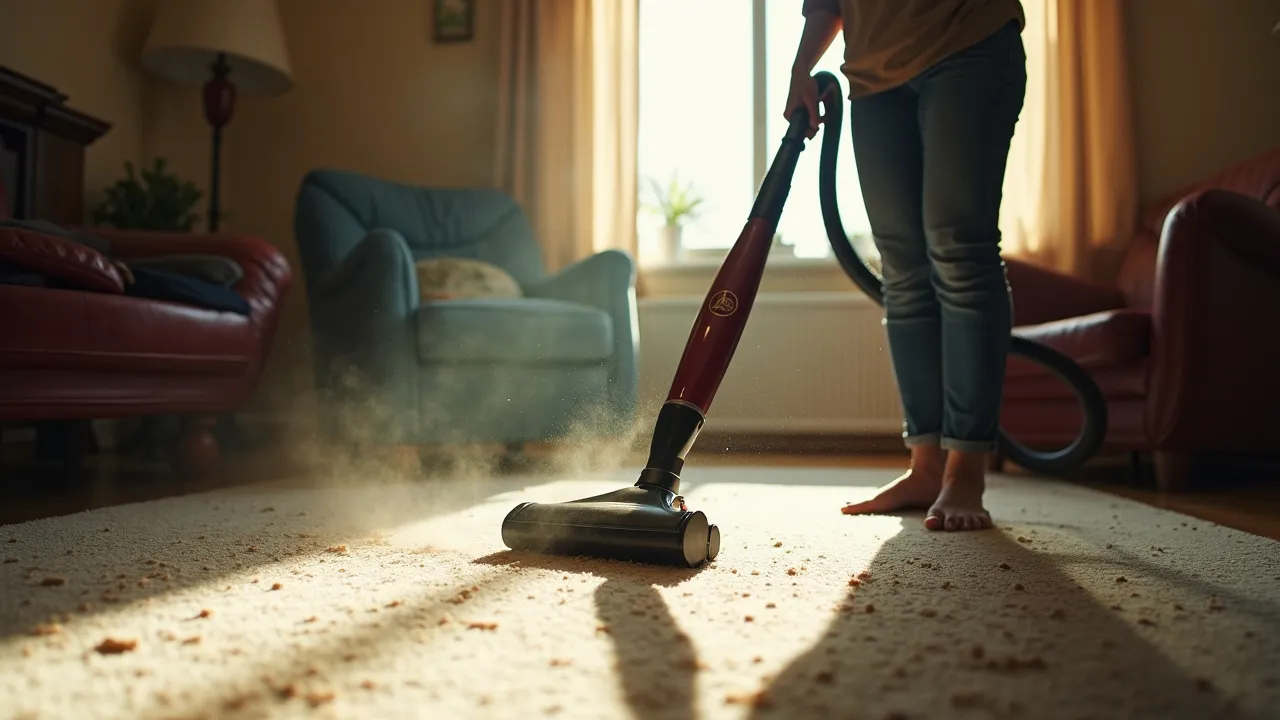
Celebrated on February 4th, Create a Vacuum Day honors the invention of vacuum cleaners and the science of vacuums. It encourages cleaning, home maintenance, and educational fun about air pressure and technology.
The Historical Origins & Evolutionary Journey
Create a Vacuum Day on February 4th is an unofficial holiday that celebrates the vacuum cleaner and the physics of vacuums. The day likely emerged from mid-century marketing campaigns by vacuum cleaner manufacturers, though its exact origin is obscure. It has since evolved into a day to both clean homes and explore the concept of vacuum in science.
The Foundational Catalyst: The Rise of Vacuum Cleaners
The vacuum cleaner revolutionized household cleaning. In the late 19th century, carpet sweepers and manual beaters were the norm. Daniel Hess patented a mechanical carpet sweeper in 1860, but the first powered vacuum cleaner was created by Hubert Cecil Booth in 1901 with the 'Puffing Billy,' a large horse-drawn machine. The first portable electric vacuum was patented by James Murray Spangler in 1907, who sold the rights to William Henry Hoover. Hoover's upright Model O (1908) became the iconic design, and marketing campaigns like 'It beats, as it sweeps, as it cleans' made vacuuming a household habit.
The Legislative/Official Adoption
Though never officially recognized by any government, Create a Vacuum Day gained traction through calendars and greeting card companies in the 1970s and 1980s. It appears on many 'fun holidays' lists and is promoted by cleaning industry associations to boost awareness of home maintenance and indoor air quality.
Modern Global Legacy
Today, the day is observed informally across the United States, the United Kingdom, and parts of Europe. It serves as a reminder to deep-clean homes, and is often used by schools to teach students about air pressure, suction, and the scientific method through simple vacuum experiments.
How to Celebrate Create a Vacuum Day
There are many ways to participate in Create a Vacuum Day, from practical cleaning to scientific exploration. Below are structured activities for individuals, families, schools, and organizations.
For Individuals & Families
- Deep Clean Your Home:
- Vacuum all carpets, rugs, and upholstery thoroughly.
- Empty and clean your vacuum cleaner's filters and dustbin.
- Check for clogs and maintain the brush roll for optimal performance.
- Conduct a Vacuum Science Experiment:
- Use a simple plastic bottle and a vacuum cleaner to demonstrate air pressure.
- Observe how a sheet of paper sticks to the vacuum hose—explain Bernoulli's principle.
- Donate Old Vacuums:
- Clean and donate working vacuums to local charities or shelters.
For Schools & Educational Groups
- Organize a 'Vacuum Physics Day' with hands-on stations.
- Build a model of a vacuum cleaner using recycled materials.
- Invite a local repair technician to talk about how vacuums work.
For Businesses & Organizations
- Offer discounts on vacuum cleaners and cleaning services.
- Host a community clean-up event focused on indoor air quality.
- Educate employees on proper vacuum maintenance and HEPA filters.
Regional celebrations: In Japan, the day is sometimes associated with 'Vacuum Cleaner Appreciation Day' and in Germany, it is tied to 'Tag des Staubsaugens' (Day of Vacuuming) on different dates, but February 4th remains the most widely recognized global date for Create a Vacuum Day.
The Science of Vacuum
A vacuum is a space devoid of matter. The concept is central to physics, engineering, and technology. Create a Vacuum Day offers an opportunity to understand how vacuums work in everyday devices and in nature.
Atmospheric Pressure & Suction
Vacuum cleaners work by creating a partial vacuum inside the machine. The fan reduces air pressure inside, allowing the higher atmospheric pressure outside to push air into the machine, carrying dust and debris. This principle is explained by Pascal's law: pressure differences cause fluid flow.
Types of Vacuum
- Household Vacuum Cleaners – use electric motors to generate low-pressure zones for cleaning.
- Laboratory Vacuums – used for filtration, degassing, and measuring pressure.
- Space Vacuum – the near-perfect vacuum of outer space, where particles are extremely sparse.
Applications Beyond Cleaning
Vacuum technology is used in food packaging (vacuum sealing), electronics manufacturing (sputtering), medicine (suction during surgery), and particle accelerators (maintaining beam lines). Create a Vacuum Day highlights these broader impacts.
Evolution of Vacuum Cleaner Technology
From the first 'Puffing Billy' to modern robot vacuums, the vacuum cleaner has undergone remarkable innovation.
Key Milestones
- 1901 – Hubert Cecil Booth patents the first powered vacuum cleaner, a horse-drawn machine that blew air, not sucked.
- 1908 – James Murray Spangler invents the first portable electric vacuum; William Hoover founds the Hoover Company.
- 1950s – Upright vacuums dominate the market; the bagless design appears in the 1980s with James Dyson.
- 1990s – Cyclonic separation technology becomes popular.
- 2000s – Robot vacuums (Roomba) enter the market, using sensors and AI.
Today, vacuums incorporate HEPA filters, smart connectivity, and self-cleaning mechanisms, making them more efficient and eco-friendly.
Global Impact & Cultural Significance
Create a Vacuum Day transcends mere cleaning; it represents human ingenuity in conquering dust and dirt. In many cultures, a clean home is associated with health and prosperity. The vacuum cleaner has reduced the time spent on housework, contributing to societal shifts in women's labor participation. The day also raises awareness about indoor air quality, as modern homes are more airtight and trap pollutants. Schools and community groups use the day to run educational workshops on physics and engineering, inspiring future inventors.
Environmental Considerations & Sustainability
While vacuum cleaners improve cleanliness, they also consume electricity and generate waste (bags, filters). Create a Vacuum Day promotes sustainable practices:
- Energy Efficiency: Choose ENERGY STAR certified models.
- Recyclable Components: Support brands that use recycled plastics and offer take-back programs.
- Maintenance: Extend the life of your vacuum by cleaning filters and replacing worn parts.
- Bagless vs. Bagged: Bagless vacuums reduce landfill waste but may release more dust when emptying.
By focusing on longevity and responsible use, the day encourages a sustainable approach to home cleaning.
Historical Timeline
Daniel Hess patents a mechanical carpet sweeper with rotating brushes and a bellows system to generate suction.
Hubert Cecil Booth patents the first powered vacuum cleaner, the 'Puffing Billy,' a large horse-drawn machine that used a gasoline engine and compressed air to blow dirt off surfaces.
James Murray Spangler, a janitor in Canton, Ohio, invents the first portable electric vacuum cleaner using an electric fan, a soap box, and a pillowcase.
Spangler sells his patent to William Henry Hoover, who establishes the Hoover Company. The Hoover Model O becomes the first upright vacuum cleaner.
Upright vacuums become widespread; Hoover's 'Beat, Sweep, and Clean' slogan emphasizes the cleaning action.
Canister vacuums gain popularity in Europe, offering more flexibility. The first central vacuum systems are installed in homes.
James Dyson launches the first bagless vacuum cleaner using cyclonic separation, challenging the dominance of bagged models.
iRobot introduces the Roomba, the first commercially successful robotic vacuum cleaner, using sensors to navigate.
Smart vacuums with Wi-Fi connectivity, mapping, and self-emptying bins become common, integrating with home automation systems.