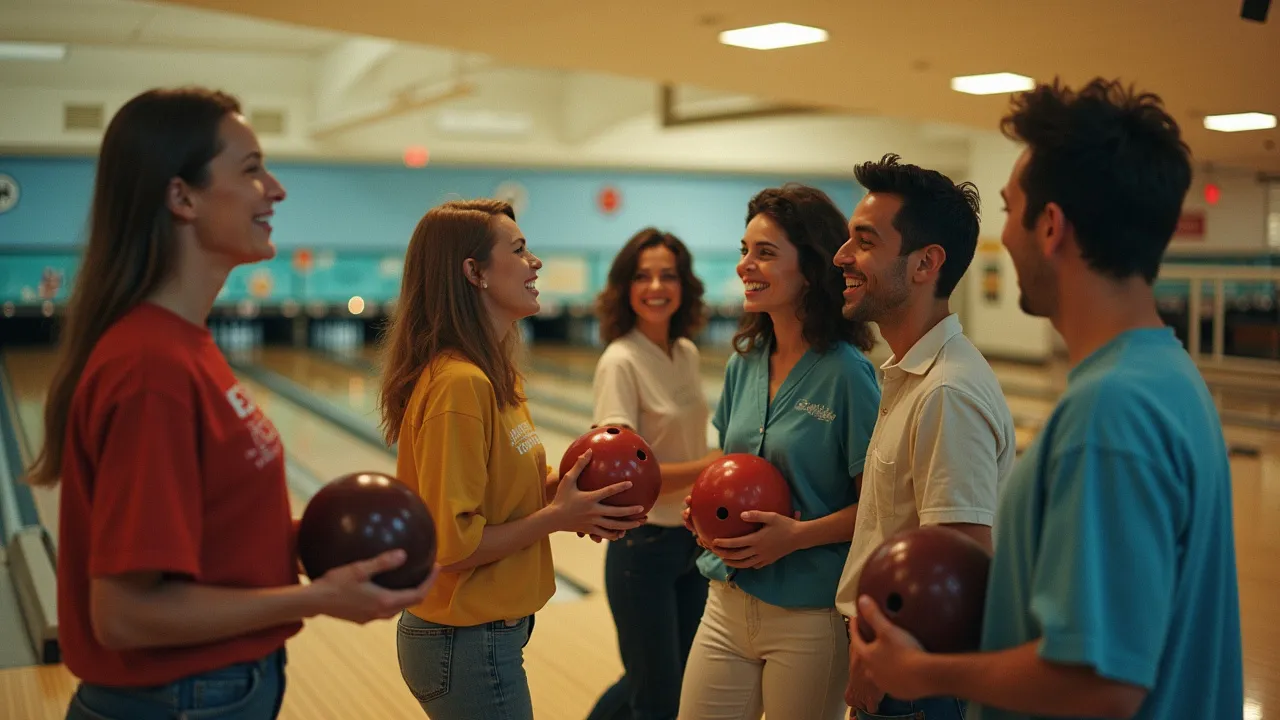
Celebrate US Bowling League Day on September 3rd, honoring the camaraderie, competition, and community of bowling leagues across America since the early 20th century.
The Historical Origins & Evolutionary Journey
US Bowling League Day, observed annually on September 3rd, celebrates the rich tradition and community spirit of bowling leagues in the United States. The origins of this observance trace back to the early 20th century when bowling evolved from a casual pastime into an organized sport with formal leagues and standardized rules.
The Foundational Catalyst
The first known bowling league in the United States was the American Bowling Congress (ABC), founded in 1895 in New York City. The ABC standardized the rules, equipment, and scoring, paving the way for the proliferation of leagues across the country. By the 1920s, bowling alleys became community hubs, and leagues blossomed as a form of social recreation, especially among working-class men and women. The 1950s saw a boom in league participation, with the ABC reporting over 100,000 sanctioned leagues by 1955. US Bowling League Day was unofficially celebrated in local alleys, but gained national recognition when the Bowling Proprietors' Association of America (BPAA) formally designated September 3rd as a day to honor league play in 1953.
The Legislative/Official Adoption
While not a federal holiday, US Bowling League Day has been recognized by state legislatures and municipal proclamations. In 1967, the state of Illinois officially proclaimed September 3rd as Bowling League Day, followed by several other states. The day was further solidified by the United States Bowling Congress (USBC), formed in 2005 from the merger of the ABC, Women's International Bowling Congress (WIBC), and Young American Bowling Alliance (YABA). Today, the USBC actively promotes the day through sanctioned events and social media campaigns.
Modern Global Legacy
Though US-centric, the concept of bowling league day has inspired similar observances in Canada, Japan, and Europe, where bowling leagues enjoy popularity. In Japan, for instance, September 3rd is often celebrated as "Bowling League Appreciation Day" in many bowling centers, reflecting the sport's global reach. The day now emphasizes inclusivity, youth participation, and the health benefits of recreational league play.
How to Celebrate US Bowling League Day
US Bowling League Day offers a perfect opportunity to engage with your local bowling community or start a new tradition. Here is a comprehensive guide to celebrating, whether you are an individual, a school, or an organization.
For Individuals and Families
- Join a league: Visit your local bowling alley and sign up for a league. Many offer free trial nights on September 3rd.
- Host a friendly tournament: Gather friends or coworkers and organize a bracket-style competition at a nearby alley.
- Learn the history: Read about the origins of bowling leagues or watch documentaries on the sport's evolution.
For Schools and Youth Groups
- Field trip to a bowling center: Coordinate with a local alley to provide discounted games and instruction for students.
- Bowling-themed lessons: Incorporate bowling into math (scoring averages), physics (ball dynamics), or history lessons.
- After-school league: Start a youth league with weekly practice sessions and a culminating tournament on September 3rd.
For Businesses and Organizations
- Corporate bowling night: Rent out an alley for employee team-building activities, complete with custom shirts and prizes.
- Sponsor a league: Financial support for local leagues helps maintain the tradition and fosters community goodwill.
- Charity bowl-a-thon: Organize a fundraising event where proceeds go to youth bowling programs or local charities.
Global Traditions
In Canada, bowling leagues often hold "open house" events where newcomers can try league play without commitment. Japan celebrates with special "league appreciation" discounts at over 200 bowling centers. In the United Kingdom, some leagues host themed costume nights, blending tradition with fun.
The Social and Health Benefits of Bowling Leagues
Bowling leagues are more than just a sport; they are a cornerstone of social well-being and physical health. Social benefits include forging lasting friendships, reducing isolation, and building a sense of community. Leagues provide a structured social outlet that encourages regular interaction, often leading to improved mental health. Health benefits are significant: bowling a three-game series can involve walking up to half a mile, swinging a 10-16 pound ball repeatedly, and engaging core and leg muscles. The American Heart Association recognizes bowling as a moderate-intensity physical activity that can help lower blood pressure, control weight, and improve cardiovascular health. Additionally, the repetitive nature of swinging and releasing can improve hand-eye coordination and joint flexibility. Studies show that league participation consistently correlates with lower stress levels and higher life satisfaction among older adults. The camaraderie of team play also fosters accountability, encouraging regular exercise. In an era of sedentary lifestyles, bowling leagues offer a fun, low-impact alternative to traditional gym workouts.
Bowling League Statistics and Economic Impact
The economic footprint of bowling leagues in the United States is substantial. According to the Bowling Proprietors' Association of America, there are approximately 67 million American bowlers, with over 8 million active league participants. The sport generates $4 billion annually in direct revenue, with leagues contributing nearly $1.2 billion through weekly fees, equipment sales, and spending at centers. Leagues also support 120,000 jobs at bowling alleys nationwide. A typical league season (30 weeks) sees an average spending of $150 per bowler on shoes, balls, and accessories. During US Bowling League Day, many alleys report a 30% increase in league sign-ups and merchandise sales. The economic ripple effect extends to local businesses like restaurants and bars near bowling centers, which see increased traffic on league nights. Despite a slight decline in league participation from the 1980s peak, recent efforts to modernize with music, lights, and themed nights have revived interest, particularly among millennials and Gen Z.
The Future of Bowling Leagues in a Digital Age
Bowling leagues are adapting to the digital age with technology that enhances the player experience and attracts new generations. Digital scoring systems now allow real-time stats, social media sharing, and integrated tournaments. Many leagues use apps like LeaguePals or Bowling.com to manage schedules, communicate with members, and track averages. Virtual leagues have emerged, where participants bowl at different centers and submit scores online, expanding access to those with busy schedules. Social media challenges, such as #USBowlingLeagueDay, encourage bowlers to post videos of their best shots. Esports bowlong (simulated bowling) is gaining traction, with leagues for games like Wii Sports or Bowling VR. However, the core appeal remains the in-person social experience. Bowling alleys are investing in dark-light attractions, cosmic bowling, and food-and-beverage upgrades to stay relevant. The future likely sees a hybrid model: traditional weekly leagues complemented by occasional digital meetups and thematic events. US Bowling League Day will continue to serve as an anchor for these evolving traditions, celebrating both the time-honored camaraderie and the innovative spirit that keeps the sport vibrant.
Notable Bowling Leagues and Records
Throughout history, certain bowling leagues have achieved legendary status. The Professional Bowlers Association (PBA) league, founded in 1958, hosts the most prestigious tournaments. Among amateur leagues, the Greater Milwaukee Bowling Association holds the record for the largest single-league membership: over 3,000 bowlers in the 1970s. The National Negro Bowling Association (now National Bowling Association) was established in 1939 to promote inclusivity. For records, the highest team game in a sanctioned league is 1,192 (out of a possible 1,200) achieved by the St. Louis Eagles in 1991. The longest consecutive game streak belongs to Bob Learn Jr. with 10 perfect games in league play. US Bowling League Day highlights these achievements and encourages bowlers to chase their own records, no matter the level.
Historical Timeline
American Bowling Congress (ABC) founded in New York City, standardizing rules and equipment for bowling leagues.
Women's International Bowling Congress (WIBC) formed, creating separate leagues for women and boosting female participation.
Bowling Proprietors' Association of America (BPAA) designates September 3rd as US Bowling League Day to promote league play.
Illinois becomes the first state to officially proclaim September 3rd as Bowling League Day.
The Greater Milwaukee Bowling Association records the largest single-league membership with over 3,000 bowlers.
Introduction of automatic scoring systems revolutionizes league play, making scoring faster and more accurate.
United States Bowling Congress (USBC) formed from merger of ABC, WIBC, and YABA, unifying league governance.
US Bowling League Day gains national attention with social media campaigns and thousands of events at bowling centers across the U.S.
Pandemic challenges leagues, but virtual leagues emerge, allowing bowlers to compete from home with remote score submission.
US Bowling League Day sees record participation with over 10,000 events registered, including in Japan and Canada.