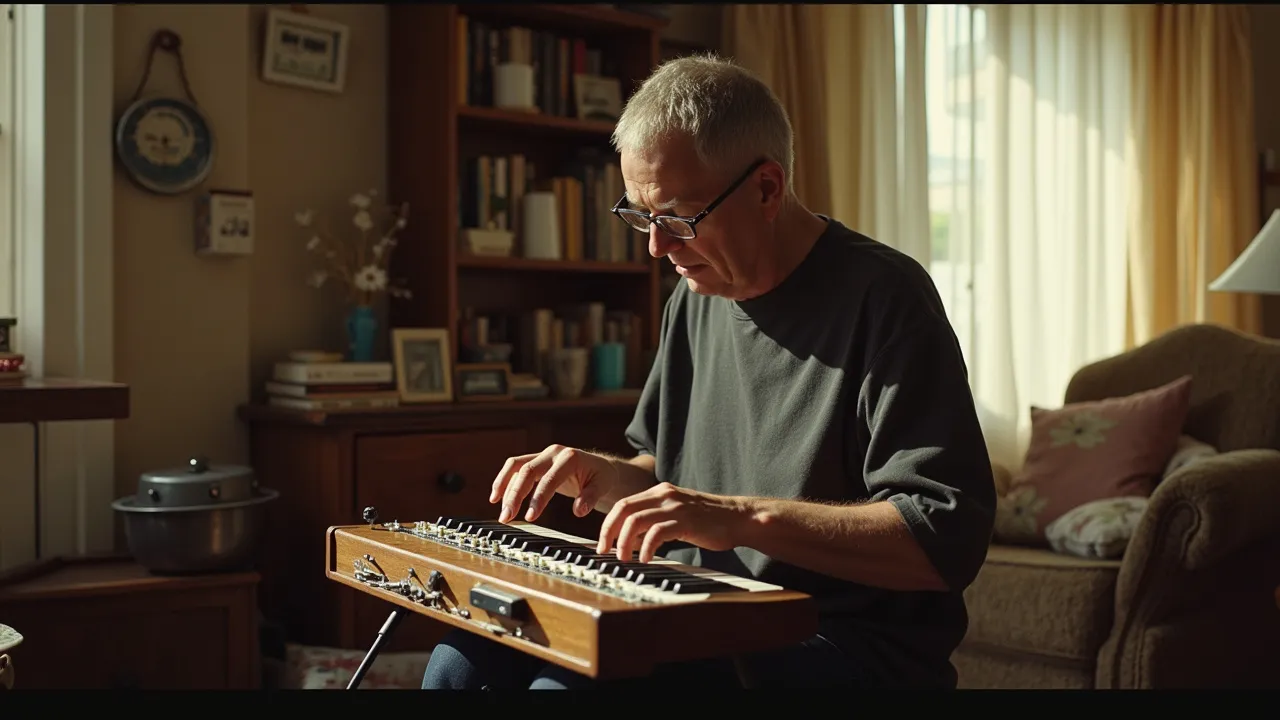
Uncommon Instrument Awareness Day, observed on July 31st, celebrates rare and unusual musical instruments from around the world. It encourages exploration of obscure sounds and the preservation of lesser-known musical heritage.
The Historical Origins & Evolutionary Journey
Uncommon Instrument Awareness Day traces its roots to the late 20th century, when a group of ethnomusicologists and instrument collectors noticed a growing threat to the survival of rare musical instruments. Many traditional and experimental instruments were being lost to modernization, disuse, and lack of documentation. The Instrumental Music Society, a nonprofit founded in 1990, established July 31st as a day to celebrate and raise awareness about these unique instruments.
The Foundational Catalyst
The catalyst for the observance was a 1993 symposium at the University of Oxford titled "Saving the Sounds of Silence." During this event, experts presented case studies of instruments on the brink of extinction, such as the nyckelharpa (Swedish key harp) and the hurdy-gurdy. The symposium concluded with a call to action, leading to the official proclamation of Uncommon Instrument Awareness Day in 1995.
The Legislative/Official Adoption
While not a government-declared holiday, the day gained official recognition from several music education bodies. In 1996, the International Council for Traditional Music (ICTM) endorsed the day, and by 2000, over 30 countries had organized events. The day is now listed on numerous cultural calendars worldwide.
Modern Global Legacy
Today, Uncommon Instrument Awareness Day is celebrated through concerts, workshops, and online showcases. It has inspired the creation of digital archives and initiatives to teach rare instruments in schools. The day continues to evolve, embracing both ancient instruments and modern experimental inventions.
How to Celebrate Uncommon Instrument Awareness Day
Celebrating Uncommon Instrument Awareness Day can be as simple or elaborate as you wish. The core goal is to expose yourself and others to instruments that are not part of the mainstream. Here are actionable strategies for individuals, schools, and organizations:
For Individuals
- Discover a New Instrument: Spend time listening to recordings of rare instruments online. Platforms like YouTube and Spotify have extensive collections.
- Visit a Museum: Many music museums have exhibits on rare instruments. Check local listings for special events on July 31st.
- Try Playing: If you have access to an uncommon instrument (e.g., a theremin, kalimba, or otamatone), give it a try. Even a simple tune can be enlightening.
- Share Online: Post a video or photo of a rare instrument using the hashtag #UncommonInstrumentDay. Encourage friends to learn more.
For Schools
- Instrument Petting Zoo: Organize a showcase where students can touch and play rare instruments borrowed from local collectors.
- Guest Lecture: Invite an ethnomusicologist or instrument maker to speak about the cultural significance of rare instruments.
- Creative Project: Have students create their own unusual instruments from recycled materials and explain the sound.
For Organizations
- Host a Concert: Book a performer who specializes in rare instruments (e.g., a glass harpist or a hurdy-gurdy player).
- Online Archive: Launch a digital exhibition featuring high-quality recordings and histories of endangered instruments.
- Fundraising: Raise funds for instrument restoration or preservation projects in indigenous communities.
In different countries, traditions vary. In Sweden, July 31st often features nyckelharpa workshops. In Japan, there are gatherings for the shō (mouth organ) and koto. In the United States, theremin workshops are popular. Regardless of location, the day emphasizes curiosity and preservation.
The Global Impact of Rare Instrument Preservation
The preservation of uncommon instruments is crucial for cultural heritage. Many rare instruments are tied to specific communities and oral traditions. When an instrument disappears, a part of that community's identity vanishes. Here are key areas of impact:
Cultural Identity
Instruments like the marimba de brazo (Mexico) or the ranat ek (Thailand) are emblematic of their regions. Efforts to keep them alive support cultural pride.
Musical Diversity
Rare instruments offer unique timbres and playing techniques that enrich global music. For example, the ondes Martenot influenced electronic music, and the armonica (glass harmonica) had a role in classical compositions.
Educational Value
Learning about rare instruments teaches history, physics of sound, and craftsmanship. Many schools have integrated them into STEAM curricula.
Economic Boost
Instrument makers and artisans benefit from renewed interest. Festivals and workshops attract tourism.
The day itself has sparked grassroots movements, such as the Rare Instrument Registry, an online database that documents over 5,000 instruments globally.
Notable Uncommon Instruments and Their Stories
Uncommon Instrument Awareness Day highlights many fascinating instruments. Here are a few with rich histories:
- Theremin (1919): One of the first electronic instruments, played without physical contact. Invented by Léon Theremin, it became iconic in sci-fi soundtracks.
- Hurdy-Gurdy: A medieval instrument that produces sound via a rotating wheel. It was nearly lost but revived by folk musicians.
- Glass Harmonica: Invented by Benjamin Franklin in 1761, it creates ethereal tones by rubbing wet glass bowls. It was once banned for supposedly causing madness.
- Nyckelharpa: A Swedish keyed fiddle dating back to the 14th century. It experienced a revival in the 20th century.
- Ondes Martenot: An early electronic instrument from 1928, used by composers like Olivier Messiaen. It produces a haunting, wavelike sound.
- Armonica a bicchieri: Another glass-based instrument, popular in 18th-century Europe.
Each instrument has a story of creation, near-extinction, and revival. The day encourages us to explore these narratives.
Modern Innovations in Uncommon Instruments
While the day honors historical instruments, it also embraces modern inventions. Contemporary luthiers and engineers are creating new rare instruments that push boundaries:
- Eigenharp: A digital wind controller that mimics various instruments.
- Haken Continuum: A touch-sensitive surface that allows microtonal expression.
- Yaybahar: A Turkish instrument that uses coiled springs to create cinematic sounds.
- Hydraulophone: An instrument played by directing water flow over holes, producing soothing tones.
These innovations show that the spirit of uncommon instruments is alive and well, blending tradition with technology.
Challenges in Preserving Uncommon Instruments
Preserving rare instruments faces several obstacles:
- Lack of Documentation: Many traditional instruments exist only in oral tradition, with no written manuals or notation.
- Scarcity of Craftsmen: As older artisans pass away, specialized skills for making and repairing these instruments are lost.
- Economic Viability: Without commercial demand, instrument makers cannot sustain a living.
- Cultural Appropriation: Some instruments are tied to specific cultures, and commercialization can lead to misrepresentation.
Uncommon Instrument Awareness Day helps address these challenges by fostering appreciation and funding for preservation projects. For example, the Global Instrument Watch program has funded repairs of over 200 rare instruments in developing countries.
Historical Timeline
Benjamin Franklin invents the glass harmonica, an early uncommon instrument that gains popularity in Europe.
Léon Theremin invents the theremin, one of the first electronic instruments, which later becomes a symbol of Uncommon Instrument Awareness Day.
Maurice Martenot introduces the ondes Martenot, an early electronic instrument that influences avant-garde music.
The Instrumental Music Society is founded to promote rare and unusual instruments.
The symposium 'Saving the Sounds of Silence' at Oxford University calls for a dedicated day to raise awareness.
The first Uncommon Instrument Awareness Day is observed on July 31st, initiated by the Instrumental Music Society.
The International Council for Traditional Music endorses the day, leading to global participation.
Over 30 countries celebrate Uncommon Instrument Awareness Day with concerts and workshops.
The Rare Instrument Registry is launched, documenting over 2,000 instruments in its first year.
Virtual celebrations expand due to the pandemic, reaching a global online audience.