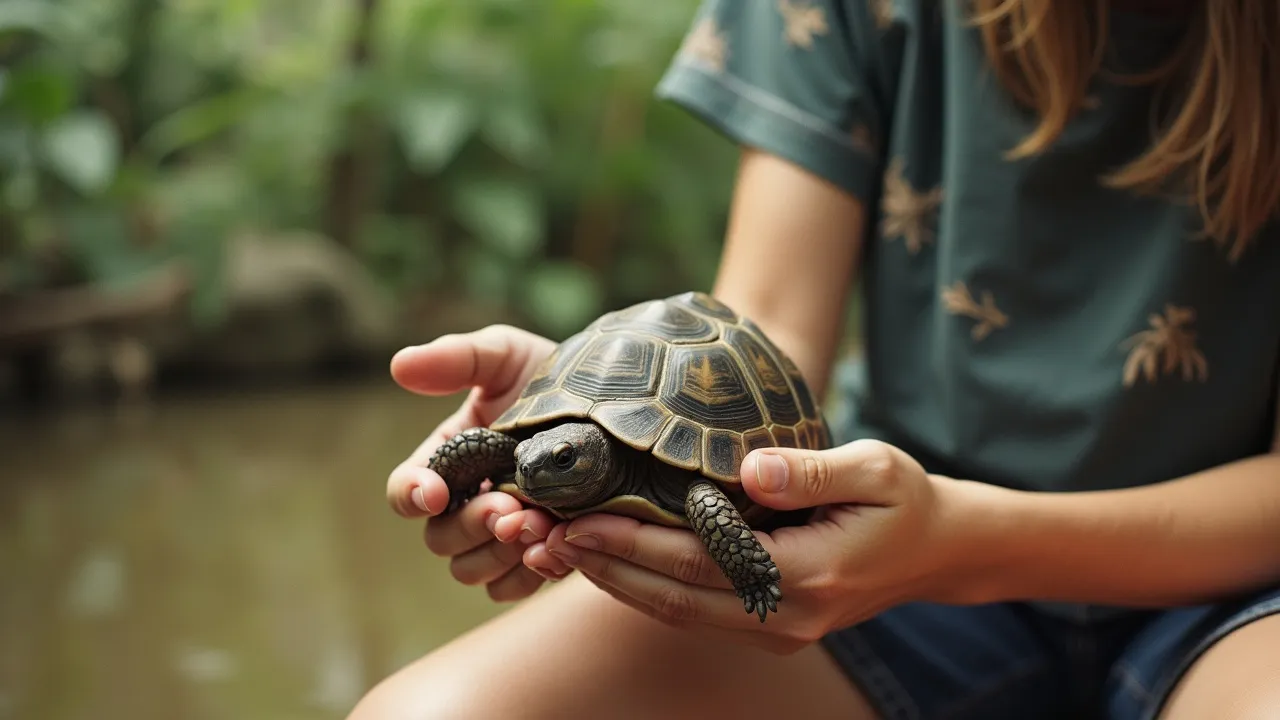
Turtle Adoption Day, observed on November 27th, encourages people to adopt turtles and tortoises from rescues rather than buying wild-caught ones. It promotes ethical pet ownership and conservation awareness.
The Historical Origins & Evolutionary Journey
Turtle Adoption Day, observed annually on November 27th, was established to combat the crisis of abandoned pet turtles and rampant illegal wildlife trade. American Tortoise Rescue, co-founded by Susan Tellem and Marshall Thompson, spearheaded the initiative in 2002. The date was strategically chosen before the holiday season to discourage impulsive pet purchases and promote responsible adoption.
The Foundational Catalyst: The 1990s Turtle Boom
The 1990s witnessed an unprecedented surge in turtle ownership, driven largely by the Teenage Mutant Ninja Turtles franchise. Children begged for pet turtles, often purchased from street vendors and pet stores without proper care knowledge. As the turtles outgrew small tanks and required specialized lighting and diets, many were abandoned in parks, lakes, or backyards. Shelters reported a massive influx of red-eared sliders and box turtles, overwhelming limited resources. By 2000, American Tortoise Rescue had documented thousands of cases of neglect, prompting the need for a dedicated adoption day.
The Legislative/Official Adoption: November 27, 2002
On November 27, 2002, American Tortoise Rescue officially declared the date as Turtle Adoption Day. The organization partnered with local animal shelters, reptile rescues, and pet stores to host adoption events, educational workshops, and media campaigns. In 2005, the event gained national attention when a high-profile rescue of 500 turtles from a hoarding situation highlighted the urgency. The day was later recognized by the United States Humane Society and similar bodies abroad.
Modern Global Legacy
Today, Turtle Adoption Day is celebrated across continents. In the UK, the day aligns with the British Chelonia Group's adoption programs. In Japan, it has spurred the creation of turtle sanctuaries. Social media movements like #AdoptDontShop and #TurtleAdoptionDay generate millions of impressions annually. The day also advocates for stronger laws, such as the U.S. Lacey Act amendments to curb trafficking. As climate change threatens sea turtle nesting sites, the day has expanded to include symbolic adoptions for sea turtles through organizations like WWF and Sea Turtle Conservancy.
How to Celebrate Turtle Adoption Day
Participating in Turtle Adoption Day involves both direct action and advocacy. Below are comprehensive ways individuals, schools, and organizations can contribute.
For Individuals
- Adopt, Don't Shop: Research reputable turtle rescues in your area. Complete an adoption application, which may include a home inspection and interview. Be prepared to provide a suitable habitat with proper UVB, heat, and water filtration systems.
- Symbolic Adoption: If you cannot keep a turtle, adopt a species symbolically. Many conservation groups offer adoption kits that fund wild turtle protection.
- Donate Supplies: Rescue organizations always need tanks, filters, heat lamps, and food. Contact your local rescue for a wishlist.
- Educate Yourself and Others: Attend webinars, read books like Turtles of the World, and share facts on social media. Use the official hashtag #TurtleAdoptionDay.
For Schools
- Organize a "Turtle Day" with a reptile expert who brings educational turtles.
- Incorporate turtle conservation into biology curricula, focusing on species diversity and threats.
- Hold a fundraising drive: bake sales or charity runs to benefit a local rescue.
- Create art projects like turtle shell designs to raise awareness.
For Organizations
- Host Adoption Fairs: Collaborate with veterinarians to offer on-site health checks and microchipping for adopted turtles.
- Discount Programs: Partner with pet supply stores to offer discounts for adopted turtles.
- Legislative Advocacy: Write letters to representatives supporting laws that restrict the sale of wild-caught turtles.
Regional Variations
In the United States, major events occur at zoos and aquariums. In Europe, the focus is on tortoise adoption because of the popularity of Mediterranean spur-thighed tortoises. In Asia, countries like Indonesia emphasize sea turtle adoption due to high poaching for eggs. In Australia, the day raises awareness for native species like the eastern long-necked turtle threatened by road mortality.
The Plight of Turtles and Tortoises: Conservation Status
Turtles and tortoises are among the most endangered vertebrates on Earth. According to the IUCN Red List, over 50% of turtle species are threatened with extinction, making them more imperiled than birds, mammals, or amphibians. Key threats include:
Habitat Destruction
Coastal development for tourism and agriculture destroys sea turtle nesting beaches. Freshwater turtles lose wetlands to drainage and pollution. Tortoises suffer from habitat fragmentation due to farming and urbanization. For example, the desert tortoise in the southwestern US has lost over 80% of its habitat.
Wildlife Trade
Millions of turtles are captured from the wild annually for the pet trade, food, and traditional medicine. The United States is a major exporter of turtles, though laws like the Lacey Act aim to regulate it. Adoption from rescues reduces demand for wild-caught animals.
Climate Change
Rising temperatures skew sea turtle sex ratios (warmer sand produces more females) and increase storm frequency that washes away nests. Freshwater turtles face altered water levels and temperatures.
Bycatch and Pollution
Sea turtles are accidentally caught in fishing gear, causing injury or death. Plastic pollution is ingested, blocking digestive tracts. Light pollution disorients hatchlings on beaches.
Ethical Adoption vs. Wild Capture
Adopting a turtle from a rescue ensures you are not contributing to the decline of wild populations. Here's a detailed comparison:
- Ethical Adoption: Turtles come from surrendered pets, confiscated animals, or rescues. They have been health-checked and often come with veterinary records. Adoption fees support rescue operations. You receive guidance on proper care.
- Wild Capture: Turtles are taken from their natural habitats, often under stressful conditions. They may carry parasites, diseases, or injuries. Removing them reduces genetic diversity and disrupts ecosystems. Many die during transport or shortly after.
- Pet Store Purchases: Even store-bought turtles may originate from wild-caught stock. It is impossible to verify their history. By adopting, you avoid supporting this supply chain.
Always choose to adopt from licensed rescues or sanctuaries that follow ethical guidelines. Verify their credentials through organizations like the Association of Reptilian and Amphibian Veterinarians.
Turtle Care Requirements: A Comprehensive Guide
Proper care is paramount for a turtle's well-being. Below are essential requirements for common pet species.
Housing
- Aquatic Turtles (e.g., Red-eared Slider): Need a tank at least 40 gallons for a small adult, with water depth allowing swimming. A basking area with UVB light and heat lamp is crucial. Water temperature 72-78°F, basking 85-95°F.
- Tortoises (e.g., Russian Tortoise): Require a large enclosure (4x2 ft minimum) with substrate for burrowing. UVB and heat lamp needed. Humidity should be low for desert species, higher for forest species.
- Semi-Aquatic (e.g., Box Turtle): Need both land and shallow water area. High humidity, about 70-80%.
Diet
- Aquatic turtles: Commercial pellets, leafy greens, feeder fish, and calcium supplements.
- Herbivorous tortoises: Dark leafy greens, vegetables, and occasional fruits. No animal protein.
- Omnivorous species: Mix of vegetables and protein like crickets or earthworms.
Health Care
Find a reptile veterinarian. Common issues include respiratory infections, shell rot, and metabolic bone disease. Annual check-ups are recommended. Turtles can live 20-50 years or more, so commitment is long-term.
The Role of Sanctuaries and Rescues
Turtle sanctuaries and rescues are the backbone of adoption efforts. They operate as non-profit organizations relying on donations and volunteers.
Intake and Rehabilitation
Rescues accept turtles from owners who can no longer care for them, from law enforcement seizures, and from injured animals found in the wild. They provide quarantine, medical treatment, and rehabilitation. For example, the Turtle Rescue of the Carolinas takes in over 200 turtles annually.
Adoption Programs
Potential adopters are screened through applications and home visits. Adoptions are tracked to ensure compliance with care standards. Many rescues require adopters to sign contracts and allow follow-up visits.
Education and Outreach
Rescues conduct school programs, community talks, and online seminars. They provide resources on turtle care and conservation. Turtle Adoption Day amplifies these efforts.
Global Impact of Turtle Adoption Initiatives
Turtle Adoption Day has inspired global initiatives. In 2015, the UK Parliament debated the day, leading to stricter regulations on tortoise sales. In Costa Rica, the day is tied to sea turtle nesting conservation. In India, it has boosted support for the Turtle Survival Alliance. Social media campaigns have reached millions. The day also encourages eco-tourism to places like the Great Barrier Reef, where turtle rehabilitation centers attract visitors.
Future Directions and Advocacy
The future of Turtle Adoption Day involves leveraging technology for virtual adoptions and expanding international cooperation. Climate change adaptation strategies for turtle habitats are being integrated into adoption networks. Stronger enforcement of wildlife laws and corporate partnerships with pet stores to phase out wild-caught sales are key goals. The day will continue to evolve as an advocacy platform for all testudines.
Common Misconceptions About Turtle Adoption
Many people hold misconceptions about turtle adoption. It is crucial to debunk these for successful conservation.
Misconception 1: Turtles are easy, low-maintenance pets.
In reality, turtles require specialized lighting, heating, and filtration. They can live for decades and grow large. Many are surrendered because owners underestimated their needs.
Misconception 2: It's okay to release a pet turtle into the wild.
Releasing non-native species like red-eared sliders harms local ecosystems by outcompeting native turtles and spreading diseases. It is also illegal in many areas.
Misconception 3: Turtles don't need veterinary care.
Turtles can suffer from metabolic bone disease, respiratory infections, and shell injuries. They require a reptile vet for proper health care.
Misconception 4: Adopting from a rescue is expensive.
Adoption fees are typically lower than purchasing from a pet store and often include initial veterinary costs. Rescues also provide guidance.
Misconception 5: Turtles are solitary and don't need interaction.
While not social, turtles benefit from environmental enrichment and routine care. Handling should be minimal to reduce stress.
Symbolic Adoption Programs
For those unable to adopt a physical turtle, symbolic adoption programs offer a way to support conservation. Organizations like World Wildlife Fund and Sea Turtle Conservancy allow individuals to "adopt" a sea turtle for a fee, receiving a certificate, photo, and updates on the animal's migration. These funds go directly to protection efforts, such as patrolling nesting beaches or rehabilitating injured turtles. Symbolic adoption is especially popular for endangered species like the Kemp's ridley sea turtle.
Historical Timeline
The Teenage Mutant Ninja Turtles franchise sparks a surge in pet turtle ownership, leading to widespread abandonment and a crisis in shelters.
American Tortoise Rescue establishes World Turtle Day on May 23 to promote global conservation.
American Tortoise Rescue officially declares November 27 as Turtle Adoption Day, aiming to encourage adoptions before the holiday season.
A high-profile rescue of 500 turtles from a hoarding situation garners national attention, boosting the day's profile.
Social media campaigns using #TurtleAdoptionDay begin to spread globally, increasing participation.
The UK Parliament recognizes Turtle Adoption Day, leading to stricter regulations on tortoise sales and trade.
Virtual adoption events and online fundraisers become prominent due to the COVID-19 pandemic.
Over 100 rescues and sanctuaries worldwide participate in Turtle Adoption Day, with events in North America, Europe, Asia, and Australia.