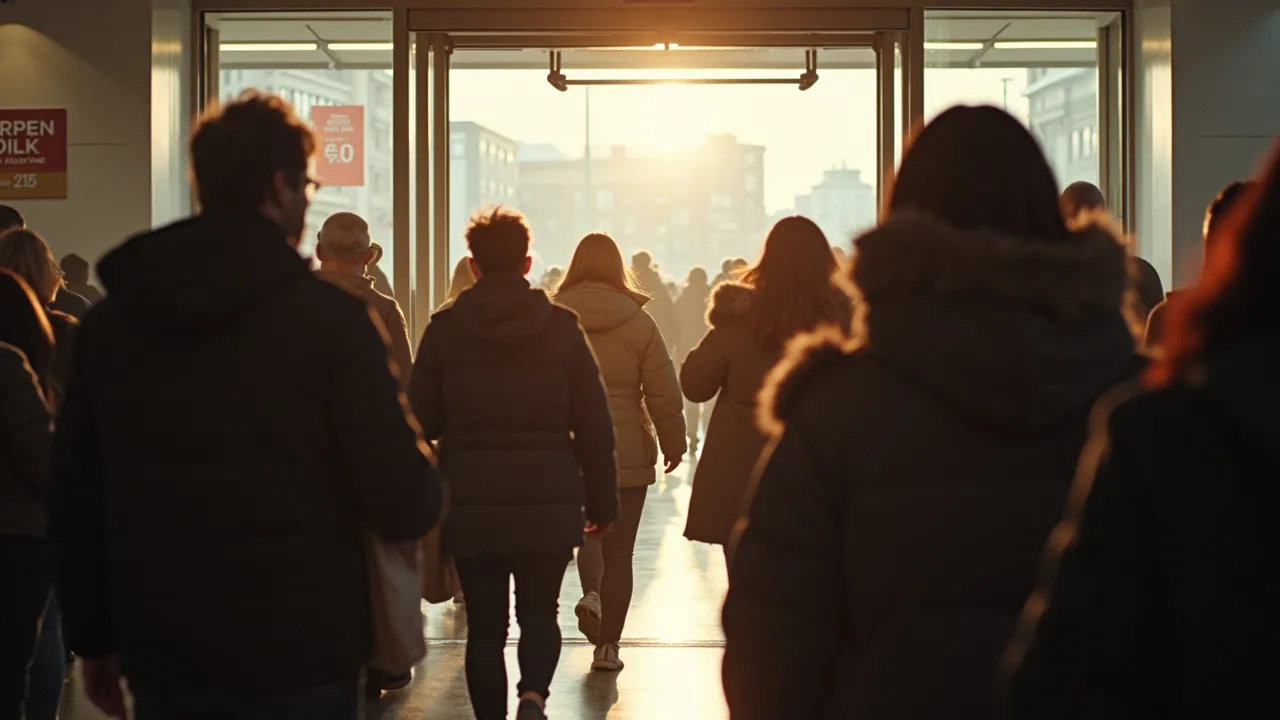
Black Friday, the day after Thanksgiving, marks the unofficial start of the Christmas shopping season with massive discounts and doorbuster deals, drawing millions of shoppers in-store and online.
The Historical Origins & Evolutionary Journey
Black Friday has a fascinating and somewhat controversial history. The term was first used in Philadelphia in the 1950s and 1960s by the police department to describe the chaotic traffic and crowds that descended upon the city the day after Thanksgiving. Shoppers and tourists flocked to the city for the Army-Navy football game and the start of Christmas shopping, causing gridlock and incidents. By 1961, the phrase "Black Friday" was officially adopted by Philadelphia police and traffic reporters.
The Foundational Catalyst
The catalyst for Black Friday was the convergence of two events: the annual Army-Navy football game (usually held on the Saturday after Thanksgiving) and the traditional start of the Christmas shopping season. Retailers, recognizing the opportunity, began offering special sales to attract the throngs of people already in town. However, the negative connotation of "Black Friday"—implying a day of stress and chaos—troubled merchants for decades.
The Legislative/Official Adoption
In the 1980s, retailers sought to rebrand the day in a positive light. They promoted the idea that "Black Friday" referred to the day when stores went from being "in the red" (losing money) to "in the black" (turning a profit). This narrative, though historically inaccurate, gained traction and helped transform Black Friday into a nationwide shopping phenomenon. The official adoption of the day as the unofficial start of the holiday shopping season was cemented by the 1990s, with many stores opening earlier and earlier each year.
Modern Global Legacy
Today, Black Friday has expanded beyond the United States to many countries around the world, including Canada, the United Kingdom, Australia, and Brazil. While the date remains tied to U.S. Thanksgiving, international retailers have adopted the event with localized promotions. The rise of e-commerce, especially with the advent of Cyber Monday (the following Monday dedicated to online deals), has transformed Black Friday into a hybrid in-store and online shopping event. The COVID-19 pandemic further accelerated the shift to online, with many retailers offering extended "Black Friday" deals throughout November.
How to Celebrate Black Friday
Black Friday is both a thrilling and overwhelming experience. To navigate it successfully, preparation is key. Below are actionable strategies for individuals, families, and organizations to make the most of the day.
For Individual Shoppers
- Create a Budget: Set a spending limit and stick to it. Black Friday deals can tempt impulse buys, so list items you genuinely need.
- Research Deals in Advance: Check store ads and online platforms like Amazon, Walmart, and Target. Many retailers release their Black Friday ads weeks in advance.
- Use Price Tracking Tools: Apps like CamelCamelCamel or Honey can help verify if a deal is genuine or just a marketing gimmick.
- Prioritize High-Value Items: Electronics, appliances, and luxury goods often see the steepest discounts. Focus on these categories for maximum savings.
- Plan Your Route: If shopping in-store, map out which stores to hit first. Consider going late at night or early morning to avoid the biggest crowds.
- Check Return Policies: Many stores have strict Black Friday return policies. Know the terms before purchasing.
For Families and Groups
- Divide and Conquer: Split up to cover more stores. Use walkie-talkies or group chats to communicate.
- Pack Essentials: Bring water, snacks, portable chargers, and comfortable shoes. The wait can be long.
- Make It a Tradition: Some families enjoy the thrill together. Combine shopping with a post-Thanksgiving breakfast or brunch.
For Online Shoppers
- Set Up Accounts Early: Create accounts on major retail sites and save your payment info to speed up checkout.
- Enable Notifications: Follow retailers on social media or sign up for newsletters to get early access codes.
- Use Multiple Devices: Some deals are device-specific. Have a laptop, tablet, and phone ready to compare.
- Beware of Scams: Only shop on secure websites (look for HTTPS). Avoid clicking suspicious links.
For Organizations and Businesses
- Offer Tiered Discounts: Encourage larger purchases with escalating discounts (e.g., 10% off $50, 20% off $100).
- Leverage Email Marketing: Send targeted campaigns to subscribers with exclusive early access or coupon codes.
- Extend Shopping Hours: Open as early as possible or offer 24-hour online availability.
Remember that the real celebration is about saving money responsibly. Avoid overspending and enjoy the hunt!
Economic Impact of Black Friday
Black Friday is one of the most critical economic events of the year, particularly for retailers. It sets the tone for the entire holiday shopping season, which can account for up to 30% of annual retail sales. Here are key aspects of its economic footprint:
Consumer Spending
In 2023, U.S. consumers spent over $9.8 billion online on Black Friday alone, according to Adobe Analytics. In-store spending also remains strong, with millions visiting physical stores. The National Retail Federation (NRF) estimated that total holiday spending in 2023 exceeded $960 billion, with Black Friday and Cyber Monday driving a significant portion.
Employment and Small Businesses
Many retailers hire seasonal workers to handle the surge, boosting employment temporarily. Small businesses also benefit through local promotions and Shop Small Saturday (the day after Black Friday). However, dominance by big-box stores can sometimes squeeze smaller competitors.
Supply Chain & Inventory Management
Black Friday forces manufacturers and retailers to coordinate extensive supply chains. Goods must be ordered months in advance, and warehouse logistics are tested. Last-mile delivery services (UPS, FedEx, Amazon) experience peak workloads.
Global Retail Expansion
Black Friday has become a global phenomenon. In the UK, for example, consumers spent £8.7 billion in 2023. Brazil's "Black Friday Brasileira" has also grown rapidly. However, the event's impact varies by country due to cultural differences in shopping habits.
While Black Friday delivers a massive economic boost, it also raises questions about consumer debt, overconsumption, and environmental sustainability. Many critics argue that the frenzy promotes waste and materialism.
Global Expansion and Regional Adaptations
Though Black Friday originated in the United States, its influence has spread worldwide. Different countries have adopted the concept, often tailoring it to their own shopping calendars. Below is a look at how various regions celebrate:
Canada
Canada celebrates Black Friday on the same day as the US (the day after American Thanksgiving, not Canada's Thanksgiving in October). Many Canadian retailers match US deals, but the event is less intense than in the US due to smaller population and earlier holiday shopping patterns.
United Kingdom
The UK adopted Black Friday around 2010, driven by online retailers like Amazon. It has since become a major event, with stores offering deep discounts. However, some retailers have scaled back due to past instances of violence and overcrowding.
Australia
Australia observes Black Friday in late November, coinciding with the US date. It has gained popularity through e-commerce, with major players like JB Hi-Fi and Harvey Norman participating. Boxing Day (December 26) remains the traditional mega-sale event in Australia.
Brazil
Brazil's "Black Friday" is held on the last Friday of November. It has grown rapidly but is also known for "Black Fraud" (Black Fraude) due to misleading discounts. Consumer protection agencies now monitor deals closely.
India
Black Friday is relatively new in India, promoted by e-commerce giants like Flipkart and Amazon. It is less impactful due to the country's own major sales events like Dussehra and Diwali shopping festivals.
Each region adapts Black Friday to its local context, but the core idea of massive post-Thanksgiving discounts remains universal. Cultural differences influence shopping behaviors, with some countries preferring online over in-store experiences.
Consumer Behavior Trends on Black Friday
Understanding consumer behavior on Black Friday is crucial for retailers and marketers. Over the years, several trends have emerged that shape how people shop:
Early Bird vs. Night Owl
Traditional Black Friday meant waking up at 4 AM to line up before stores opened. However, many retailers now start deals as early as Thanksgiving evening (known as "Gray Thursday"). Alternatively, online shoppers often wait for midnight and late-night flash sales.
Omnichannel Shopping
Shoppers increasingly use multiple channels: browsing on mobile, purchasing online, and picking up in-store (BOPIS). Retailers that integrate online and offline experiences—such as allowing online price matching in stores—tend to perform better.
Social Media Influence
Platforms like Instagram, TikTok, and Facebook are used to leak deals and create buzz. Influencers often promote "haul" videos post-purchase. Social proof and FOMO (fear of missing out) drive urgency.
Bargain Hunting Psychology
Consumers often perceive Black Friday deals as limited-time opportunities. Retailers exploit this with countdown timers, limited stock notifications, and “doorbusters” that create scarcity. However, savvy shoppers use price history tools to avoid fake discounts.
Sustainability and Ethical Concerns
A growing segment of consumers is questioning the environmental impact of Black Friday. Some advocate for "Buy Nothing Day" on the same day, promoting anticonsumerism. Brands like Patagonia have run campaigns urging customers not to buy their products unless necessary.
As technology evolves, so do shopping behaviors. Voice shopping, AR try-ons, and AI-driven recommendations are expected to shape future Black Fridays.
Controversies and Criticisms
Black Friday is not without its detractors. Several controversies have arisen over the decades, ranging from workplace ethics to physical safety. Key criticisms include:
Worker Exploitation
Retail workers often face mandatory overtime, reduced holidays, and stressful conditions. Incidents of employees being trampled or injured while working on Black Friday have led to calls for better protections. Some companies, like REI, close their stores on Black Friday and encourage employees to spend the day outdoors (#OptOutside).
Consumer Safety
The frenzy of doorbusters has led to violence, including fights, stampedes, and even fatalities. In 2008, a Walmart employee was trampled to death by a crowd on Long Island. Many stores have since implemented crowd control measures, such as limiting the number of people inside or using virtual queues.
Environmental Impact
The surge in consumption generates massive waste, from packaging to unsold inventory. E-commerce returns also contribute to carbon emissions. Critics argue that Black Friday epitomizes the unsustainable "take-make-waste" economy.
Deceptive Marketing
Some retailers inflate pre-sale prices to make discounts appear larger. Consumer watchdogs have filed lawsuits against companies for false advertising. Tools like price trackers help consumers identify genuine deals.
These controversies have spurred movements like "Small Business Saturday," "Cyber Monday," and "Giving Tuesday" to redirect spending toward more positive outcomes. Nonetheless, Black Friday remains a polarizing event.
The Future of Black Friday
As consumer behaviors and technology evolve, so too will Black Friday. Here are some trends that may shape its future:
Shift to Online & Mobile
The pandemic accelerated e-commerce adoption. Many retailers now offer “online-only” deals or extend sales over weeks. In the future, Black Friday may become a month-long event, reducing the urgency of a single day.
Personalization with AI
Artificial intelligence will enable hyper-personalized offers based on browsing history, past purchases, and real-time behavior. Chatbots and virtual assistants could guide shoppers through deals.
Augmented Reality (AR) Try-Ons
AR will allow consumers to virtually try on clothing, furniture, or accessories before buying, reducing returns and enhancing confidence in online purchases.
Sustainability as a Differentiator
Eco-conscious brands may promote sustainable products during Black Friday, appealing to consumers who value ethics. Some retailers might adopt circular economy models, offering discounts on refurbished or recycled goods.
Regulation and Worker Rights
There is growing pressure to regulate Black Friday hours to protect workers. Some states and countries already restrict Sunday sales or require extra pay. Future legislation may further curtail the event.
Despite these changes, the core appeal of Black Friday—massive savings on coveted items—will likely endure. The challenge for retailers will be to balance profit with social responsibility.
Historical Timeline
The term 'Black Friday' is coined by Philadelphia police to describe the chaos of shoppers and tourists flooding the city the day after Thanksgiving.
The term is officially used by Philadelphia police and traffic reporters; retailers try unsuccessfully to rename it 'Big Friday'.
Retailers rebrand Black Friday as the day stores go 'from red to black' (profitable), helping the event gain positive traction nationwide.
Black Friday becomes the official start of the Christmas shopping season, with many stores opening at 6 AM or earlier.
Cyber Monday is coined by the National Retail Federation to promote online shopping on the Monday after Thanksgiving.
A Walmart worker is trampled to death in Long Island, NY, sparking widespread criticism and safety reforms.
Several retailers begin opening on Thanksgiving evening (Gray Thursday), blurring the line between the two days.
Amazon expands its Black Friday deals to include both online and physical stores with 'Prime Day' later in the year.
Due to the COVID-19 pandemic, most Black Friday shopping shifts online; retailers offer extended deals throughout November.
U.S. consumers spend over $9.8 billion online on Black Friday, a record high according to Adobe Analytics.