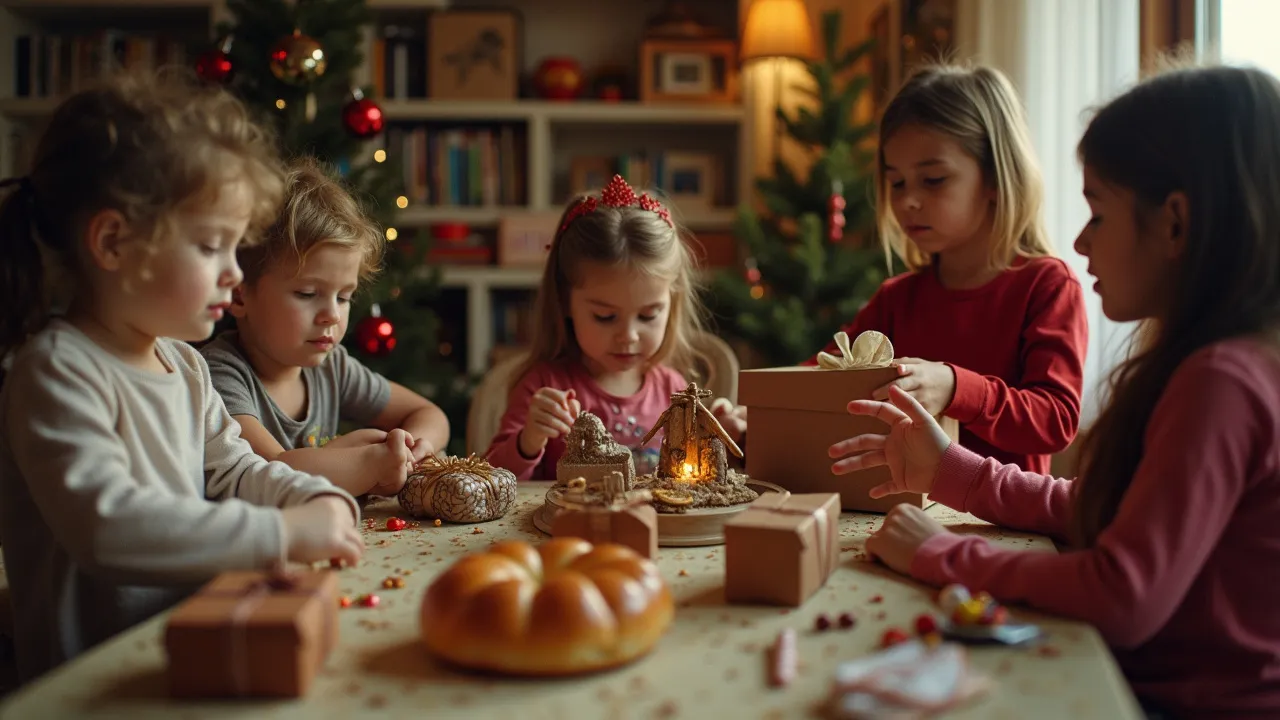
Three Kings Day, celebrated on January 6th, marks the visit of the Magi to baby Jesus. It is a major Christian feast day with rich traditions including gift-giving, special breads, and parades, especially in Latin America and Europe.
The Historical Origins & Evolutionary Journey
Three Kings Day, also known as the Feast of the Epiphany, commemorates the biblical story of the Magi—three wise men from the East—who followed a star to Bethlehem to present gifts of gold, frankincense, and myrrh to the infant Jesus. The word "epiphany" means manifestation, and this day celebrates the revelation of Christ to the Gentiles. The observance has deep roots in Christian tradition and has evolved over centuries into a rich cultural celebration.
The Foundational Catalyst
The earliest references to the Magi appear in the Gospel of Matthew (2:1-12). By the 2nd century, Christian theologians like Irenaeus and Origen elaborated on the story, though the number of wise men was not fixed until later. The feast of Epiphany was established in the Eastern Church as early as the 3rd century, initially celebrating both Christ's birth and baptism. In the West, the feast was adopted by the 4th century, with a focus on the visit of the Magi. The date January 6th was chosen partly as a counterpoint to pagan winter solstice festivals. By the Middle Ages, Three Kings Day had become a major liturgical celebration, with unique traditions like the baking of a special cake (the Galette des Rois in France or Rosca de Reyes in Latin America) and the blessing of homes with chalk.
The Legislative/Official Adoption
While not established by a single legislative act, the observance was codified in the liturgical calendars of the Catholic, Orthodox, and many Protestant churches. The Council of Tours in 567 decreed the 12 days from Christmas to Epiphany as a unified festive period. In many countries, Three Kings Day is a public holiday. For example, in Spain and many Latin American nations, January 6th is a national holiday, with parades (Cabalgatas de Reyes) on the evening of January 5th. In Puerto Rico, the day is a public holiday, and the tradition of leaving grass or hay for the camels is widely practiced. In recent decades, some regions have moved the observance to the nearest Sunday, but January 6th remains the traditional date.
Modern Global Legacy
Today, Three Kings Day is celebrated by millions worldwide. In Mexico, children receive gifts on this day rather than Christmas. In France, the Galette des Rois is eaten throughout January. In the Eastern Orthodox Church, Epiphany (Theophany) focuses on Jesus' baptism, with the Great Blessing of Waters. The day has also gained recognition in secular contexts, with some schools and businesses incorporating it as a multicultural holiday. The traditions of the Magi's journey continue to inspire art, music, and literature, and the day remains a powerful symbol of generosity and cross-cultural encounter.
How to Celebrate Three Kings Day
Three Kings Day is celebrated with a variety of customs that blend religious piety with family fun. Here is a comprehensive guide to observing the day, whether you are in a predominantly Christian culture or introducing the tradition elsewhere.
Essential Traditions
Gift-Giving: In many Latin American countries (e.g., Mexico, Argentina, Puerto Rico), children receive gifts from the Three Kings on January 6th, mirroring the Magi's gifts to Jesus. Families often leave shoes near the door or a nativity scene to be filled with presents.
Special Foods: The centerpiece is the Rosca de Reyes (a round fruit-filled bread) in Mexico and Spain, or the Galette des Rois (a puff pastry with almond cream) in France. A small figurine of baby Jesus is hidden inside; whoever finds it must host a party on Candlemas (February 2nd).
Parades and Pageants: The evening of January 5th sees elaborate "Cabalgatas de Reyes" in Spain and many Latin American cities, where the three kings ride on floats throwing candy to children. Live nativity plays are also common.
Chalk Blessing: In some European traditions, families use blessed chalk to write the initials of the three kings (Caspar, Melchior, Balthazar) above doorways, along with the year, as a protective blessing.
How to Celebrate at Home
Decorate your home with a nativity scene, adding figures of the Magi (they are often moved from the stable to the front of the scene on this day).
Bake or purchase a Rosca de Reyes. Gather family and friends to share it. The finder of the figurine takes on the responsibility of providing tamales or a party on February 2nd.
Set out shoes or a small basket for the Magi to fill with gifts. Some families also leave a box of grass or hay for the camels.
Attend a church service that includes the reading of the Epiphany gospel and, in some traditions, a blessing of gold, frankincense, and myrrh.
Participate in a local Three Kings parade or organize a small community procession.
Celebrations Around the World
Spain: The Three Kings Parade in Madrid is one of the largest, with horse riders, bands, and floats. Children write letters to the kings ahead of time.
Mexico: Families gather to eat Rosca de Reyes on January 6th. Children receive gifts, and some towns hold religious processions.
France: The Galette des Rois is served in bakeries and homes throughout January. A paper crown is placed on the head of the person who finds the figurine.
Puerto Rico: Old San Juan hosts a massive festival with music, dancing, and parades. Traditions also include singing "villancicos" (Christmas carols).
Greece & Cyprus: On Epiphany (Theophany), priests throw a cross into the sea, and young men dive to retrieve it for blessings. The celebration includes the Great Blessing of the Waters.
Ethiopia: The Ethiopian Orthodox Church celebrates Timkat (Epiphany) on January 19th (due to a different calendar) with processions, baptism reenactments, and colorful ceremonies.
Symbolism and Traditions of the Magi
The story of the three Magi is rich with symbolism that has evolved over centuries. The gifts themselves represent key aspects of Jesus' identity: gold for royalty, frankincense for divinity, and myrrh for his future suffering and death. The number three likely comes from the three gifts, though early Christian art depicted varying numbers of magi. Their names—Caspar, Melchior, and Balthazar—were assigned in the 8th century. In tradition, Caspar is often depicted as an old man with a beard, Melchior as a middle-aged figure, and Balthazar as a young African king, symbolizing the universal reach of Christ. The star that guided them is a powerful metaphor for divine guidance and revelation. Many cultures incorporate these symbols into their celebrations: star-shaped decorations, gift-giving as a sign of generosity, and the use of figurines in nativity scenes. The tradition of hiding a figurine in the bread (Rosca de Reyes) symbolizes the need to find Christ and the joy of discovery.
Regional Variations and Unique Customs
Three Kings Day is celebrated across the globe with distinct regional flavors. In Latin America, the day is often more important than Christmas for gift-giving. For instance, in Argentina, children leave their shoes by the door, while in Peru, families attend a "Misa de Reyes" and share a large Rosca. In Spain, the Cabalgata de Reyes on January 5th is a major event; the three kings arrive by boat in coastal cities or by train inland. In early modern Europe, Twelfth Night (the evening before Epiphany) was a lively festival with role reversals and feasting. Shakespeare's play "Twelfth Night" was written for such festivities. In the Philippines, the day is known as "Pista ng Tatlong Hari" and is marked with a novena and community feasts. Some indigenous communities in Mexico combine Catholic traditions with pre-Hispanic elements, such as offering gifts to nature spirits. The Eastern Orthodox Church, celebrating Theophany on January 6th (or January 19th in the Julian calendar), emphasizes the baptism of Christ, with water-blessing ceremonies that often occur at rivers, lakes, and seas. These regional variations highlight the adaptability of the feast while maintaining its core Christian message.
The Role of the Rosca de Reyes in Culture
The Rosca de Reyes (King's Ring) is more than a sweet bread; it is a cultural emblem with deep roots. Originating in Spain and brought to the Americas during colonization, this oval-shaped bread is decorated with candied fruits symbolizing jewels. Inside, a small plastic figurine of baby Jesus is hidden. The tradition of hiding an object in a cake dates back to Roman Saturnalia, where a bean was hidden to choose the "king of the festival." In the Christian context, the figurine represents the hiding of the infant Jesus from King Herod's massacre. The person who finds the figurine becomes the "godparent" of the baby Jesus for the year and is obliged to host a party on February 2nd (Candlemas) or bring tamales and atole. The bread is traditionally shared among family and friends, fostering community and continuity. In recent years, commercial bakeries have mass-produced the rosca, but many families still home-bake it, passing down recipes through generations. The Rosca de Reyes has also become a symbol of identity for Hispanic communities abroad, a way to maintain cultural heritage.
Three Kings Day in Modern Media and Commerce
In contemporary society, Three Kings Day has found a place in media, advertising, and commerce. In countries with strong Catholic traditions, retailers run sales and promotions specifically for the holiday. Instagram and TikTok see a surge of posts featuring roscas and gift hauls. Netflix has aired special episodes of popular shows set around Epiphany. The holiday is also frequently mentioned in Christmas music and films. Interestingly, the tradition of the Magi has inspired modern gift-giving systems: in some Latin American countries, children write letters to the Kings, similar to letters to Santa. This dual-gift culture (Christmas and Three Kings) has commercial implications, spreading out consumer spending. Educational institutions often use the day to teach about global cultures and religious diversity. The holiday's emphasis on generosity and hospitality resonates in secular narratives about community service. As multicultural awareness grows, Three Kings Day is increasingly recognized in non-Christian contexts, often alongside other winter festivals, enriching the global calendar of celebrations.
The Spiritual and Theological Significance
Theologically, Three Kings Day (Epiphany) is a profound feast. It celebrates the manifestation of God to the Gentiles through the Magi, affirming that salvation is for all people, not just the Jews. The Revelation of Christ's divinity, first to the shepherds and then to the wise men, underscores the universal scope of the gospel. The gifts symbolize key aspects of Jesus' mission: gold for his kingship, frankincense for his priesthood, and myrrh for his death and resurrection. For many Christians, the day serves as a call to recognize Christ in everyday life and to offer their own gifts—time, talent, and treasure—to God. The journey of the Magi, full of faith and perseverance, inspires believers to seek truth diligently. The feast also marks the conclusion of the Christmas season, encouraging a final celebration before moving into the ordinary time of the liturgical year. In Orthodox traditions, Theophany emphasizes the Baptism of Christ and the revelation of the Trinity, with the Holy Spirit descending as a dove and the Father's voice from heaven. Both streams of Christianity find deep meaning in this day, making it a cornerstone of the liturgical calendar.
Historical Timeline
Early Christian writings (e.g., Irenaeus) reference the Magi; number of wise men not yet fixed.
The Feast of Epiphany is established in the Eastern Church (January 6th) to celebrate Christ's birth and baptism. Western church soon adopts it.
Council of Tours decrees the 12 days from Christmas to Epiphany as a unified festival period.
Names Caspar, Melchior, and Balthazar are first recorded in a manuscript; they become widely accepted.
Twelfth Night traditions flourish in Europe, including the "king cake" and role-reversal festivities.
Spanish colonization spreads the celebration of Three Kings Day to the Americas, integrating local customs.
Puerto Rico declares January 6th a public holiday (later reinstated in 1990s after a period of change).
Mexico City hosts one of the world's largest Three Kings parades, with over 2 million attendees.
Three Kings Day gains increased recognition in the U.S. as a multicultural holiday, with some schools and businesses acknowledging it.