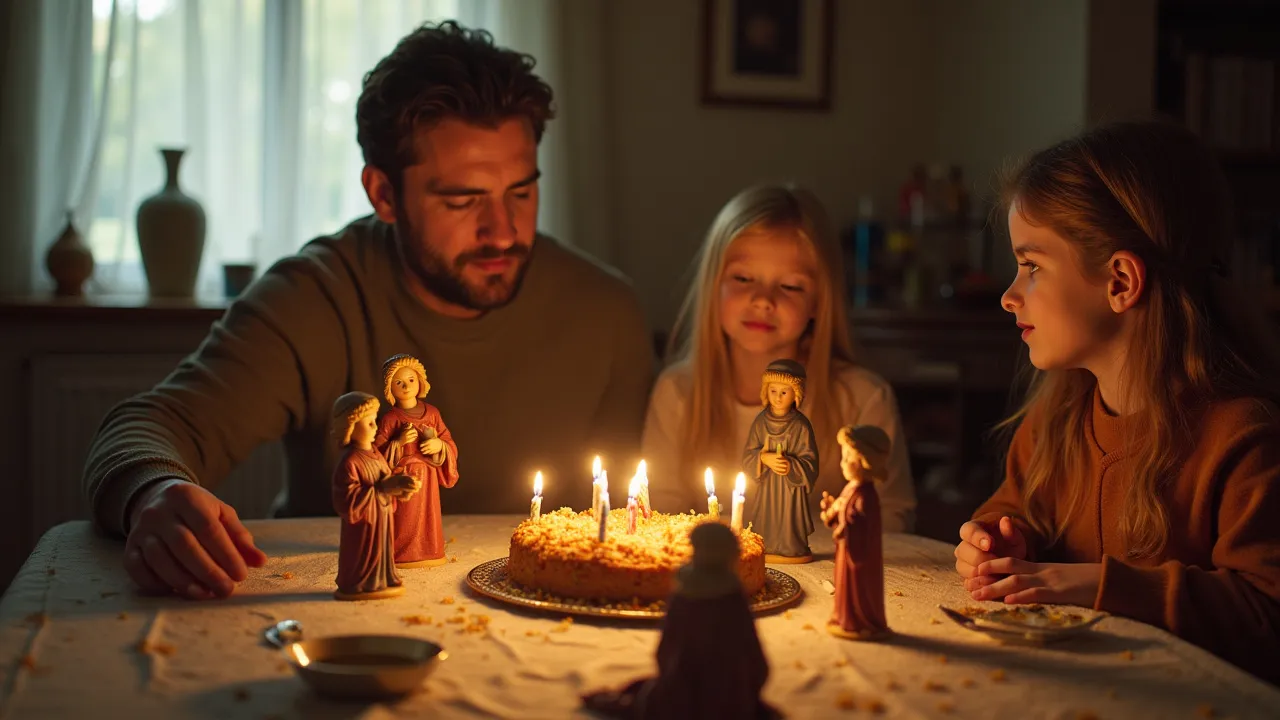
Epiphany, celebrated on January 6th, commemorates the revelation of Jesus Christ to the Magi and his baptism in the Jordan River. It is observed with diverse traditions worldwide, including gift-giving, feasts, and water blessings.
The Historical Origins & Evolutionary Journey
Epiphany, derived from the Greek word 'epiphaneia' meaning 'manifestation' or 'appearance,' is one of the oldest Christian feasts. Its origins trace back to the early Eastern Church in the 2nd and 3rd centuries, where it primarily celebrated the baptism of Jesus Christ as the moment of his divine manifestation to the world. The Western Church later expanded the feast to include the visit of the Magi, emphasizing the revelation of Christ to the Gentiles.
The Foundational Catalyst
The earliest recorded observance of Epiphany dates to around the 4th century. In the Eastern Orthodox tradition, the feast focuses on the Baptism of Jesus (Theophany), highlighting the revelation of the Holy Trinity. The date January 6th was chosen, possibly as a Christian response to pagan winter solstice festivals or as a complement to Christmas. Key theological themes include:
- Manifestation of Christ: The incarnation and divine nature of Jesus revealed to humanity.
- Baptism of the Lord: The voice of the Father and the descent of the Holy Spirit confirming Jesus as the Son of God.
- Visit of the Magi: The symbolic representation of the Gentiles receiving the gospel.
The Legislative/Official Adoption
The Council of Tours in 567 CE formally included Epiphany in the liturgical calendar, and over the centuries, various Christian denominations adopted it with distinct emphases. The feast became a major celebration, often accompanied by the 'Twelve Days of Christmas' culminating on Twelfth Night (January 5th). During the Middle Ages, Epiphany evolved into a popular folk holiday, with traditions such as the 'King's Cake' and the 'Blessing of Water' becoming widespread.
Modern Global Legacy
Today, Epiphany is celebrated by Catholics, Orthodox, Anglicans, and some Protestant denominations. While the Western church emphasizes the Magi, the Eastern church maintains a strong focus on the Baptism. The feast has also influenced secular customs, such as the 'Twelfth Night' festivities in England and the 'Three Kings' Day' parades in Spain and Latin America. In many countries, January 6th remains a public holiday, and the liturgical season extends until the Feast of the Presentation (Candlemas) on February 2nd.
How to Celebrate Epiphany
Epiphany offers a rich array of traditions that vary by region and denomination. Below is a comprehensive guide to celebrating this feast, whether at home, in church, or within the community.
Traditional Church Observances
- Attend a Divine Liturgy or Mass: Many churches hold special services on January 6th. In Eastern Orthodox churches, the Great Blessing of Water is a central ritual.
- Blessing of Homes: Some priests visit homes to bless them with holy water and chalk, marking doors with the initials of the Magi (C, M, B) and the year.
- Processions and Parades: In Spain and Latin American countries, elaborate parades reenact the arrival of the Magi, often tossing candies to children.
Home and Family Customs
- Bake or buy a King's Cake: A sweet bread (Galette des Rois in France, Rosca de Reyes in Mexico, or King Cake in the US) containing a hidden figurine or bean. The finder becomes the 'king' or 'queen' of the feast.
- Exchange gifts: In many cultures, Epiphany is the day for gift-giving, commemorating the Magi's gifts. Children leave their shoes out for the three kings to fill.
- Twelfth Night party: On the eve of Epiphany, some families host a farewell to the Christmas season, complete with wassail and burning of greenery.
Global Variations
Eastern Orthodox Tradition
Known as Theophany, the focus is on the Baptism of Jesus. The Great Blessing of Water takes place, and many immerse themselves in rivers or lakes to receive blessings. In Greece, a cross is thrown into the sea, and divers retrieve it.
Spain and Latin America
Día de Reyes (Three Kings' Day) is a major celebration. Children write letters to the Magi, and on January 5th, they go to bed early or wait for the 'cabalgata' (parade). On the morning of the 6th, they find gifts left by the kings.
France and Francophone Regions
The Galette des Rois, a puff pastry filled with frangipane, is shared. The youngest child hides under the table and decides who gets each slice. The person who finds the fève (figurine) becomes king or queen for the day.
Ethiopia (Timkat)
Ethiopian Orthodox Christians celebrate Timkat on January 19th (according to the Julian calendar). It commemorates the Baptism of Jesus with processions, baptisms, and reenactments.
Theological Significance of Epiphany
Epiphany is deeply rooted in Christian theology, representing the revelation of Jesus Christ's divine nature to the world. The term 'epiphany' itself conveys a sudden manifestation of the divine. The feast encompasses two primary events.
Visit of the Magi
The Gospel of Matthew (2:1-12) recounts the arrival of wise men from the East, guided by a star, who bring gifts of gold, frankincense, and myrrh. This event symbolizes the recognition of Jesus as the Messiah by the Gentile nations. The gifts carry prophetic meanings:
- Gold: Acknowledges Jesus as king.
- Frankincense: Signifies his divinity and priestly role.
- Myrrh: Foreshadows his suffering and death.
The Baptism of Jesus
In the Eastern tradition, Epiphany (Theophany) focuses on the Baptism of Jesus in the Jordan River by John the Baptist. At that moment, the heavens opened, the Holy Spirit descended like a dove, and a voice from heaven declared, 'This is my beloved Son, with whom I am well pleased' (Matthew 3:13-17). This event reveals the Trinity and inaugurates Jesus's public ministry.
Together, these two aspects of Epiphany underscore the multifaceted nature of Christ's revelation: to both the learned (Magi) and the common (baptism), to Jews and Gentiles alike. The feast thus serves as a powerful reminder of the universality of salvation.
Global Traditions and Cultural Expressions
Epiphany is celebrated with a rich tapestry of customs across the world, reflecting local culture and history. Below are notable traditions from various regions.
Spain and Latin America
In Spain, the 'Cabalgata de los Reyes Magos' (Three Kings' Parade) takes place on the evening of January 5th. Floats carry the Magi, who throw candy to the crowd. Children leave their shoes out, along with hay for the camels, and wake to find gifts. In Mexico, the 'Rosca de Reyes' (King's Ring) is a sweet bread shaped like a wreath, decorated with candied fruit. Inside is a small plastic figurine of the baby Jesus. Whoever finds it must host a party on Candlemas (February 2nd).
France, Belgium, and Switzerland
The 'Galette des Rois' (King's Cake) is a staple. Made of puff pastry and filled with almond cream, it contains a porcelain figurine (fève). The youngest child of the family (or the youngest guest) hides under the table and decides who receives each slice. The person who gets the fève becomes king or queen and wears a paper crown.
Eastern and Central Europe
In countries like Poland, the Czech Republic, and Slovakia, Epiphany is marked by church services and home blessings. In Poland, people write 'K+M+B' (the traditional initials of the Magi) and the year above their doors with blessed chalk. In Russia, the Orthodox Church celebrates Theophany on January 19th (Julian calendar), with the Great Blessing of Water and ice swimming.
Ethiopia
Timkat, the Ethiopian Orthodox celebration of Epiphany, is a vibrant three-day festival. Priests carry replicas of the Ark of the Covenant in processions, and on the final day, water is blessed, and attendees immerse themselves to renew their baptismal vows. Timkat is known for its colorful robes, singing, and dancing.
United States and Canada
While not a public holiday, many churches hold special services. Some Catholic and Anglican parishes host Epiphany pageants. The tradition of 'King Cake' is popular, especially in Louisiana and among communities with French heritage. The cake is often purple, green, and gold, and a small plastic baby is hidden inside.
Symbolism and Rituals
Epiphany is rich in symbols that convey theological truths and cultural heritage. Understanding these symbols deepens appreciation of the feast.
The Star of Bethlehem
The star guides the Magi to Jesus, symbolizing divine guidance and the light of Christ. It is often depicted on the front of churches or used in nativity scenes.
The Gifts of the Magi
Gold, frankincense, and myrrh represent different aspects of Christ's identity:
- Gold: Kingship and royalty.
- Frankincense: Deity and worship.
- Myrrh: Sacrifice and burial.
Water Blessing
In Eastern Orthodox and some Catholic traditions, water is solemnly blessed on Epiphany to commemorate Jesus's baptism. The blessed water is considered holy and is used for drinking, blessing homes, and healing.
The King Cake
This circular cake symbolizes the crown of the Magi and the eternal nature of God's love. The hidden figurine represents the Christ child, and the tradition of finding it echoes the discovery of Jesus by the Magi.
Chalking the Door
A common practice in many Christian homes: the door is marked with chalk in the pattern '20 + C + M + B + 25' (the current year), where C, M, B stand for the traditional names of the Magi (Caspar, Melchior, Balthazar) or the Latin phrase 'Christus Mansionem Benedicat' (May Christ bless this house).
Epiphany in Modern Times
In the contemporary world, Epiphany balances religious observance with secular customs. While its importance varies by denomination and region, the feast continues to resonate.
Commercial and Secular Aspects
In many countries, Epiphany marks the official end of the Christmas season. Retailers often hold sales, and the day is known as 'Twelfth Night' in the UK, associated with the play by Shakespeare. The King Cake tradition has become commercialized, especially in the United States, where bakeries produce them in large quantities.
Interfaith and Cultural Significance
Epiphany also serves as an opportunity for interfaith dialogue, particularly between Christians and Jews, as the Magi represent the Gentile recognition of the Messiah. In multicultural societies, Three Kings' Day parades foster inclusion and community celebration.
Digital Age Observances
Churches and communities now broadcast Epiphany services online, allowing broader participation. Social media platforms share recipes, crafts, and historical insights, helping to preserve and adapt traditions for younger generations.
Continued Relevance
Despite secularization, Epiphany remains a deeply spiritual feast for many Christians. It offers a moment to reflect on the manifestation of God in the world and to recommit to faith. The rituals of gift-giving, blessings, and community gatherings strengthen family bonds and local identity.
Historical Timeline
Earliest known celebrations of Epiphany in the Eastern Church, focusing on the Baptism of Jesus.
The feast of Epiphany becomes widespread, with January 6th fixed as the date. Western Church begins to emphasize the visit of the Magi.
The Council of Tours officially includes Epiphany in the liturgical calendar, linking it to the Twelve Days of Christmas.
Epiphany becomes a popular folk holiday with traditions like the King's Cake and Twelfth Night festivities.
Epiphany is widely celebrated across Christian denominations, with unique local customs preserved in various countries.
Epiphany remains a major feast in Catholic, Orthodox, and Anglican churches; secular celebrations include parades, king cakes, and gift-giving.