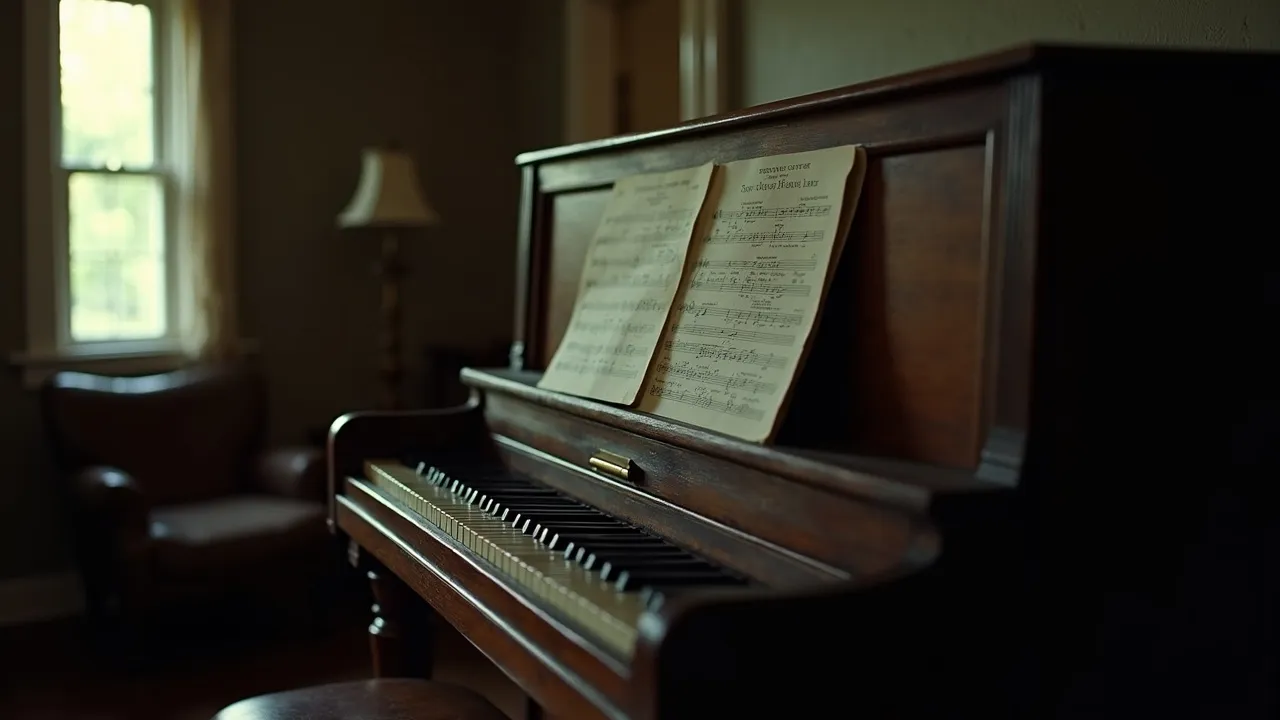
Stephen Foster Memorial Day, observed on January 13th, honors the life and legacy of the "father of American music" whose timeless songs like "Oh! Susanna" and "Camptown Races" shaped the nation's cultural heritage.
The Historical Origins & Evolutionary Journey
Stephen Collins Foster (1826–1864) is revered as the "father of American music" for his enduring contributions to the nation's songbook. Born near Pittsburgh, Pennsylvania, Foster composed over 200 songs that captured the spirit of 19th-century America, blending European ballad forms with African American folk influences. His melodies, such as "Oh! Susanna," "Camptown Races," "My Old Kentucky Home," and "Beautiful Dreamer," became instant classics and remain staples of American culture.
The Foundational Catalyst
Foster's sudden death on January 13, 1864, at the age of 37, in a Bowery hotel room in New York City, shocked the nation. He had died penniless, but his music had already woven itself into the fabric of American life. Within years, admirers sought to commemorate his legacy. The first formal recognition came in 1900 when the Stephen Foster Memorial Association was formed to preserve his birthplace and promote his works.
The Legislative/Official Adoption
The movement for a national day gained momentum in the mid-20th century. On June 26, 1951, President Harry S. Truman signed a joint resolution of Congress designating January 13 as Stephen Foster Memorial Day. The official proclamation stated:
"Whereas the songwriting genius of Stephen Collins Foster has enriched the culture of the United States and the world; now, therefore, be it resolved that the President is authorized and requested to issue a proclamation calling upon the people of the United States to observe January 13 as Stephen Foster Memorial Day.
Modern Global Legacy
Today, Stephen Foster Memorial Day is observed not only in the United States but also internationally, particularly in countries where his songs are taught in schools and performed by choral societies. The day serves as a reminder of the power of folk music to unite people across generations and borders. Events include concerts, museum exhibits, and educational programs, notably at the Stephen Foster Memorial Center on the University of Pittsburgh campus.
How to Celebrate Stephen Foster Memorial Day
Whether you are a music lover, historian, or educator, Stephen Foster Memorial Day offers numerous ways to honor the composer. The key is to engage with his music and reflect on its cultural impact. Below are actionable strategies for individuals, schools, and organizations.
For Individuals and Families
- Listen to a curated playlist of Foster's greatest hits, such as "Old Folks at Home," "Jeanie with the Light Brown Hair," and "Hard Times Come Again No More."
- Attend a local concert or sing-along hosted by historical societies or community choirs.
- Visit the Stephen Foster Memorial Museum in Pittsburgh or the Stephen Foster Folk Culture Center State Park in White Springs, Florida.
- Read Foster's biography or watch documentaries about his life and era.
For Schools and Educational Institutions
- Organize a classroom lesson on Foster's role in American music history, discussing the evolution of folk and popular music.
- Host a school-wide "Foster Day" where students perform his songs and learn about the 19th-century context.
- Assign creative projects: writing essays, composing modern versions of his melodies, or creating artwork inspired by his lyrics.
For Cultural Organizations and Communities
- Plan a commemorative concert featuring local musicians and historical reenactors.
- Create a public exhibit showcasing Foster's original manuscripts, photographs, and instruments.
- Partner with libraries to host readings of Foster's letters and poetry, which reveal his creative process.
In the United Kingdom, choirs often include Foster's spirituals in their repertoire. In Japan, where his songs are widely taught in English classes, schools hold special recitals. These global adaptations show the universal appeal of his music.
Cultural Impact and Societal Themes
Stephen Foster's songs reflect the social and political tensions of antebellum America. Many of his works, such as "My Old Kentucky Home" and "Old Folks at Home," are suffused with nostalgia for a pre-Civil War South, yet they also contain complex themes of slavery, loss, and hope. Foster's ability to humanize the plight of enslaved people through sentimental ballads has been both celebrated and critiqued. Modern scholars reexamine his legacy through the lens of cultural appropriation and racial representation.
Influence on American Music Genres
Foster's melodic structure and lyrical simplicity directly influenced later genres including minstrelsy, ragtime, blues, and country music. Composers like Charles Ives and Aaron Copland cited him as an inspiration. His songs are considered a bridge between European art song and American vernacular music.
Preservation Efforts
The Stephen Foster Memorial Day also highlights preservation initiatives. The Stephen Foster Collection at the University of Pittsburgh houses over 10,000 items, including unpublished works. The nonprofit Stephen Foster Memorial Association continues to fund educational programs and restore historic sites like the Foster Birthplace in Lawrenceville, Pennsylvania.
The Stephen Foster Memorial in Pittsburgh
One of the most significant tributes to Foster is the Stephen Foster Memorial, a building on the University of Pittsburgh campus opened in 1937. Housing the Stephen Foster Memorial Museum, it features a grand auditorium, the Center for American Music, and a research archive. The building's Gothic Revival architecture and stained glass windows depict scenes from Foster's songs. Every January 13th, a memorial concert is held in the auditorium, attracting scholars and fans from around the world.
Architectural Highlights
The Great Hall displays a 10-foot bronze statue of Foster by sculptor Giuseppe Moretti.
The museum contains Foster's piano, original manuscripts, and personal belongings.
The center's library is a premier resource for American music studies.
Global Recognition and Performances
Stephen Foster's music transcends borders. In Japan, his song "Jeanie with the Light Brown Hair" is a beloved English-learning classic. In Brazil, "Oh! Susanna" is a popular folk tune. European orchestras frequently perform his works. The day serves as a platform for international cultural exchange, with events such as:
- Simultaneous global sing-alongs organized via social media.
- Online archives and virtual tours of Foster-related sites.
- Collaborations between American and foreign music schools.
These initiatives ensure that Foster's melodies continue to inspire new generations worldwide.
Modern Observations and Technology
In the digital age, Stephen Foster Memorial Day has embraced technology. Streaming platforms create dedicated playlists, while museums offer virtual reality tours of Foster's childhood home. Educational YouTube channels produce animated biographies. The official Stephen Foster Memorial website provides resources for teachers and event organizers. Social media campaigns use hashtags like #FosterDay to encourage sharing of performances and historical facts. Technology amplifies the reach of this observance, making it accessible to a global audience.
Historical Timeline
Stephen Collins Foster is born on July 4 in Lawrenceville, Pennsylvania.
Foster publishes 'Oh! Susanna,' which becomes an anthem of the California Gold Rush.
'Old Folks at Home' (also known as 'Swanee River') is published, becoming one of his most famous songs.
Foster dies on January 13 in New York City at age 37.
The Stephen Foster Memorial Association is founded to preserve his legacy.
The Stephen Foster Memorial building opens at the University of Pittsburgh.
President Harry S. Truman signs a joint resolution establishing Stephen Foster Memorial Day on January 13.
The first official Stephen Foster Memorial Day is observed across the United States.
The 160th anniversary of Foster's death is marked with global digital events and educational programs.