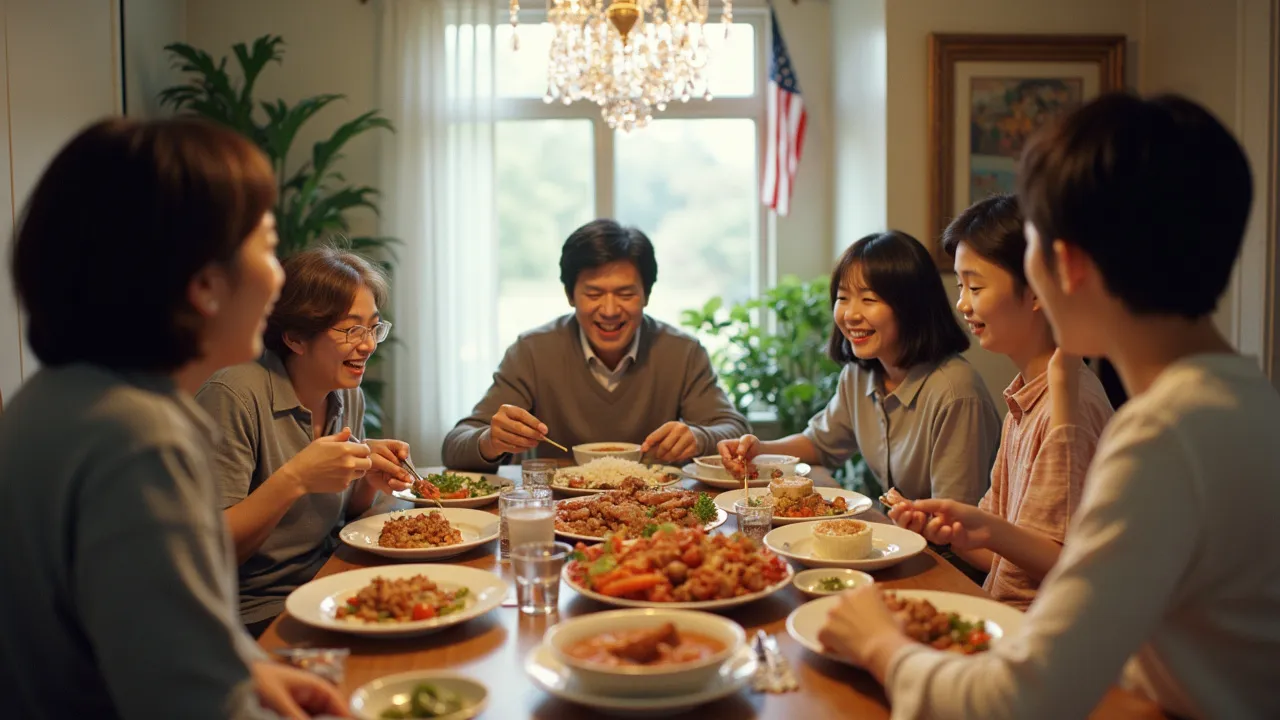
Korean American Day on January 13th celebrates the rich heritage and contributions of Korean Americans to the United States. Learn about the history, cultural traditions, and ways to honor this vibrant community.
The Historical Origins & Evolutionary Journey
Korean American Day, observed annually on January 13th, commemorates the arrival of the first Korean immigrants to the United States in 1903. This day honors the enduring spirit and contributions of Korean Americans across all facets of American society.
The Foundational Catalyst
The first wave of Korean immigrants arrived on the SS Gaelic in Honolulu, Hawaii, on January 13, 1903. These 102 pioneers sought economic opportunity and escape from political turmoil in Korea. They worked on sugar plantations, forming the bedrock of a community that would grow to over 1.8 million today. Their journey marked the beginning of a diaspora that would profoundly shape both nations.
The Legislative/Official Adoption
For decades, Korean American community leaders advocated for official recognition. In 2005, President George W. Bush issued a presidential proclamation designating January 13 as Korean American Day, following resolutions in both houses of Congress. The date was chosen to align with the 1903 arrival. This official status validated the community's historical significance and provided a platform for national celebration.
Modern Global Legacy
Today, Korean American Day is celebrated in schools, community centers, and government institutions. It has expanded beyond the US, with Korean diaspora communities in Canada, Australia, and elsewhere adopting similar observances. The day now symbolizes not just a historical milestone but a living bridge between Korean heritage and American identity.
How to Celebrate Korean American Day
Celebrating Korean American Day involves honoring heritage, fostering community, and educating others. Here are actionable ways to participate:
For Individuals and Families
- Cook traditional Korean dishes: Prepare kimchi, bibimbap, or japchae to connect with culinary heritage.
- Learn Korean history: Watch documentaries or read books about Korean immigration and culture.
- Support Korean-owned businesses: Visit local Korean markets, restaurants, or shops.
For Schools and Educational Institutions
- Host cultural fairs: Organize events featuring Korean music, dance (like Samulnori), and hanbok displays.
- Invite guest speakers: Invite Korean American community leaders to share personal stories.
- Integrate lessons: Include Korean American history in social studies curricula.
For Organizations and Corporations
- Employee resource groups: Host lunch-and-learns about Korean American contributions.
- Community partnerships: Collaborate with Korean American nonprofits on service projects.
- Social media campaigns: Share profiles of Korean American employees or historical figures.
Celebration dynamics vary globally: in South Korea, the day is less prominent, but US embassies may host events. In Canada, Korean Heritage Month in May sometimes overlaps with related activities.
Cultural Significance and Traditions
Korean American Day weaves together two rich cultural tapestries. Central to the observance is the concept of jeong (정), a Korean term for deep emotional connection and bond. This manifests in community gatherings, shared meals, and intergenerational storytelling.
Symbolic Traditions
- Doljanchi (돌잔치): Many families celebrate first birthdays with elaborate feasts, symbolizing good fortune.
- Seollal (설날): While Lunar New Year is separate, Korean American Day often incorporates traditional games like Yut Nori and foods like tteokguk (rice cake soup).
- Hanbok (한복): Wearing traditional Korean attire is common at parades and cultural shows.
Religious and Spiritual Observances
Korean American churches, which serve as community cornerstones, hold special services emphasizing gratitude for immigrant ancestors and prayer for future generations. Many also light candles in memory of Korean independence activists like Ahn Chang-ho.
Korean American Contributions to US Society
Korean Americans have made indelible marks across every sector, from technology to arts.
Science and Technology
Pioneers like Dr. Samuel Ting (Nobel laureate in physics) and Dr. Younan Xia (nanotechnology pioneer) exemplify Korean American excellence. In tech, figures like Steve Chen (co-founder of YouTube) and David Eun (former Samsung executive) have shaped digital landscapes.
Arts and Entertainment
From Margaret Cho's comedy to Michelle Yeoh's Oscar-winning performance, Korean American artists break barriers. BTS's global phenomenon, though Korean, has deep ties to the diaspora. Literature includes Min Jin Lee's "Pachinko" and Chang-rae Lee's works.
Politics and Civic Life
Representatives like Young Kim and Andy Kim serve in Congress, while Dr. David Kim has influenced policy. Community organizations like the Korean American Community Foundation address social issues.
Modern Observances and Global Impact
Korean American Day has evolved from a niche commemoration to a nationally recognized event, with growing international resonance.
Official Proclamations and Events
Annual proclamations from the White House and state governors coincide with events such as flag-raising ceremonies at city halls and cultural performances at the Smithsonian. In 2023, New York City designated a street as "Korean American Way."
Global Influence
The Korean Wave (Hallyu) has boosted interest in Korean culture worldwide. Korean American Day now serves as a platform for promoting cultural exchange. In countries like Brazil and Germany, Korean diaspora communities host parallel celebrations, often linked to the anniversary of diplomatic relations.
Digital Engagement
Social media campaigns under hashtags like #KoreanAmericanDay amplify stories. Virtual tours of Korean heritage sites and online cooking classes have broadened participation, especially post-pandemic.
Historical Timeline
First group of 102 Korean immigrants arrive in Honolulu, Hawaii, on the SS Gaelic, marking the beginning of Korean American history.
Korean American community establishes the first Korean church in Hawaii, becoming a social hub.
Korean Americans actively support the March 1st Movement for Korean independence from Japan, holding rallies and fundraisers.
Korean War prompts increased immigration to the US, with many war orphans and military brides.
Immigration and Nationality Act abolishes quotas, leading to a surge in Korean immigration; Koreatowns begin forming.
Los Angeles riots highlight struggles of Korean American shopkeepers; catalyzes political activism and community organizing.
President George W. Bush signs proclamation officially designating January 13 as Korean American Day.
First Korean American Day parade held in New York City's Koreatown.
Korean American Day recognized by the US House of Representatives with Resolution 732.
Celebration reaches new heights with virtual events and expanded educational programs in schools nationwide.