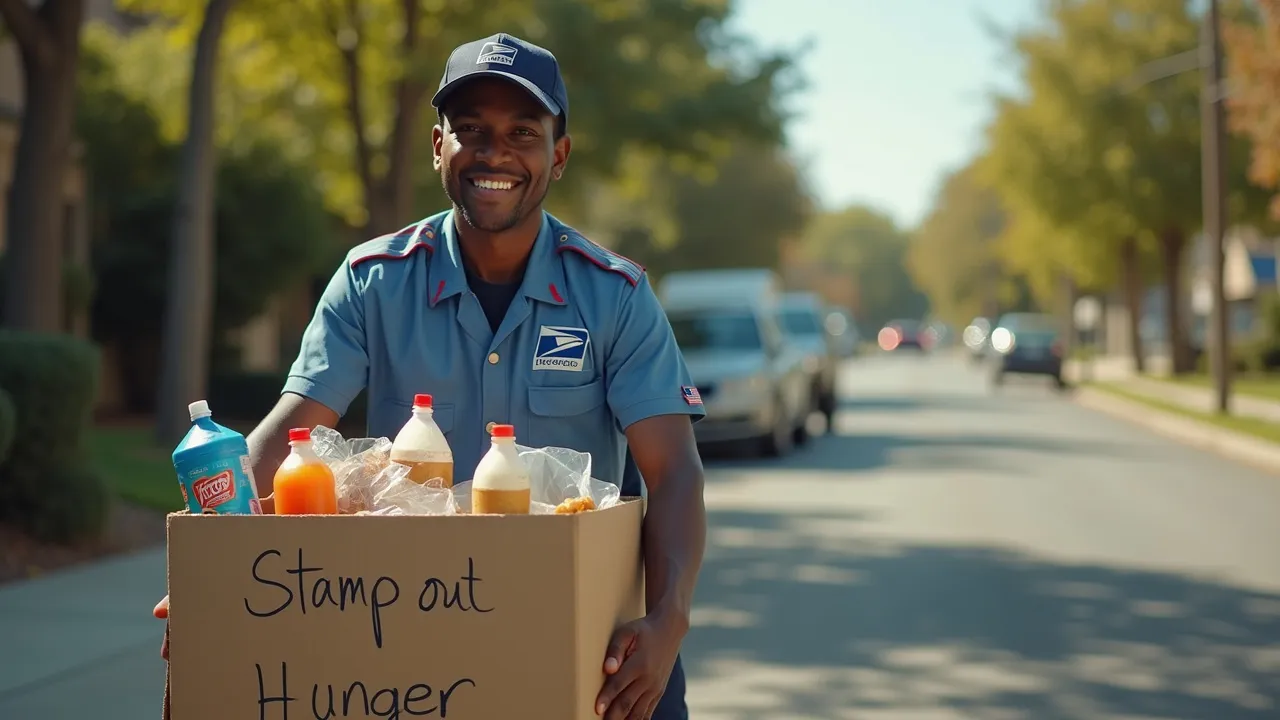
Stamp Out Hunger Food Drive Day, held on the second Saturday of May, is the largest single-day food drive in the United States, organized by the National Association of Letter Carriers to collect non-perishable donations for local food banks.
The Historical Origins & Evolutionary Journey
The Foundational Catalyst
In 1991, the National Association of Letter Carriers (NALC) identified a growing need across American communities: food insecurity was rising, yet food banks often faced shortages during the late spring months when donations from holiday drives had dwindled. The concept emerged from local letter carrier initiatives where carriers would collect food along their routes. The first coordinated national effort, spearheaded by then-NALC President Vincent Sombrotto, launched in 1992 with a pilot program in 10 cities. The overwhelming success—collecting over 1 million pounds—proved the model viable.
The Legislative/Official Adoption
In 1993, the NALC formalized the drive as an annual event, naming it the "Stamp Out Hunger Food Drive." The United States Postal Service (USPS) became a key partner, granting permission for carriers to leave collection bags at mailboxes in advance. The drive quickly expanded, with 200 cities participating in 1993. By 1997, the drive had collected over 10 million pounds. In 2009, Congress officially recognized the day, though it is not a federal holiday. The drive is now the nation's largest single-day food collection event.
Modern Global Legacy
While primarily a US event, the initiative inspired similar programs in Canada (Carriers Collect Food Drive) and parts of Europe. The drive relies on the trusted role of letter carriers as community anchors. Since its inception, over 1.8 billion pounds of food have been collected. The 2023 drive alone brought in 35 million pounds, benefiting millions of Americans. The event has evolved to include social media campaigns, school partnerships, and corporate sponsorships.
How to Celebrate Stamp Out Hunger Food Drive Day
For Individuals and Families
- Prepare Your Donation: Place non-perishable food items in a sturdy bag near your mailbox before your regular mail delivery time on the second Saturday of May. Suggested items include canned vegetables, beans, pasta, rice, peanut butter, and cereal.
- Check Your Mailbox: Your letter carrier typically leaves a special collection bag or reminder flyer in the days before the drive. If not, use any bag and label it "Food Drive."
- Spread the Word: Use social media with hashtags like #StampOutHunger or #NALC to inform neighbors and friends.
For Schools and Youth Groups
- Host a Food Drive Competition: Organize classes or clubs to compete in collecting items. Offer prizes for the most donations.
- Educational Sessions: Invite a local letter carrier to speak about the importance of community service and food security.
- Sort and Deliver: After collection, help local food banks sort and distribute donations.
For Businesses and Organizations
- Corporate Matching: Offer to match employee donations or provide financial contributions to partner food banks.
- On-site Collection Bins: Place clearly marked bins in lobbies or break rooms for employees and customers to donate.
- Volunteer Partnerships: Encourage staff to volunteer at local food pantries on the day of or after the drive.
Global Impact and Societal Themes
Food Insecurity in America
According to Feeding America, over 44 million people—including 13 million children—face hunger annually. The Stamp Out Hunger drive is critical because it occurs in late spring when donations are traditionally low. The drive's model leverages the existing postal infrastructure, minimizing costs and maximizing reach.
The Role of Letter Carriers as Community Trust Anchors
Letter carriers are among the most trusted public employees. Their daily presence on every street creates a unique channel for charitable giving. Studies show that donations collected by trusted intermediaries are more consistent and larger in scale.
Environmental and Social Synergy
The drive reduces food waste by redirecting surplus to those in need. Many food banks report that the donations from the May drive sustain operations through the summer months. The event also strengthens community bonds, fostering a sense of shared responsibility.
Key Partnerships and Organizational Structure
National Partners
- NALC: The founding organization, responsible for national coordination and volunteer mobilization.
- USPS: Provides logistical support and permission for carriers to collect food alongside mail.
- Feeding America: The largest hunger-relief organization in the US, which receives and distributes the collected food through its network of food banks.
- Campbell Soup Company: A longtime corporate sponsor, providing financial support and promotional materials.
Local Implementation
Each local branch of the NALC works with nearby food banks and community organizations. Carriers collect donations during their regular routes, then transport them to central collection points where they are sorted and delivered to partner agencies. The drive operates in all 50 states, plus Puerto Rico and the District of Columbia.
Economic and Health Implications
Economic Benefits
For every $1 donated in food, food banks can provide 2-3 meals. The Stamp Out Hunger drive saves food banks millions in procurement costs, allowing them to allocate funds to other services like nutrition education and job training.
Health Impact
Access to nutritious food is linked to better health outcomes, especially for children and seniors. The drive emphasizes healthy donations such as low-sodium vegetables, whole grains, and canned proteins. Many food banks report that the quality of donations has improved over the years due to public awareness campaigns.
Future Directions and Innovations
Digital Integration
In recent years, the NALC has launched online donation portals and mobile apps to allow cash contributions for those who miss the physical drive. Virtual food drives have also been added, enabling remote participation.
Expanding to Other Countries
While still US-centric, there is growing interest from postal services in Canada, the UK, and Australia. Pilot programs in Toronto and London have shown promise. The potential for a global day of giving through postal networks could revolutionize hunger relief.
Climate-Smart Donations
Efforts are underway to encourage donations of plant-based proteins and locally sourced items to reduce the carbon footprint of food transport. Partnerships with sustainable food producers are being explored.
Historical Timeline
NALC President Vincent Sombrotto proposes a national food drive by letter carriers after successful local initiatives.
Pilot program in 10 cities collects over 1 million pounds of food, proving the concept viable.
First official Stamp Out Hunger Food Drive held on the second Saturday in May; 200 cities participate, collecting 2 million pounds.
Cumulative donations surpass 10 million pounds; the drive expands to all 50 states.
Congressional resolution recognizes the drive; USPS officially designates the day as the National Stamp Out Hunger Food Drive.
The drive collects 77 million pounds in a single year—its highest total ever.
Despite the COVID-19 pandemic, the drive adapts with contactless collection, still gathering 25 million pounds.
30th anniversary: 35 million pounds collected; total since inception surpasses 1.8 billion pounds.