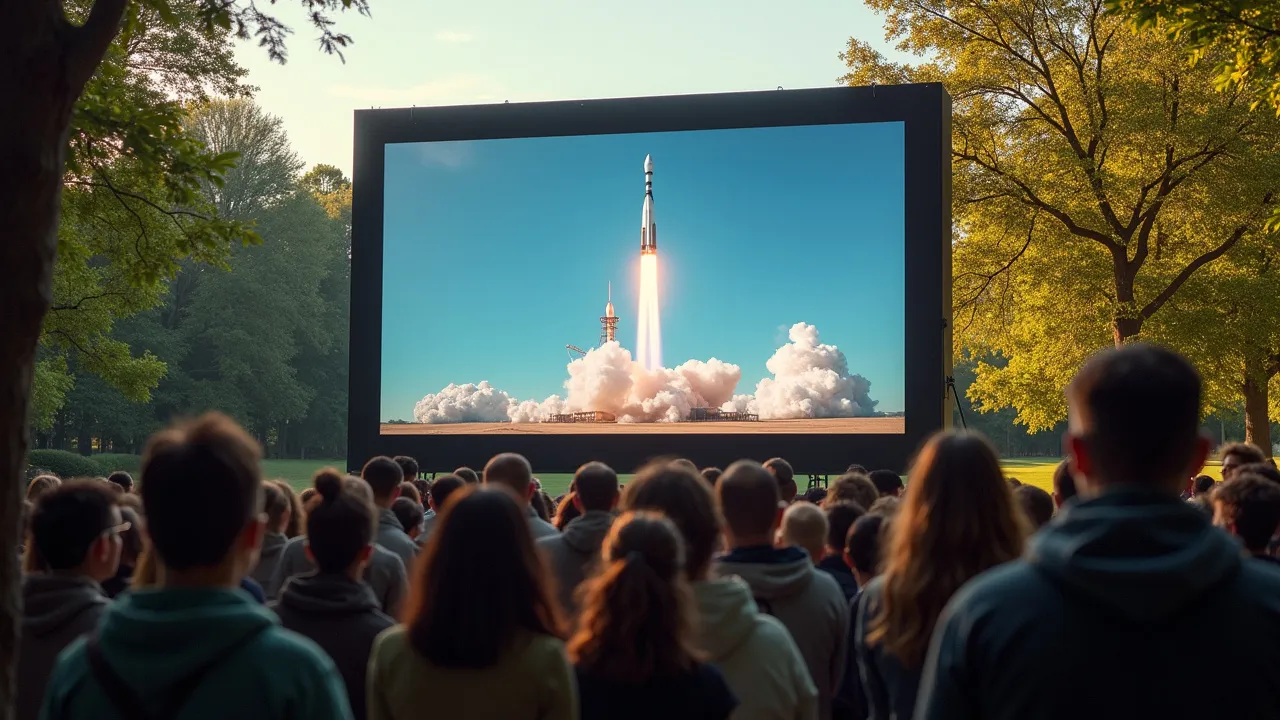
Space Exploration Day, observed on July 20, honors humanity's achievements in space and the Apollo 11 moon landing. Celebrate by learning about space, visiting museums, and inspiring future explorers.
The Historical Origins & Evolutionary Journey
Space Exploration Day, celebrated annually on July 20, marks the anniversary of the Apollo 11 lunar landing in 1969—a monumental achievement that forever changed human history. This section delves into the origins, official recognition, and global legacy of this observance.
The Foundational Catalyst
The Apollo 11 mission was the culmination of the Cold War space race. President John F. Kennedy's 1961 challenge to land a man on the Moon by decade's end spurred unprecedented scientific collaboration and investment. On July 20, 1969, astronauts Neil Armstrong and Buzz Aldrin set foot on the lunar surface, while Michael Collins orbited above. This event was broadcast to over 600 million people worldwide, inspiring generations.
The Legislative/Official Adoption
While not a federal holiday in the United States, Space Exploration Day gained traction through grassroots efforts and official proclamations. In 1970, NASA encouraged schools and communities to celebrate the first anniversary. Later, states like Florida and Texas issued gubernatorial proclamations. In 2019, the UN declared July 20 as International Moon Day, aligning with Space Exploration Day. Today, it is observed by space agencies, museums, and educational institutions globally.
Modern Global Legacy
Space Exploration Day now emphasizes both past achievements and future endeavors. It serves as a platform to promote STEM education, international cooperation (like the ISS), and private-sector innovation (e.g., SpaceX, Blue Origin). Events include museum exhibits, rocket-building workshops, and live streams from space agencies. The day reminds us that exploration transcends borders.
How to Celebrate Space Exploration Day
Space Exploration Day offers countless ways to engage with space science and history. Below are actionable ideas for individuals, schools, and organizations worldwide.
For Individuals and Families
- Watch a moon landing documentary or a space-themed movie like Apollo 13 or The Martian.
- Attend a local star party hosted by amateur astronomy clubs or planetariums.
- Build a model rocket using kits from Estes or similar companies.
- Visit a science museum with space exhibits (e.g., the Kennedy Space Center, the Air and Space Museum).
- Live stream a NASA or ESA event online.
For Schools and Educators
- Organize a space-themed lesson day covering Apollo 11, the solar system, and current missions (e.g., Artemis, James Webb Space Telescope).
- Host a design challenge where students create a habitat for the Moon or Mars.
- Invite a guest speaker from a local university or space industry.
- Conduct simple physics experiments on propulsion or gravity.
For Organizations and Companies
- Host a viewing party of historic launch footage or a virtual panel with astronauts.
- Launch a social media campaign using hashtags like #SpaceExplorationDay or #Apollo50.
- Sponsor scholarships for STEM students or donate to space education nonprofits.
In different countries, traditions vary. For example, in India, ISRO often hosts open houses; in Europe, ESA holds competitions; in Japan, JAXA conducts public lectures. Adapt celebrations to reflect local space achievements.
The Scientific Impact of Space Exploration
Space exploration has yielded profound scientific advancements that benefit life on Earth.
Key Discoveries
- Earth observation satellites improve weather forecasting and climate monitoring.
- International Space Station (ISS) enables microgravity research in biology, physics, and medicine.
- Rovers and probes have revealed Mars’ ancient water, Saturn’s moon Enceladus’ plumes, and exoplanets in the habitable zone.
Technological Spinoffs
NASA’s Technology Transfer Program has led to innovations like memory foam, cordless tools, and improved water filtration. The demand for miniaturization drove the development of microelectronics and the smartphone industry. Space exploration is a catalyst for economic growth and scientific literacy.
International Cooperation in Space Ventures
From the Cold War rivalry to the collaborative ISS, space exploration has evolved into a symbol of global unity.
Historic Partnerships
- The Apollo-Soyuz Test Project (1975) docked US and Soviet spacecraft.
- The International Space Station involves 15 nations since 1998.
- The Artemis Accords (2020) outline peaceful lunar exploration with 20+ signatories.
Challenges and Future Collaboration
Despite geopolitical tensions, space agencies continue cooperating on large-scale projects like the James Webb Space Telescope and the proposed Gateway lunar station. Space Exploration Day highlights the potential for diplomacy beyond Earth.
The Role of Private Companies in Space
The 21st century has seen a paradigm shift with private enterprises taking leading roles.
Key Players
- SpaceX: Reusable rockets, Crew Dragon, Starship, and Starlink constellation.
- Blue Origin: New Shepard suborbital flights and lunar lander development.
- Virgin Galactic: Commercial suborbital space tourism.
- Rocket Lab: Small satellite launches via Electron rocket.
These companies lower costs, increase access, and pioneer technologies like in-orbit refueling. Their involvement accelerates timelines for returning to the Moon and reaching Mars.
The Future of Space Exploration
Space Exploration Day also looks forward to upcoming milestones.
Upcoming Missions
- Artemis II (2024): First crewed lunar flyby since Apollo.
- Lunar Gateway (mid-2020s): A space station orbiting the Moon.
- Mars Sample Return (2030s): NASA-ESA mission to bring Martian soil to Earth.
- Space mining: Asteroid resource extraction by companies like Planetary Resources.
Societal Implications
Long-term goals include a permanent lunar base and human missions to Mars. These efforts require international law updates, sustainable life-support systems, and ethical considerations about planetary protection. The day inspires the next generation of explorers and problem-solvers.
Historical Timeline
Launch of Sputnik 1, the first artificial satellite, by the Soviet Union, igniting the space race.
Yuri Gagarin becomes the first human in space aboard Vostok 1. Also, President Kennedy announces the goal to land a man on the Moon.
Apollo 11 lands on the Moon; Neil Armstrong and Buzz Aldrin take the first steps, with Michael Collins orbiting above.
Launch of the first space station, Salyut 1, by the Soviet Union.
First Space Shuttle mission (STS-1) on Columbia, introducing reusable spacecraft.
First module of the International Space Station (Zarya) launched, marking a new era of global cooperation.
NASA's Curiosity rover lands on Mars, discovering evidence of ancient habitable environments.
SpaceX's Crew Dragon Demo-2 carries astronauts to the ISS, restoring US crew launch capability. The Artemis Accords are signed.
NASA's James Webb Space Telescope begins science operations, revealing unprecedented views of the cosmos.