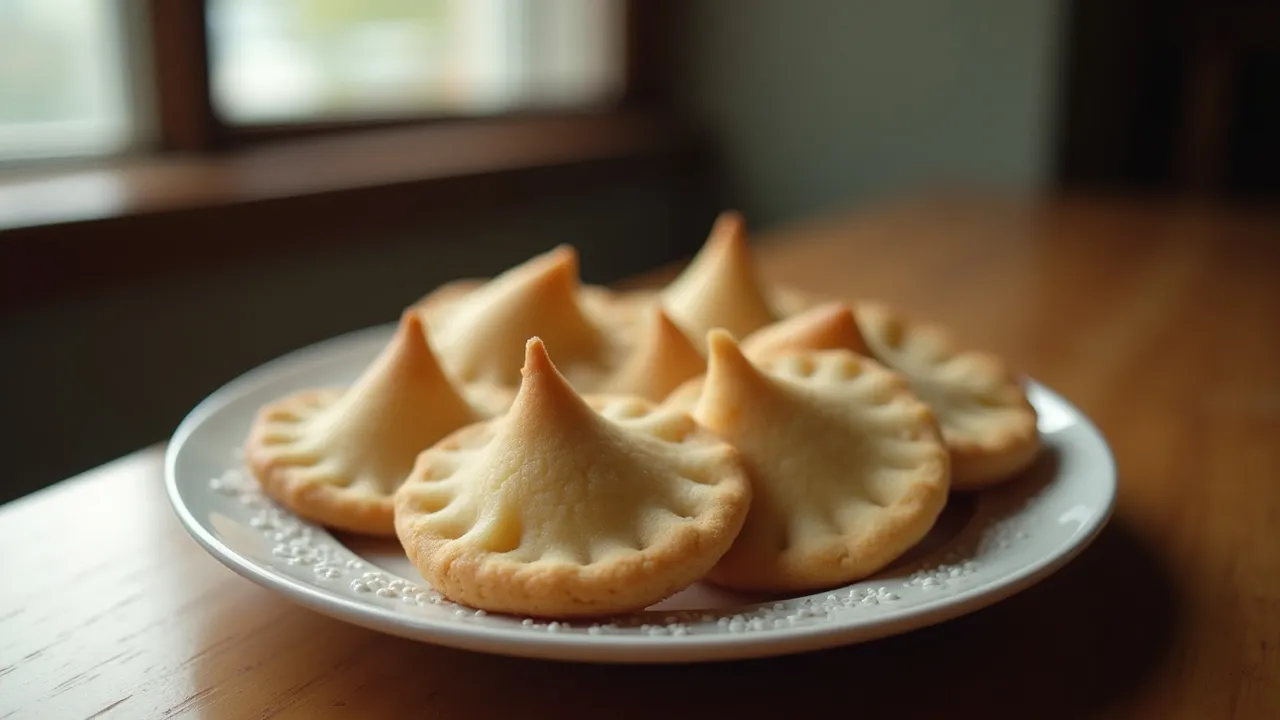
National Fortune Cookie Day on July 20th celebrates the crunchy, sweet treat with a hidden message. Learn the surprising history of this Chinese-American invention and fun ways to observe the day.
The Historical Origins & Evolutionary Journey
National Fortune Cookie Day, observed each year on July 20th, honors a dessert that is as much a cultural icon as it is a snack. The fortune cookie is a crisp, folded cookie containing a slip of paper with a proverb or vague prediction. Despite being ubiquitously served in Chinese restaurants across the United States, its origins are not Chinese but rather a fusion of Japanese and American innovation.
The Foundational Catalyst: Japanese Roots
The earliest known precursor to the fortune cookie was a Japanese cracker called tsujiura senbei (literally "fortune cracker"), which contained a small slip of paper. These were made by hand in Kyoto and other regions of Japan since the 19th century. Japanese immigrants brought this tradition to the United States in the late 1800s, settling in California and Hawaii. However, the fortune cookie as we know it today likely evolved in California during the early 20th century.
The Legislative/Official Adoption: American Invention
Multiple claimants exist for the invention of the modern fortune cookie. The most prominent story involves Makoto Hagiwara, a Japanese immigrant who managed the Japanese Tea Garden in San Francisco's Golden Gate Park. Around 1914, he began serving cookies with thank-you notes inside as a gesture of appreciation. Another claim is by David Jung, a Chinese immigrant and founder of the Hong Kong Noodle Company in Los Angeles, who purportedly created the cookie in 1918 to boost morale among the poor. A third story credits Seiichi Kito, founder of the Fugetsu-do confectionery in Little Tokyo, Los Angeles, who claimed to have invented the cookie in the 1920s. Regardless of which story is accurate, the fortune cookie became a staple in Chinese-American restaurants after World War II, when returning soldiers developed a taste for Chinese food.
Modern Global Legacy and National Fortune Cookie Day
The day itself—July 20th—was established as National Fortune Cookie Day in the United States, likely through the efforts of cookie manufacturers and food enthusiasts. The exact founding year is unclear, but it has gained recognition through national day calendars and social media. Today, fortune cookies are produced by the billions, with companies like Wonton Food Inc. (based in Brooklyn, New York) churning out over 4 million cookies daily. The messages inside have evolved from simple fortunes to include jokes, lottery numbers, and even custom messages for events. National Fortune Cookie Day encourages people to enjoy these cookies, share their fortunes, and reflect on the serendipity of life.
How to Celebrate National Fortune Cookie Day
Observing National Fortune Cookie Day on July 20th can be both fun and meaningful. Whether you’re an individual, a family, or an organization, there are many ways to participate. Below are actionable strategies for celebrating this unique day.
For Individuals and Families
- Enjoy a Chinese takeout meal: Order from your favorite local Chinese restaurant and save the fortune cookies for dessert. Read the fortunes aloud and discuss how they might apply to your life.
- Host a fortune cookie party: Bake or buy a batch of fortune cookies. Write your own messages on small strips of paper—include predictions, advice, or compliments—and insert them into the cookies. Serve with tea or ice cream.
- Create DIY fortune cookies: Use a fortune cookie recipe or make them with pre-made wrappers. Write personalized fortunes for each family member or friend.
- Share your fortunes: Post a photo of your cookie and fortune on social media with #NationalFortuneCookieDay. Tag friends and challenge them to do the same.
For Schools and Educational Groups
- Teach the history: Use the day as an opportunity to explore the cultural history of fortune cookies. Discuss the Japanese origins and American adaptation in the context of immigration and food culture.
- Write creative fortunes: Have students write their own fortunes using literary devices like metaphors, alliteration, or puns. Then, share them in class.
- Math and probability: Use fortune cookies to teach probability—e.g., what are the chances of getting a specific type of fortune? Or analyze the most common topics in fortunes.
For Businesses and Organizations
- Customer appreciation: Give out fortune cookies with your company’s branding and a positive message. Attach a discount code or a thank-you note.
- Team building: During a meeting, have each employee pick a fortune cookie and share how the message relates to their work or goals.
- Fundraising: Sell custom fortune cookies with educational or inspirational messages to raise money for a cause.
Global Variations
While National Fortune Cookie Day is primarily celebrated in the United States, other countries have their own traditions. In Japan, similar cookies called tsujiura senbei are still made and enjoyed, especially during New Year. In China, the cookie is virtually unknown; instead, people eat mooncakes during the Mid-Autumn Festival. However, Chinese restaurants worldwide have adopted the fortune cookie as a complimentary dessert, so you can celebrate by visiting a Chinese restaurant in your country.
The Cultural Impact and Controversy
Fortune cookies are a quintessential example of fusion food—a dish that evolves through cultural exchange. Their popularity in the United States has sparked debates about authenticity and cultural appropriation. Some argue that fortune cookies misrepresent Chinese cuisine, while others see them as a symbol of American ingenuity. This section explores the cultural footprint of the fortune cookie.
Americanization of Chinese Food
Fortune cookies are part of a larger trend of adapting Chinese dishes to American palates, such as General Tso’s chicken and chop suey. These dishes are not traditional in China but became popular in the US due to ingredient availability and taste preferences. The fortune cookie, in particular, serves as a palate cleanser and a conversation starter after a meal. It embodies the American dream of innovation and entrepreneurship, as immigrant bakers turned a simple cookie into a multi-million dollar industry.
Global Spread and Adaptation
Fortune cookies have spread to many countries, often with local twists. In Mexico, they might contain lottery numbers. In the United Kingdom, they are sometimes filled with chocolate. The messages inside have also evolved: they now include jokes, motivational quotes, and even marriage proposals. Some bakeries offer custom fortunes for weddings, birthdays, and corporate events. This adaptability has kept the fortune cookie relevant for over a century.
Controversies: Misrepresentation and Waste
Critics argue that fortune cookies perpetuate stereotypes about Chinese culture and reduce a rich culinary tradition to a gimmick. Additionally, the cookies are often individually plastic-wrapped, contributing to environmental waste. In response, some restaurants have switched to bulk packaging or compostable wrappers. Despite these issues, the fortune cookie remains a beloved tradition for millions.
The Science of Fortune Cookie Messages
Have you ever wondered how fortunes are written? Behind the seemingly random messages lies a careful science of psychology and marketing. This section delves into the craft of fortune writing and its effects on consumers.
Psychological Principles
- Forer effect: Fortunes are often vague enough that they seem to apply to anyone (e.g., "You will soon receive good news"). This makes people feel personally addressed.
- Positivity bias: Most fortunes are positive or neutral, as negative messages might upset customers. Research shows that people are more likely to remember and act on positive statements.
- Self-fulfilling prophecy: Acting on a fortune (e.g., taking a risk because the cookie said so) can make the prediction come true, reinforcing belief in the cookie's power.
Writing Fortunes: A Blend of Art and Data
Professional fortune writers often draw from proverbs, literature, and pop culture. Wonton Food Inc., the largest fortune cookie manufacturer, employs a team to write and update their catalog of over 10,000 fortunes. They analyze which types of messages are most popular and occasionally add topical references, such as mentions of holidays or current events. The ideal fortune is short, memorable, and applicable to a wide audience.
Fun Fact
The longest fortune ever printed was 128 words long, but most keep it to 5-15 words. Some companies offer "educational" fortunes with historical facts or vocabulary words.
Fortune Cookie Manufacturing: From Dough to Delivery
The process of making fortune cookies is a fascinating blend of old-world craftsmanship and modern automation. Here’s how the typical fortune cookie journey unfolds.
Ingredients and Dough Preparation
Fortune cookies are made from a simple batter of flour, sugar, oil, vanilla extract, and water. The dough is prepared in large mixers and then piped onto a hot griddle or conveyor belt in small circular disks. The disks are baked for about 60 seconds at high heat, until the edges turn golden brown.
Folding and Inserting the Fortune
While still hot and pliable, each disk is lifted from the griddle. A machine or worker places a paper fortune onto the center of the disk, then quickly folds the disk in half. Next, the half-circle is bent over the edge of a rod or mold to create the classic crescent shape. The cookie cools and hardens in seconds, sealing the fortune inside. This step requires speed and precision; if the cookie cools too much, it will crack instead of folding.
Packaging and Distribution
After cooling, the cookies are inspected for quality and then packaged. Most are individually wrapped in plastic to maintain freshness, though some bulk packages are sold to restaurants. The cookies are then shipped nationwide—and globally—within days. The entire process, from mixing to packaging, can take less than 10 minutes.
Environmental Considerations
Manufacturers are under pressure to reduce plastic waste. Some now offer compostable wrappers or use paper boxes. Home bakers can make fortune cookies without any packaging, as they are best consumed fresh.
Fun Statistics and Records
Fortune cookies have inspired some quirky statistics and record-breaking feats. Here are a few notable examples:
- Over 3 billion fortune cookies are produced annually worldwide, with the majority consumed in the United States.
- Largest fortune cookie: In 2015, a bakery in New York created a fortune cookie weighing 1,000 pounds (453 kg) and measuring 15 feet long. It contained a giant fortune that read "Congratulations!"
- Most common fortune phrase: "You will have good luck" and its variations appear in nearly 30% of all cookies.
- Lottery numbers: Some people use the numbers on the back of their fortune to play the lottery, though there is no statistical evidence that they win more often.
- Fortune cookie theft: In 2017, a truck carrying 150,000 fortune cookies was stolen in California. The cookies were later recovered, but the incident highlights the high demand for these treats.
Global Observance and Regional Variations
While National Fortune Cookie Day is primarily an American observance, similar traditions exist worldwide. This section highlights how other cultures celebrate or interact with fortune cookies.
United States: The Epicenter
In the US, July 20th is marked by social media campaigns, restaurant promotions, and homemade cookie parties. Many Chinese restaurants offer free cookies with takeout orders, and some bakeries sell special themed cookies for the day.
Japan: The Original Tradition
In Japan, tsujiura senbei are still made, especially during the New Year. These crackers are larger and have a different texture, but the concept is similar. Japanese people often write wishes on paper and insert them into crackers for good luck.
China: A Foreign Concept
In mainland China, fortune cookies are rarely seen. Instead, Chinese people enjoy mooncakes, dumplings, and other traditional treats. However, in Hong Kong and Macau, where Western influence is stronger, some restaurants serve fortune cookies to tourists.
Other Countries
In Canada, the UK, and Australia, fortune cookies are common in Chinese takeaways, but they are not widely celebrated on a specific day. Some food bloggers use July 20th as an excuse to create unique recipes, such as fortune cookie-inspired cakes or ice cream.
Historical Timeline
Japanese tsujiura senbei (fortune crackers) are made in Kyoto, containing slips of paper with fortunes.
Makoto Hagiwara begins serving cookies with thank-you notes at the Japanese Tea Garden in San Francisco, a precursor to the fortune cookie.
David Jung, founder of Hong Kong Noodle Company in Los Angeles, claims to have invented the fortune cookie to distribute to the poor.
Seiichi Kito of Fugetsu-do in Los Angeles also claims invention, creating a cookie with a fortune inside.
Fortune cookies become standard in Chinese-American restaurants after WWII, popularized by returning soldiers.
Mass production begins; Wonton Food Inc. is founded in Brooklyn, becoming the largest manufacturer.
National Fortune Cookie Day is established, observed each year on July 20th.
A 1,000-pound fortune cookie is created in New York, setting a record for the largest ever.
A truck carrying 150,000 fortune cookies is stolen and later recovered in California.