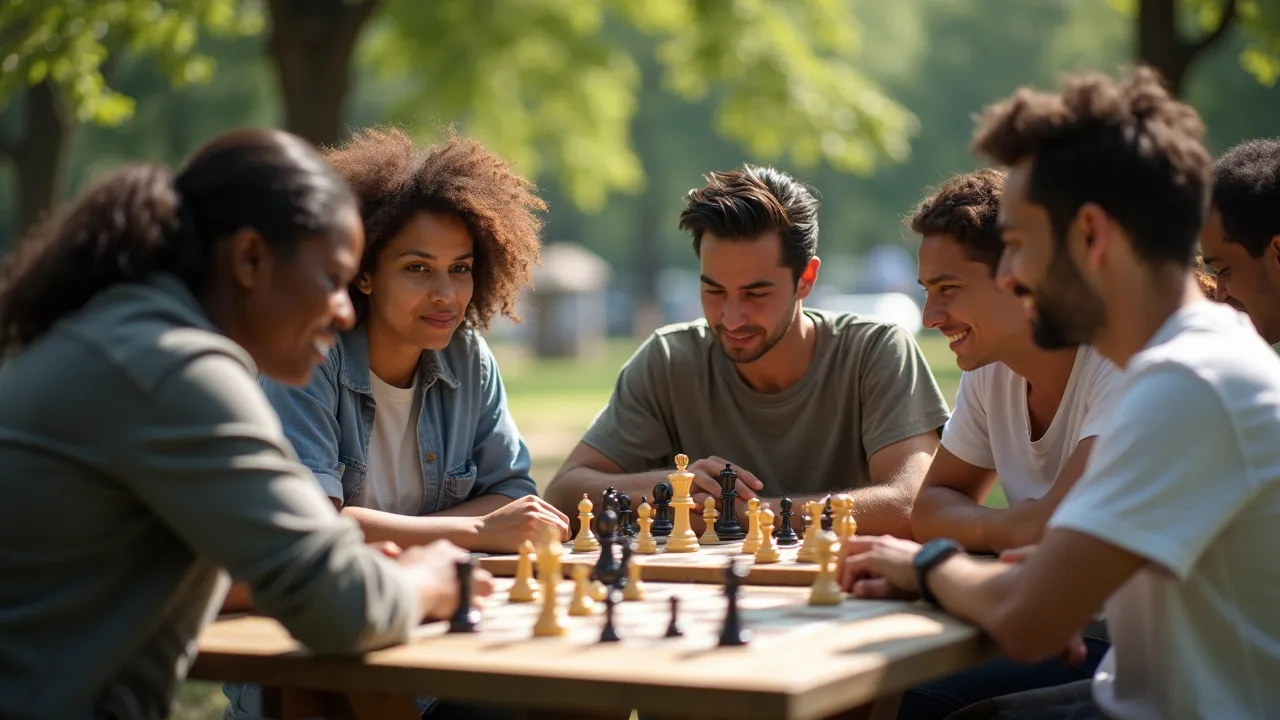
International Chess Day, observed on July 20th, celebrates the ancient game of chess and its impact on strategy, culture, and education. It commemorates the founding of FIDE in 1924 and promotes chess worldwide.
The Historical Origins & Evolutionary Journey
International Chess Day, celebrated annually on July 20th, honors a game that has transcended centuries, continents, and cultures. Chess is not merely a pastime; it is a profound intellectual pursuit that has shaped strategic thinking, diplomacy, and even artificial intelligence. The date was chosen to coincide with the founding of the Fédération Internationale des Échecs (FIDE) in 1924, and the day was officially proclaimed by UNESCO in 1966. This section delves into the rich tapestry of chess history, from its obscure origins to its modern global prominence.
The Foundational Catalyst: Origins of Chess
The earliest known predecessor of chess is chaturanga, which originated in India around the 6th century AD. Chaturanga featured four divisions of the military—infantry, cavalry, elephants, and chariotry—represented by pieces that moved similarly to modern pawns, knights, bishops, and rooks. The game spread along trade routes to Persia, where it became known as shatranj. The Persians introduced the concept of checkmate (shah mat, meaning "the king is dead") and refined the rules. From Persia, chess traveled to the Islamic world, where it flourished during the Golden Age of Islam, and then to Europe via Moorish Spain and the Byzantine Empire.
The Legislative/Official Adoption: FIDE and UNESCO
Chess underwent significant evolution in Europe during the Renaissance. The modern rules—including the powerful queen and bishop moves—were standardized in the 15th and 16th centuries. The first official World Chess Championship was held in 1886, marking the beginning of organized competitive chess. However, it wasn't until 1924 that the Fédération Internationale des Échecs (FIDE) was founded in Paris to govern international competition. On July 20, 1966, UNESCO officially proclaimed International Chess Day, recognizing the game's educational and cultural value. This endorsement helped propagate chess as a tool for cognitive development and international understanding.
Modern Global Legacy
Today, chess is played by an estimated 600 million people worldwide. The rise of the internet and AI engines like AlphaZero has revolutionized training and accessibility. International Chess Day is now celebrated with tournaments, simultaneous exhibitions, and educational programs in schools, libraries, and community centers. The day also highlights the efforts of organizations like Chess in Schools and the Kasparov Chess Foundation to promote the game among youth.
How to Celebrate International Chess Day
International Chess Day offers a perfect opportunity to engage with the game, whether you are a seasoned grandmaster or a complete novice. Here are actionable ways to participate, from individual practices to large-scale community events.
For Individuals
- Play a game of chess: Challenge a friend, family member, or online opponent. Platforms like Chess.com and Lichess offer free play and puzzles.
- Learn the basics: Use free tutorials, apps, or books to understand the rules and basic strategies.
- Solve chess puzzles: Sharpen your tactics by solving daily puzzles available on many websites.
- Watch a classic game: Study annotated matches by famous players like Bobby Fischer or Garry Kasparov.
- Host a chess night: Invite friends over for casual games or a mini-tournament.
For Schools and Educators
- Organize a chess club event: Set up boards in the library or common area and encourage students to play.
- Integrate chess into lessons: Use chess to teach logic, problem-solving, and history in math or social studies classes.
- Hold a school-wide tournament: Offer prizes for different age groups to foster friendly competition.
- Invite a guest speaker: Arrange for a local chess expert to give a talk or simultaneous exhibition.
For Organizations and Communities
- Host a public chess festival: Set up boards in a park or plaza with timed games and demonstrations.
- Partner with local chess clubs: Collaborate for larger events, such as blitz tournaments or workshops.
- Launch a charity simul: Have a master play against multiple opponents, with proceeds going to a chess-related cause.
- Use social media: Share chess facts, puzzles, and event promotions using hashtags like #InternationalChessDay.
Across the globe, countries celebrate with unique traditions. In Russia, massive simultaneous exhibitions are common; in India, schools hold inter-house competitions; in the United States, libraries feature chess-themed storytimes. No matter where you are, the goal is to unite people through the universal language of chess.
The Global Impact of Chess: Culture, Education, and Community
Chess is more than a game—it is a cultural phenomenon that bridges gaps across age, gender, nationality, and socioeconomic status. Its impact extends into education, cognitive development, and even social change. This section explores the multifaceted contributions of chess to global society.
Educational Benefits
Numerous studies have shown that chess improves academic performance, particularly in mathematics, reading, and critical thinking. Programs like "Chess in Schools" have been implemented in over 40 countries, demonstrating significant gains in student focus and problem-solving skills. Schools that integrate chess into the curriculum often see improved test scores and reduced behavioral issues.
Social and Community Building
Chess fosters a sense of community. Public parks in cities like New York, Berlin, and Tokyo have outdoor chess tables where strangers become opponents and friends. Online platforms connect players from different cultures, breaking down language barriers. Chess clubs provide a safe, inclusive environment for all ages, offering mentorship and friendship.
Chess as a Tool for Diplomacy
Historically, chess has been used in diplomacy. The 1972 World Championship match between Bobby Fischer (USA) and Boris Spassky (USSR) was seen as a Cold War proxy battle. Today, chess remains a symbol of intellectual rivalry without violence, promoting mutual respect and understanding between nations.
Gender and Inclusivity
Efforts are ongoing to increase female participation in chess. Organizations like the Susan Polgar Foundation promote young girls' involvement, while FIDE has introduced programs to address gender disparity. International Chess Day often spotlights female role models such as Judit Polgár and Hou Yifan.
Chess in the Digital Age: Technology and Transformation
The digital revolution has transformed chess from a board game into a global online phenomenon. This section examines the role of technology in making chess accessible, competitive, and endlessly fascinating.
Online Platforms and Growth
Platforms like Chess.com, Lichess, and chess24 host millions of games daily. During the COVID-19 pandemic, the surge in online play was unprecedented, with weekly active users doubling. These sites offer features like puzzle rushes, lessons, and computer analysis, enabling self-improvement at any level.
Artificial Intelligence and Chess Engines
AI has reshaped how the game is studied. Engines like Stockfish and AlphaZero have exceeded human ability, but they also serve as training tools. Grandmasters now routinely use computers to analyze lines and prepare openings. The 1997 match between Garry Kasparov and IBM's Deep Blue was a landmark moment, signaling the dawn of AI dominance in chess.
Streaming and Entertainment
Chess streaming on platforms like Twitch and YouTube has exploded in popularity. Personalities like Hikaru Nakamura, GothamChess, and Anna Rudolph entertain millions with live commentary, speed runs, and educational content. This has attracted a younger demographic, reinvigorating interest in the game.
Esports and Competitive Chess
The line between traditional chess and esports is blurring. Online tournaments with significant prize pools, such as the Speed Chess Championship and the Champions Chess Tour, are broadcast globally. Chess now appears on major esports platforms, and FIDE is exploring official recognition of online events.
Chess and Education: Shaping Young Minds
The educational value of chess has been recognized for decades. This section details how chess is integrated into academic curricula worldwide and the cognitive benefits it provides to learners of all ages.
Chess in Schools Programs
Countries like Armenia, where chess is a mandatory subject from second grade, serve as models. Studies from Armenia show improved logical reasoning, memory, and concentration among students. In the United States, the nonprofit Chess in Schools brings instruction to underserved communities, often with remarkable results in standardized testing.
Cognitive and Psychological Benefits
Playing chess enhances executive functions such as planning, inhibition, and cognitive flexibility. It also teaches patience, emotional control, and resilience in the face of loss. Research suggests that regular chess play can delay the onset of dementia in older adults.
Special Needs and Chess
Chess has been successfully used as a therapeutic tool for children with ADHD, autism, and learning disabilities. The structured rules and immediate feedback provide a safe environment for developing social and cognitive skills. Programs like "Chess for Autism" have reported increased engagement and improved self-esteem.
Case Studies and Success Stories
In New York City, the Chess in the Schools program has produced multiple national champions from low-income neighborhoods. Similarly, the Mwai Kibaki Education Centre in Kenya uses chess to foster discipline and academic excellence among girls. These examples illustrate the transformative power of the game.
Notable Chess Personalities and Historic Matches
From legendary champions to iconic matches, the history of chess is filled with personalities who have captivated the world. This section highlights key figures and events that define the sport.
World Champions
- Wilhelm Steinitz (1886-1894): First official world champion, known for his scientific approach.
- Emanuel Lasker (1894-1921): Held the title for 27 years, a record.
- José Raúl Capablanca (1921-1927): Renowned for his endgame technique.
- Alexander Alekhine (1927-1935, 1937-1946): Aggressive attacking style.
- Mikhail Botvinnik (1948-1963): Father of the Soviet chess school.
- Bobby Fischer (1972-1975): American prodigy who ended Soviet dominance.
- Garry Kasparov (1985-2000): Dominated for 15 years, later a political activist.
- Magnus Carlsen (2013-2023): Norwegian champion, known for universal play.
Historic Matches
- Fischer vs. Spassky (1972): The Match of the Century, played in Reykjavik, symbolizing Cold War tensions.
- Kasparov vs. Deep Blue (1996-1997): Man vs. machine; Deep Blue's victory was a watershed for AI.
- Carlsen vs. Anand (2013): The rise of a new champion and changing of the guard.
- Online Clash (2020): The PogChamps tournament bridging chess with internet culture.
Influential Figures Beyond Champions
Women like Judit Polgár, the strongest female player in history, broke gender barriers. Coaches like Mark Dvoretsky shaped generations of players. Writers such as Irving Chernev popularized chess through books. These contributors enrich the chess ecosystem.
The Future of Chess: Trends and Innovations
As International Chess Day reminds us of the game's enduring appeal, it is worth looking ahead to the future. Chess is evolving rapidly with technology, social changes, and new formats. This section explores emerging trends.
Inclusivity and Diversity
Initiatives like FIDE's Chess for All program aim to make chess accessible to people with disabilities, including visually impaired players using special boards. Gender equality remains a priority, with more women entering the top ranks. The game is also spreading to regions like Africa and Latin America through grassroots efforts.
Chess Variants and New Formats
Fischer Random (Chess960) is gaining popularity as it reduces opening preparation. Bughouse, Crazyhouse, and other variants attract casual players. Speed chess (blitz and bullet) is the preferred format for online streams, emphasizing fast thinking.
Integration with Technology
Augmented reality (AR) and virtual reality (VR) could create immersive chess experiences. Blockchain might be used for fair play and tournament certification. AI coaching will become more personalized, analyzing a player's weaknesses and suggesting tailored exercises.
The Role of FIDE and Governance
FIDE is modernizing its structure, addressing issues like cheating in online chess with detection software, and expanding its reach through partnerships with UNESCO and educational bodies. The Chess Olympiad continues to grow, with the 2024 edition in Budapest expected to attract record participation.
International Chess Day stands as a celebration not just of the past, but of the endless possibilities that chess offers for the future. It unites generations and cultures around a common love for the game.
Historical Timeline
The game of chaturanga, the earliest known predecessor of chess, originated in India.
Chaturanga reached Persia, evolving into shatranj, with the concept of checkmate introduced.
Chess spread to Europe through Moorish Spain and the Islamic world, undergoing rule changes.
The modern rules of chess, including the powerful queen and bishop moves, were established in Spain.
The first official World Chess Championship was held, with Wilhelm Steinitz winning the title.
FIDE (International Chess Federation) was founded in Paris on July 20.
UNESCO proclaimed July 20 as International Chess Day, celebrating the 50th anniversary of FIDE's founding.
IBM's Deep Blue defeated Garry Kasparov, the first time a computer beat a reigning world champion in a match.
AlphaZero, an AI developed by DeepMind, demonstrated superhuman chess ability after only four hours of self-play.
Online chess surged during the COVID-19 pandemic, with platforms like Chess.com setting records for daily active users.