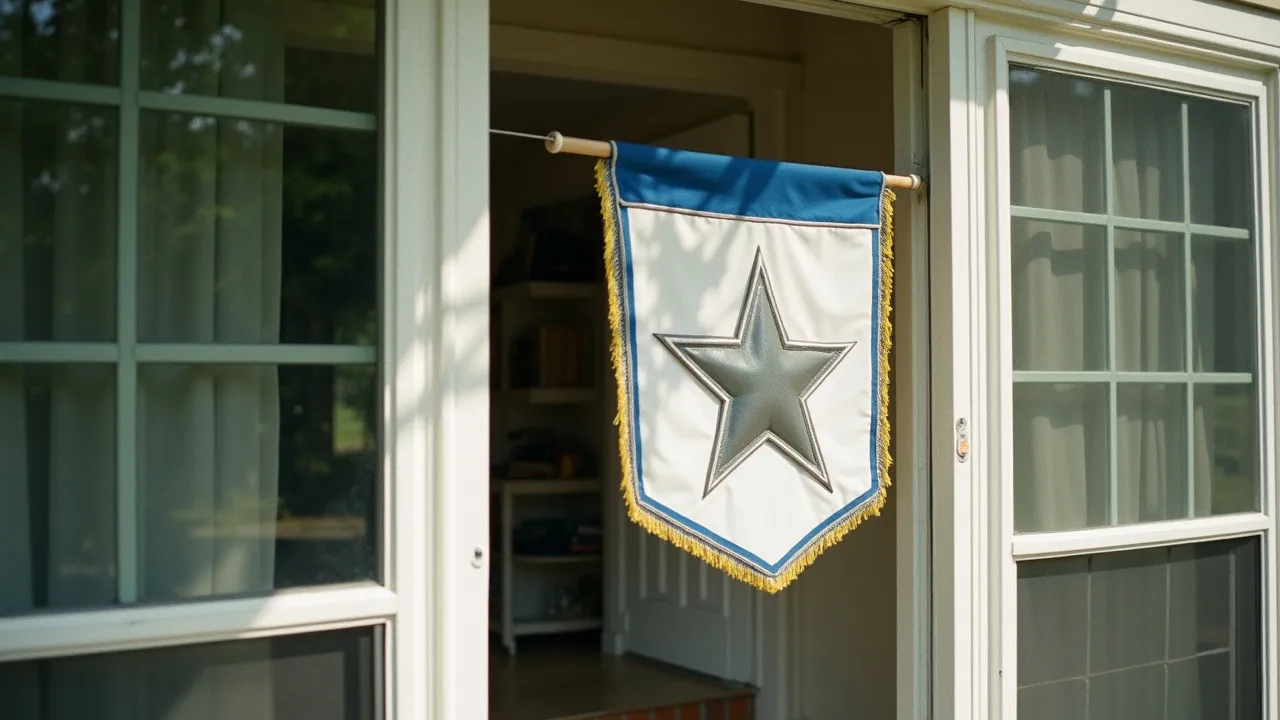
Silver Star Service Banner Day, observed on May 1st, honors service members wounded or injured in combat. This day recognizes their sacrifice and the families who support them, rooted in a tradition dating back to World War I.
The Historical Origins & Evolutionary Journey
Silver Star Service Banner Day commemorates the wounded, ill, and injured service members of the United States Armed Forces. The observance is deeply tied to the Silver Star Service Banner, a symbol that emerged from the earlier Blue Star and Gold Star banners of World War I.
The Foundational Catalyst
During World War I, families displayed Blue Star Service Banners to honor a loved one in active service. If the service member was killed, the blue star was replaced with a gold star. However, no specific symbol existed for those wounded or injured in combat. This gap persisted for decades until the Military Order of the Purple Heart (MOPH) championed the creation of a silver star banner.
The Legislative/Official Adoption
In 2010, the U.S. Congress passed a resolution designating May 1st as Silver Star Service Banner Day. The date was chosen to align with Loyalty Day, another patriotic observance. The first official observance occurred on May 1, 2011. The day encourages all Americans to display the Silver Star Service Banner to show gratitude for wounded warriors.
Modern Global Legacy
While primarily a U.S. observance, the spirit of honoring wounded service members has resonated globally. Allied nations have adopted similar banners and recognition days, though the official Silver Star Service Banner Day remains uniquely American. The day has grown with social media campaigns, veteran organizations’ events, and increased awareness of invisible wounds like PTSD and traumatic brain injury.
How to Celebrate Silver Star Service Banner Day
Participation can range from personal displays to community-wide events. Below are actionable strategies for individuals, schools, and organizations.
For Individuals and Families
- Display the Banner: Purchase or create a Silver Star Service Banner (white background, silver star, blue border) and hang it in a window or on your porch.
- Share on Social Media: Use hashtags like #SilverStarServiceBannerDay and post a photo of your banner or a message of appreciation.
- Volunteer: Spend time at a VA hospital or with organizations like the Wounded Warrior Project.
For Schools
- Organize an assembly featuring veteran speakers or lessons on military service and sacrifice.
- Host a banner-making workshop where students create banners to send to local VA facilities.
For Organizations and Corporations
- Offer special discounts or free services to wounded veterans on May 1st.
- Light up buildings in silver and blue colors.
- Partner with veteran nonprofits to host fundraising events.
Global Adaptations
In the UK, similar observances like Armed Forces Day incorporate moments honoring wounded personnel. In Canada, Silver Cross Women ceremonies recognize mothers of fallen soldiers, though a specific silver banner day is not observed. The key is to adapt the core message—honoring wounded service members—through local customs.
The Symbolism and Significance of the Silver Star Banner
The Silver Star Service Banner carries profound meaning. Each element of the banner tells a story:
- White background: Represents purity and the hope for a safe return.
- Silver star: Denotes the wounded service member; silver is a precious metal symbolizing the value of their sacrifice.
- Blue border: Mirrors the Blue Star Banner, linking the wounded to their active-duty comrades.
The banner is not a replacement for the Blue or Gold Star but a complementary symbol. It serves as a conversation starter, allowing families to share their stories and the public to acknowledge the cost of freedom. In recent years, the banner has also been adapted to represent those with invisible wounds, such as PTSD and traumatic brain injury, broadening its significance.
Modern Observances and Proclamations
Each year, May 1st is marked by presidential proclamations and state-level resolutions urging Americans to fly the banner. The Military Order of the Purple Heart spearheads national campaigns, providing free banners to qualifying families. In 2020, amidst the COVID-19 pandemic, virtual ceremonies replaced parades, but participation remained strong. Social media platforms saw a surge in posts using #SilverStarServiceBannerDay, with many sharing photos of banners in windows as a sign of solidarity.
How to Obtain a Silver Star Service Banner
Eligibility for the Silver Star Service Banner is limited to immediate family members of a service member who was wounded, injured, or killed in action. The service member must have been a member of the U.S. Armed Forces. To obtain a banner:
- Through MOPH: The Military Order of the Purple Heart offers free banners. Submit an application with proof of relationship and service documentation.
- Commercially: Various online retailers sell authentic banners. Ensure they meet official specifications (white, silver star, blue border).
- DIY: Families can create their own, though official banners are preferred for uniformity.
Displaying a banner without eligibility is discouraged out of respect for the symbol's meaning.
Challenges and Criticisms
Some critics argue that a separate day for wounded service members may fragment the recognition of all veterans. Others point out that the banner is less well-known than the Blue or Gold Star, limiting its impact. However, supporters counter that the day provides a focused opportunity to address the specific needs of wounded warriors, including medical care, employment, and mental health support. The day also highlights the sacrifices of families who care for injured veterans, a group often overlooked.
Historical Timeline
The Blue Star Service Banner becomes widely used during World War I to represent family members in active service.
Gold Star Service Banners emerge to honor those killed in action, creating a gap for wounded service members.
The Military Order of the Purple Heart proposes a Silver Star Service Banner to represent wounded warriors.
The U.S. Congress passes a resolution designating May 1st as Silver Star Service Banner Day.
First official observance of Silver Star Service Banner Day on May 1st.
During the COVID-19 pandemic, virtual ceremonies and social media campaigns replace in-person events.
Presidential proclamation reaffirms May 1st as Silver Star Service Banner Day, encouraging nationwide display.