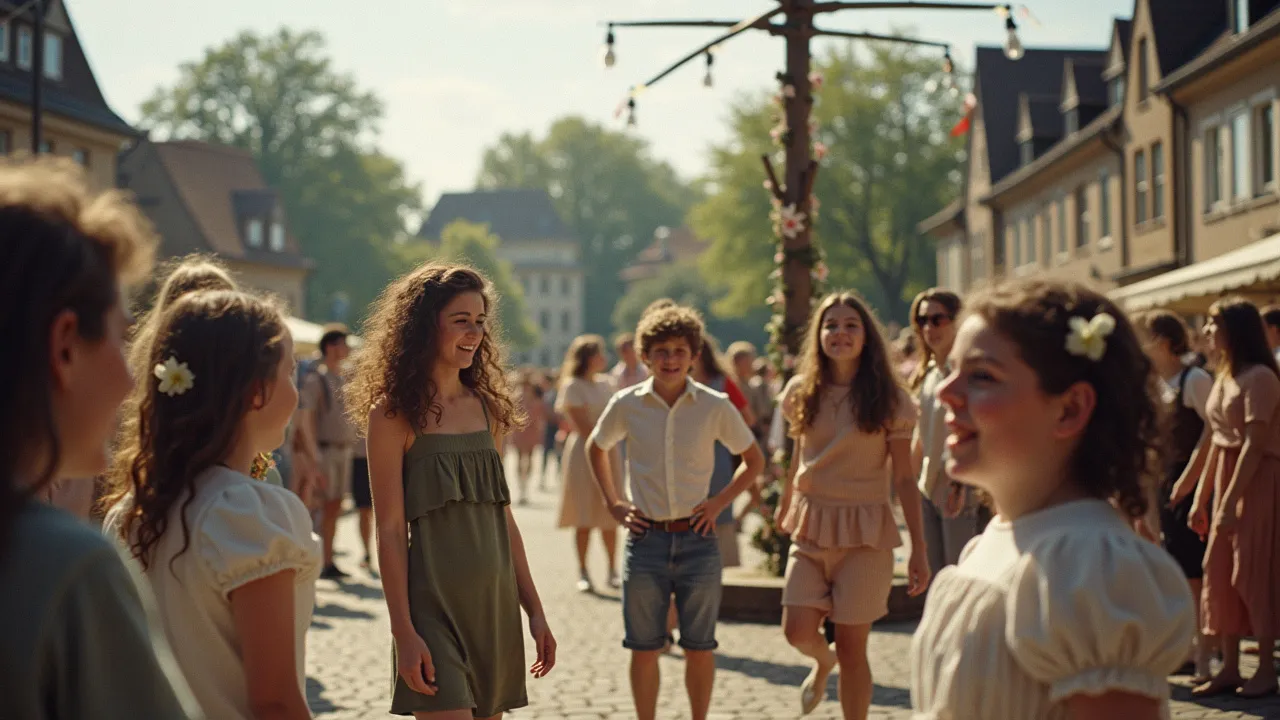
May Day, observed on May 1st, is a global celebration of spring and workers' rights. It blends ancient fertility rituals with modern labor movements, featuring maypoles, parades, and protests.
The Historical Origins & Evolutionary Journey
May Day has deep roots spanning both ancient agricultural rites and modern labor movements. Its dual identity makes it one of the most complex and celebrated days globally.
The Foundational Catalyst
Ancient peoples marked May 1st as a fertility festival. The Celts celebrated Beltane, while Romans honored Flora, goddess of flowers. These traditions involved:
- Dancing around maypoles
- Weaving flower crowns
- Lighting bonfires to welcome summer
In medieval Europe, May Day was a time for village festivities, often including the selection of a May Queen.
The Legislative/Official Adoption
The modern workers' rights association began in 1886 when American labor unions called for a general strike demanding an eight-hour work day. The Haymarket Affair in Chicago on May 4, 1886, turned violent and became a rallying point. In 1889, the Second International declared May 1st as International Workers' Day to commemorate the struggle. Many countries adopted it as a public holiday, though in the United States, Labor Day is celebrated in September.
Modern Global Legacy
Today, May Day is a public holiday in over 80 countries. In nations like China, Cuba, and Russia, it features massive military parades and government-sponsored events. In others like Finland and Sweden, it retains both labor and spring celebrations, with students wearing white caps and marching.
How to Celebrate May Day
May Day offers diverse ways to participate, whether focusing on spring traditions or labor activism. Here is a definitive guide for individuals, schools, and organizations:
Spring Celebrations
- Dance around a maypole with ribbons. This tradition is popular in Germany, the UK, and Scandinavia.
- Make a May Day basket filled with flowers and candy, leave it anonymously on a neighbor's door.
- Attend a May Fair with face painting, Morris dancing, and puppet shows.
Labor Activism
- Join a union parade or protest rally. Major cities like Berlin, Paris, and Manila hold huge demonstrations.
- Attend a labor conference or workshop on workers' rights.
- Post on social media using hashtags like #MayDay or #WorkersRights to raise awareness.
School and Community Events
Schools often organize Maypole dances and craft activities. Community centers may host potluck dinners or film screenings about labor history. For businesses, offering a day off or organizing a volunteer day aligns with the spirit of the holiday.
Global Impact and Societal Themes
May Day serves as a powerful platform for social justice and community bonding. It highlights several core themes:
Workers' Rights
The demand for fair wages and safe working conditions remains central. In many countries, unions use May Day to negotiate new contracts or protest austerity measures.
Spring and Renewal
Symbolically, May Day represents rebirth after winter. This duality allows both political and apolitical celebrations to coexist. In some regions, it is purely a family-friendly holiday.
Cultural Identity
In multicultural societies, May Day can be a moment to celebrate diversity. For example, in London, there are separate events for the labor movement and for traditional English May Day, drawing different crowds.
Industry Transformations Linked to May Day
The observance has influenced various sectors:
Tourism and Hospitality
In countries where May Day is a public holiday, tourism spikes. Destinations like Paris and Prague see increased bookings for May Day events. Hotels often offer special packages for parades and festivals.
Retail and Commerce
Florist and confectionery businesses thrive as people buy flowers and sweets for May baskets. Craft stores sell ribbon and maypole supplies.
Media and Entertainment
News outlets cover protests and parades. Streaming services feature documentaries about labor history. Social media platforms amplify activist campaigns.
Controversies and Criticisms
May Day is not without controversy. In some countries, the day is co-opted by political factions, leading to clashes.
Political Tensions
In Turkey and Brazil, May Day protests have sometimes turned violent, with police using tear gas on demonstrators. Governments in authoritarian states often use the holiday to showcase military strength, diverting from labor issues.
Cultural Erosion
Traditional spring rituals have declined in urbanized areas. Critics argue that commercialized versions of May Day lose the original community spirit. Environmental groups also note that large gatherings can increase waste and carbon footprint.
Modern Traditions and Future Outlook
In the 21st century, May Day continues to evolve. Virtual rallies and online campaigns have expanded participation. Younger generations blend ancient customs with digital activism.
Digital May Day: In 2020, many events moved online due to the pandemic. Virtual maypole dances and live-streamed protests became common. This trend may persist, making May Day more accessible globally.
Environmental Focus: Some groups now incorporate Earth Day themes, planting trees or cleaning parks on May Day. This fusion reflects growing awareness of climate justice as a labor issue, since low-income workers often bear the brunt of pollution.
As labor rights challenges persist, May Day will remain a crucial rallying point. The balance between joy and activism, tradition and progress, ensures its relevance for generations to come.
Historical Timeline
Celtic festival of Beltane and Roman Floralia mark May 1st as a spring fertility celebration.
The Haymarket Affair in Chicago on May 4 leads to deaths after a bomb explodes at a labor rally. This event becomes a symbol of workers' struggle.
The Second International designates May 1st as International Workers' Day to honor the Haymarket martyrs and advocate for the eight-hour workday.
First official May Day celebrations take place in the United States and Europe. Massive demonstrations occur in London, Paris, and New York.
Many European countries adopt May 1st as a public holiday following pressure from labor movements. Finland becomes one of the first to do so.
The Catholic Church designates May 1st as the Feast of St. Joseph the Worker, attempting to spiritualize the secular holiday.
International May Day protests erupt globally, with millions demonstrating for economic rights. In Turkey, the Taksim Square protest leads to dozens of deaths.
May Day becomes a national holiday in South Africa, aligning with the country's post-apartheid labor reforms.
Due to the COVID-19 pandemic, many May Day celebrations move online. Virtual protests and digital maypole dances become popular.