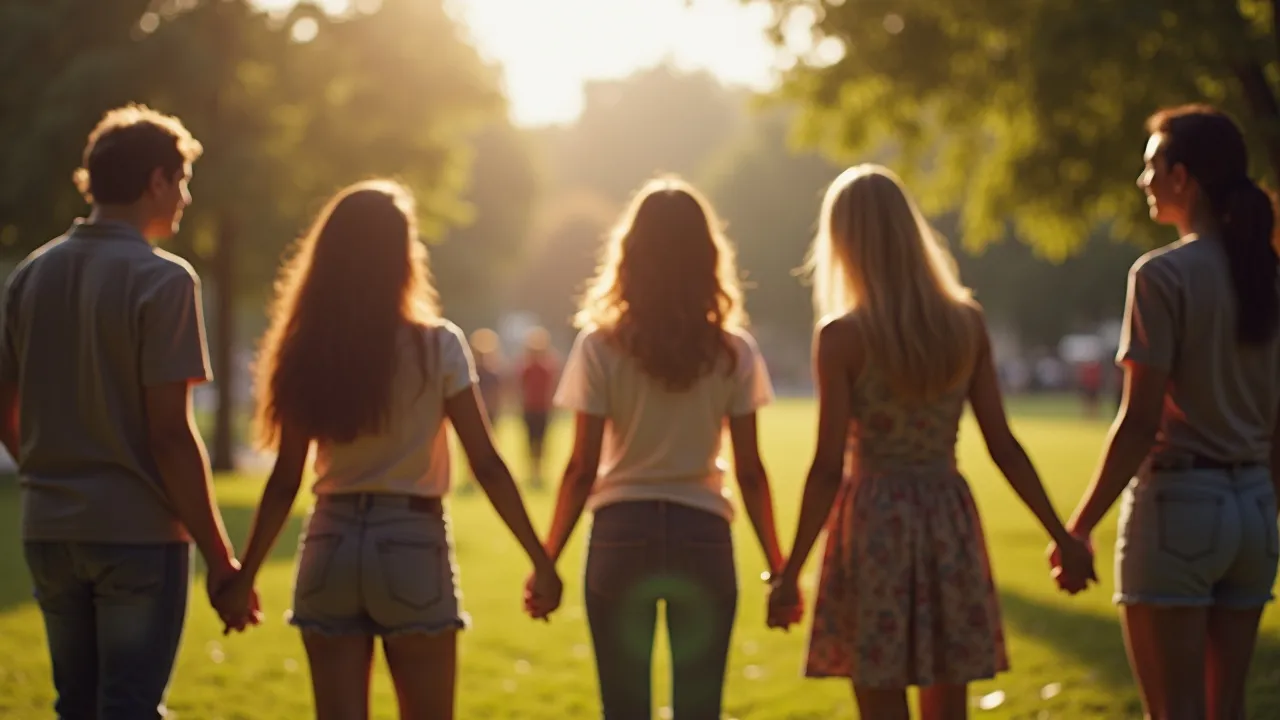
The Season for Nonviolence is a 64-day annual observance from January 30 to April 4, honoring the legacies of Mahatma Gandhi and Martin Luther King Jr. It invites individuals and communities to practice nonviolence in daily life.
The Historical Origins & Evolutionary Journey
The Season for Nonviolence was founded in 1998 by Arun Gandhi, the fifth grandson of Mahatma Gandhi, along with the M.K. Gandhi Institute for Nonviolence. The 64-day period from January 30 to April 4 was chosen deliberately to span the assassination anniversaries of two of the world's most iconic nonviolent leaders: Mahatma Gandhi (January 30, 1948) and Dr. Martin Luther King Jr. (April 4, 1968). This observance aims to transform individuals and societies through the daily practice of nonviolence.
The Foundational Catalyst
The idea emerged during a time of increasing global conflict and violence. Arun Gandhi sought to create a structured period for people to consciously adopt nonviolent principles in their daily interactions. The initial focus was on educational materials and community pledges. By the early 2000s, the observance had spread to schools, churches, and civic organizations across the United States and beyond.
The Legislative / Official Adoption
While not an official federal holiday, numerous city councils and state legislatures have issued proclamations recognizing the Season for Nonviolence. Notable examples include resolutions passed in California, New York, and Georgia, encouraging residents to participate in nonviolent actions and educational programs.
Modern Global Legacy
Today, the Season for Nonviolence is observed in over 100 countries. It has inspired related initiatives such as the '64 Ways of Nonviolence' calendar, which suggests daily practices like active listening, forgiveness, and community service. The observance has also been integrated into peace studies curricula worldwide.
How to Celebrate Season for Nonviolence
The Season for Nonviolence offers a framework for personal and collective transformation. Below are actionable strategies for individuals, schools, and organizations.
For Individuals
- Daily Reflection: Spend 10 minutes each day journaling about how you can respond to conflict with nonviolence.
- Practice Active Listening: In conversations, focus on understanding the other person's perspective without interrupting.
- Perform Acts of Kindness: Each day, do one unsolicited kind act for a friend, family member, or stranger.
For Schools
- Curriculum Integration: Teachers can dedicate lessons to the lives of Gandhi and King, as well as contemporary nonviolent movements.
- Peace Pledges: Have students sign a pledge to resolve conflicts without violence.
- Community Projects: Organize service-learning projects such as food drives or park cleanups.
For Organizations
- Workplace Workshops: Host training sessions on nonviolent communication (NVC) and conflict resolution.
- Public Events: Plan film screenings, speaker series, or peace rallies.
- Partnerships: Collaborate with local nonprofits focusing on social justice and peacebuilding.
Internationally, celebrations vary: in India, the period includes prayer meetings and peace marches; in the United States, many churches hold interfaith services; in South Africa, events emphasize reconciliation and healing from apartheid's wounds.
Core Principles of Nonviolence
The Season for Nonviolence is grounded in six fundamental principles derived from Gandhi's philosophy of Satyagraha and King's Christian nonviolence. These principles guide participants throughout the 64 days.
Respect for All Life
Nonviolence begins with the recognition that every human being has inherent dignity. This principle extends to all living beings and the environment.
Community Building
Violence isolates; nonviolence connects. Building strong, inclusive communities where everyone's needs are met is a core goal.
Truth and Transparency
Nonviolence requires honesty in communication and action. Participants are encouraged to speak truthfully and avoid deception.
Active Compassion
Compassion is not passive; it involves actively working to relieve suffering and promote justice.
Forgiveness and Reconciliation
Letting go of resentment and seeking to mend relationships is essential. This does not mean condoning harm but moving toward healing.
Social Justice
Nonviolence aims to create structures that are fair and equitable for all. Participants advocate for systemic change through peaceful means.
Global Impact and Initiatives
The Season for Nonviolence has inspired numerous global initiatives that extend beyond the 64-day period. One notable program is the '64 Days of Nonviolence' challenge, where participants commit to a different nonviolent action each day. In 2020, amid the COVID-19 pandemic, the observance saw a surge in virtual events, including online meditation sessions and webinars on nonviolent resistance. In Rwanda, community leaders have adapted the Season for Nonviolence to support post-genocide reconciliation efforts. In Colombia, it has been used to train youth in peacebuilding to counter gang violence. The observance has also been recognized by the United Nations as a valuable tool for promoting the Culture of Peace.
Corporate and Social Rituals
Some companies have adopted the Season for Nonviolence as a component of their diversity, equity, and inclusion (DEI) programs. For example, employees engage in 'nonviolence circles' where they discuss workplace conflicts and practice empathy. Nonprofit organizations often use this time to launch fundraising campaigns for peace-related causes.
Nonviolence in Education
Education is a cornerstone of the Season for Nonviolence. Many schools have integrated the observance into their social-emotional learning (SEL) curricula. Students learn about historical nonviolent movements, from Gandhi's salt march to the Civil Rights sit-ins. They also develop practical conflict resolution skills through role-playing and peer mediation programs. Higher education institutions frequently host lectures and symposiums featuring activists and scholars of nonviolence. A growing number of universities now offer certificates in peace studies, often highlighting the Season for Nonviolence as a key experiential learning component.
The Spiritual and Ethical Foundations
The Season for Nonviolence draws on diverse spiritual traditions, including Hinduism, Christianity, Buddhism, and Islam. Gandhi's concept of ahimsa (non-harming) is central, as is the Christian teaching of 'love your enemies.' The observance also aligns with the secular ethical framework of human rights and social responsibility. Participants are encouraged to explore their own spiritual or philosophical beliefs as a source of strength for nonviolent action. Interfaith dialogue and cooperation are strongly promoted during this period.
Integration with Mindfulness and Meditation
Many participants incorporate mindfulness practices to cultivate inner peace, believing that outer nonviolence begins with inner calm. Guided meditations focused on compassion and loving-kindness are common activities.
Historical Timeline
Mahatma Gandhi is assassinated on January 30, inspiring nonviolent movements worldwide.
Martin Luther King Jr. is assassinated on April 4, cementing his legacy as a global icon of nonviolence.
The Season for Nonviolence is founded by Arun Gandhi and the M.K. Gandhi Institute for Nonviolence, marking the 50th anniversary of Gandhi's assassination.
The first '64 Ways of Nonviolence' calendar is published, offering daily practices for participants.
The United Nations recognizes the Season for Nonviolence as a valuable initiative for promoting a culture of peace.
Several U.S. cities issue official proclamations supporting the observance, including Los Angeles and Atlanta.
Amid the pandemic, virtual events, and online challenges expand the reach of the Season for Nonviolence globally.